
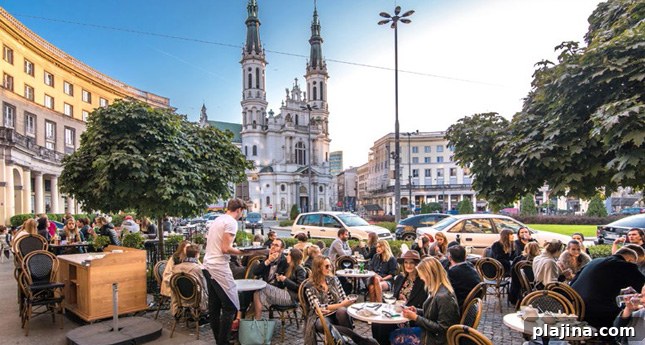
Hosting international events in Poland has required time and development. Since regaining democracy nearly three decades ago and joining the European Union more than a decade ago, Poland has steadily modernized its infrastructure and business environment. As a result, event planners are increasingly recognizing the strength of Poland’s economy and the renewed dynamism of its cities. Warsaw, in particular, has emerged as a major MICE (Meetings, Incentives, Conferences and Exhibitions) destination, offering investment-friendly policies, a revitalized city center and a restored UNESCO-designated Old Town.
Today Warsaw boasts a growing roster of luxury hotels, contemporary cultural venues and an expanding culinary scene that goes beyond traditional dishes like pierogi and kiełbasa. One notable cultural landmark is the Museum of the History of Polish Jews, designed by Finnish architect Rainer Mahlamäki, which has become an innovative off-site venue for conferences and group events. “Too few professional conference organizers around the world were aware of what Warsaw had to offer,” said Mateusz Czerwinski, director of the Warsaw Convention Bureau. A targeted familiarization visit in February 2015, which hosted more than 80 international MICE buyers, helped showcase Warsaw’s meeting assets and shifted perceptions about the city.
The Warsaw Convention Bureau highlights several standout venues, including the Palace of Culture and Science, the PGE National Stadium, the Expo XXI Convention Center, the Warsaw Uprising Museum and the Museum of the History of Polish Jews. These sites, together with a selection of high-end downtown hotels and new office towers, create a strong portfolio for planners. Warsaw’s compact layout and efficient road links make the city easy to navigate; Chopin Airport is roughly six miles from downtown, a 15–20 minute drive in normal traffic.
Warsaw’s five-star hotels combine upscale accommodations with extensive meeting facilities. The Warsaw Marriott Hotel, located opposite the Palace of Culture and Science, provides 528 guestrooms and a 28,000-square-foot conference center that includes 21 meeting rooms and high-technology event spaces. The Sheraton Warsaw offers 350 rooms, including Club rooms and suites, and hosts fine dining at InAzia restaurant. The InterContinental Warsaw, with 414 rooms in the city center, operates multiple restaurants and a catering department that serves 13 conference rooms and a large Opera Ballroom. Its upper floors house a private meeting room in the 41st-floor Club Lounge and the RiverView Wellness Centre and Spa. The Westin Warsaw, close to the Palace of Culture and Science and the Zlote Tarasy shopping complex, features 361 guestrooms, modular meeting rooms and sustainability options that appeal to environmentally conscious planners.
For those seeking historic elegance, Hotel Bristol remains an iconic choice. Operating since 1901 and recently updated by designer Anita Rosato, the 168-room property preserves its Neo-Renaissance façade and Art Nouveau interiors. The hotel offers formal dining at the Marconi restaurant, the Viennese-style Café Bristol and a suite of period-style conference rooms equipped with modern technology.
Segway tour in front of the Polin Museum of the History of Polish Jews © WARSAW CONVENTION BUREAU
Beyond hotels, Warsaw offers a wide array of off-site venues that reflect the city’s cultural and historical depth. With more than 60 museums, 13 concert halls, 38 theaters, 44 art galleries and numerous historic sites, event planners have many choices for receptions, gala dinners and conference sessions. The National Museum, one of Poland’s oldest cultural institutions, occupies a Modernist building in the city center and houses an extensive collection of artworks, offering distinctive meeting spaces in its main halls and courtyards. The Fryderyk Chopin Museum provides a cultural setting with interactive exhibits—an engaging option for private functions that connect guests to Warsaw’s musical heritage.
The Royal Castle, dating back to the 15th century, regularly hosts state ceremonies and high-profile events and can be adapted for private receptions across its ornate halls. Warsaw’s smaller, versatile venues also serve international groups: in June 2015, Teach for All brought 70 participants from 18 countries to Warsaw for a European conference. They used the Mercure Warszawa Centrum and arranged local dining experiences and activities—including a hands-on cooking class—demonstrating the variety of local services available to visiting delegations. Delegates also found the Copernicus Science Centre suitable for large gatherings and praised the city center’s walkability and cultural attractions.
Warsaw is also capable of hosting very large international summits. The city’s PGE National Stadium, a modern multifunctional complex, provides extensive exhibition and conference space and will host major international meetings. The stadium offers flexible conference rooms and an exhibition area of over 237,000 square feet, making it suitable for trade shows, large conferences and high-profile diplomatic events.
The Warsaw Convention Bureau supports planners with impartial advice on venues, hotels and local services, simplifying event logistics. An additional incentive for meeting planners is Warsaw’s relative affordability: among the world’s 100 largest non-U.S. cities, Warsaw ranked among the less expensive destinations for business travelers in recent corporate travel indexes. With a mix of modern facilities, historic charm and growing hospitality capacity, Warsaw is increasingly a competitive choice for international MICE events.