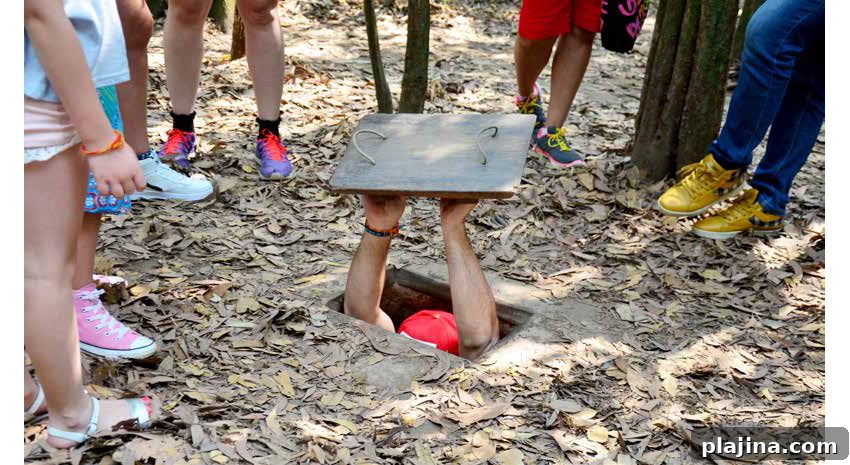
VIETNAM’s Cu Chi Tunnels stand as a remarkable testament to the ingenuity and resilience of the Viet Cong during the Vietnam War. Located northwest of Ho Chi Minh City in the Cu Chi district, the tunnel network allowed fighters and civilians to live, hide and operate underground throughout a prolonged and brutal conflict that began in 1954, involving North Vietnam and its southern allies against South Vietnam and the United States.
Two preserved sites, Ben Dinh and Ben Duoc, welcome visitors to see reconstructed sections of the tunnels and, in some places, crawl through widened passages. The easiest way to visit is to book a tour from a hotel in Ho Chi Minh City, which typically includes pickup, a guided visit and return transportation. The tunnels are roughly 20 to 30 miles from the city, so wear comfortable clothes you don’t mind getting dusty.
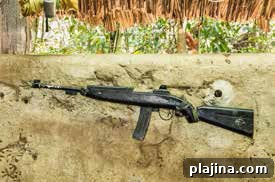
Rifle exposed in the Cu Chi tunnel park © MIRKO VITALI | DREAMSTIME.COM
Ben Dinh, closer to Ho Chi Minh City, is the more frequently visited site. Tours there typically begin with a brief film that outlines the tunnels’ history. The Cu Chi area originally featured dense rubber plantations planted to supply French tire manufacturers. The earliest tunnels were dug in the 1940s by the Viet Minh for weapon storage during the anti-colonial struggle, and the Viet Cong later expanded this network over two decades. The local compacted red clay made tunneling relatively straightforward, but every underground chamber required reinforced ceilings. Timber was preferred, but extensive bombing reduced available wood, so the Viet Cong sometimes used salvaged iron fence posts from enemy bases for support.
The tunnels formed multilevel complexes—some reaching four stories underground—where people lived for weeks or even years. These subterranean spaces housed sleeping quarters, meeting rooms, schools, kitchens, wells and latrines, as well as improvised hospitals. Medical care was rudimentary: surgery was often performed by torchlight with basic instruments, and in extreme cases a patient’s blood could be collected and later reintroduced using manual pumps and tubing.
Ventilation shafts helped disperse cooking smoke, but the underground environment could still become hot, humid and foul. Inhabitants also contended with wildlife such as bats, snakes, scorpions, centipedes and ants. The Viet Cong sometimes turned local fauna into defensive measures, placing boxes of scorpions or hollow bamboo filled with snakes in areas likely to be checked by enemy forces. Flooding and disease—malaria in particular—posed constant threats. Trapdoors and concealed exits allowed occupants to leave for combat, reconnaissance or to gather food, which was often limited to roots and foliage after defoliants and bombs destroyed many rice paddies and fruit trees. After engagements, fighters would retreat into the tunnels, making them difficult for opposing forces to locate. Prolonged time underground could also cause temporary blindness when emerging into daylight.
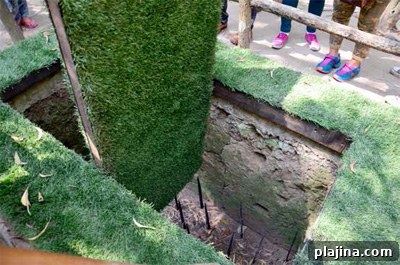
A booby trap with bamboo spikes at the tunnels © TUAYAI | DREAMSTIME.COM
U.S. forces were aware of the tunnels and took various measures to neutralize them, including bulldozing entrances, using defoliants and deploying soldiers with explosives or gas. Many passages were so narrow and low that enemy troops could not enter or move effectively. Today’s tourist sections have been widened in places to accommodate visitors, but they still convey the claustrophobic, dark and dirty conditions experienced underground. The open areas on display represent only a small portion of the original network, which once extended across a vast area measured in miles.
The human cost of the war was immense: more than 3 million people died, with Vietnamese civilians comprising roughly half of those casualties. U.S. combat troops withdrew following orders issued in 1973, and the war concluded in 1975 when Communist forces captured Saigon, which was later renamed Ho Chi Minh City. The country was formally reorganized as the Socialist Republic of Vietnam the following year.
In the decades after the conflict, the Vietnamese government established memorials and preserved sites, including the Cu Chi tunnels, to commemorate those who suffered and died. The tunnels themselves are part of a larger war memorial park, and historical records note large numbers of Vietnamese casualties associated with prolonged fighting in the region. In the United States, the Vietnam Veterans Memorial in Washington, D.C., opened in 1982 and lists the names of American service members killed or missing in the war.
Info to Go
Several international carriers operate routes to Vietnam. Ho Chi Minh City’s Tan Son Nhat Airport (SGN) is located about 20 minutes by car from the city center. Regulated taxis are the most commonly used and convenient way to reach hotels from the airport, and many hotels also provide prearranged airport pickup if requested in advance.