
Long before U.S. national parks became popular vacation destinations during the pandemic, I was already an enthusiast. Last year my count reached 28 parks as I work toward seeing all 63 of what novelist and conservationist Wallace Stegner called “the best idea we ever had.” My most recent visits reminded me not only of the parks’ remarkable beauty but also of how different they can be—both in landscape and in the ways you experience them.
PHOTOS: © KATHERINE RODEGHIER
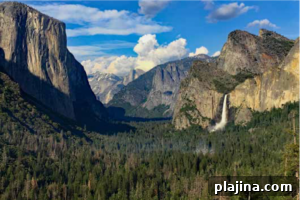
As our car emerged from the tunnel, my husband slammed on the brakes and we both gasped. We pulled into a nearby lot and watched other motorists do the same. We had arrived at Tunnel View in California’s Yosemite National Park. To the left, El Capitan rose like a granite cathedral; to the right, Bridalveil Fall spilled down the cliff; and the park’s iconic Half Dome gleamed in the distance.
We saw Yosemite in two distinct ways, each with its advantages. Driving allowed us to go where we wanted and linger when we pleased, but the driver had to balance enjoying the scenery against navigating winding roads, traffic and wildlife. On a day-long guided tour booked through Tenaya Lodge, two miles from the park’s southern edge, we both could admire the landscape while our guide shared vivid stories about the park’s history and geology. Tenaya’s 19-passenger vans have large glass sides and retractable roofs for unobstructed views. The tour hit the major highlights; it was perfect for an overview, though I wished we could have spent more time at some spots and less at others.
The park also runs free shuttles that stop at major overlooks. Note that the road to Glacier Point—a standout viewpoint during our visit—was closed for reconstruction in 2022 with delays expected into 2023, so check current conditions before you go.
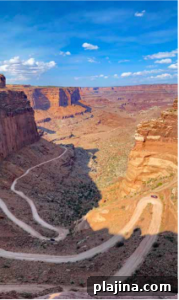
PHOTO: © KATHERINE RODEGHIER
I’d heard horror stories about long waits to enter Arches National Park, but on a day tour of Arches and nearby Canyonlands last August, we never reached the park entrance. Instead, our guide from NAVTEC Expeditions took us in a 4×4 over backcountry routes that most visitors never see.
Unlike Yosemite’s waterfalls and granite domes, these parks sit amid the red-rock high desert around Moab, Utah. I passed iconic formations such as Balanced Rock and Park Avenue, but we also left the paved roads to bounce along dirt tracks to remote sites. We encountered bighorn sheep and weathered buttes, paused to examine dinosaur footprints, scrambled to Eye of the Whale Arch and descended the steep switchbacks of the Shafer Trail. At Thelma & Louise Point I imagined the cinematic scene of a car flying off the cliff; I felt my stomach drop standing at the edge of the gorge at Gooseneck Bend, where the Colorado River carves the landscape.
To limit crowding, Arches now requires timed-entry reservations through Oct. 3. Off-road tours run by authorized concessionaires such as NAVTEC, Adrift Adventures and Moab Scenic Adventures are exempt from the timed-entry requirement, as are other approved operators listed by local travel authorities. If you want to visit less-crowded areas, guided off-road trips are a good option.
In Virginia, my husband and I picked our way over rocks and tree roots to the summit of Stony Man and watched the Shenandoah Valley and the Blue Ridge Mountains unfurl below. Skyline Drive—Shenandoah National Park’s single public road—meanders along the ridge from Front Royal to Rockfish Gap. At the park’s leisurely 35 mph limit, no one is in a hurry. Traffic stopped to let deer cross; a doe and fawn ambled by. I spotted a black shape on a grassy embankment: a bear. Nearly 70 overlooks provide pull-offs where motorists can absorb the sweeping views of the Blue Ridge, part of the ancient Appalachian chain. Unlike the sharp peaks of the West, these mountains have been worn into long, forested ridges that glow with a blue haze produced in part by isoprene emitted by the trees.
At Milepost 56.4 we hiked the Bearfence Viewpoint trail, one of more than 500 miles of paths in Shenandoah. When our route crossed the Appalachian Trail, we exchanged nods with through-hikers whose heavy packs and steady rhythm spoke to months on the trail.
INFO TO GO
Driving time to Yosemite Valley varies by departure point: roughly two hours from Merced Regional Airport, 2.5 hours from Mammoth Yosemite Airport (seasonal) and Fresno Yosemite International Airport, about 3.5 hours from Oakland or Sacramento airports, and around four hours from San Francisco International Airport. Seasonal YARTS buses offer service from Mammoth Lakes, Sonora and Fresno.
For Arches and Canyonlands, fly into Canyonlands Regional Airport, about 18 miles from Moab, which handles flights to and from Denver and Salt Lake City. Shuttle services such as Moab Express connect the airport with town.
Charlottesville-Albemarle Airport lies roughly 31 miles from Shenandoah’s southern entrance. Washington Dulles International is about 56 miles from the park’s northern entrance and Ronald Reagan Washington National about 70 miles. The park does not offer authorized shuttle service within its boundaries, so visitors should plan their own transportation to and inside the park.