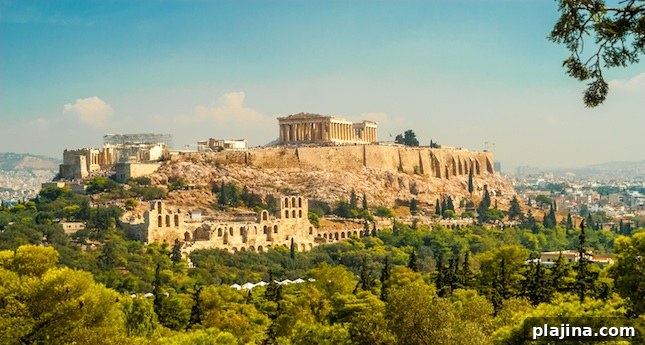
Any doubts about the resilience of Greece’s tourism industry after recent economic and political challenges can be dismissed. The country recorded an all-time high in 2015 with 23.5 million visitors. Early indicators for 2016 point to continued growth: passenger traffic at Greek airports rose by about 10 percent in the first five months of the year compared with the same period a year earlier.
Athens, Greece’s busiest airport, handled roughly 1.8 million passengers from January through May 2016. Other regional airports also reported notable increases: Thessaloniki, Rhodes, Heraklion and Chania all showed substantial growth in arrivals. Several island airports saw a surge in requests for new routes, with Skiathos, Mykonos, Santorini and Kefalonia emerging as particularly popular destinations.
Tourism expansion is not limited to the islands. Athens itself is expected to welcome about 4.5 million visitors in 2016 and currently has nine new hotels under construction, reflecting rising demand for city stays. This broader recovery is rooted in Greece’s enduring appeal—its rich historical sites, picturesque beaches and attractive towns continue to draw travelers from around the world.
In addition to Greece’s intrinsic attractions, the country may also be benefiting from regional instability elsewhere in the eastern Mediterranean. Destinations such as Egypt, Tunisia and Turkey have experienced volatility in recent years, and some travelers may be choosing Greece as a relatively stable, accessible alternative.