
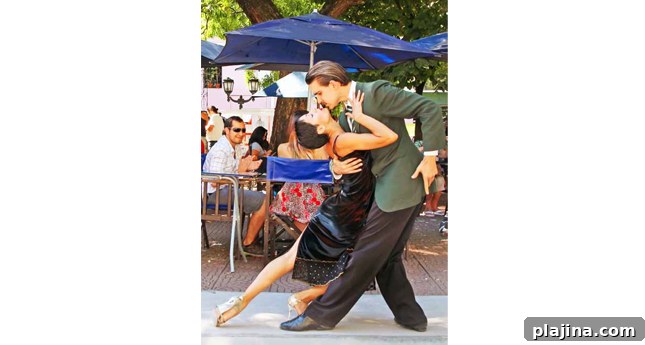
At any time of year you’ll find tango in Buenos Aires, but for two weeks each August this sensuous, seductive dance becomes the city’s obsession. Its evocative rhythms fill the air and spill into the streets. The annual Tango Buenos Aires Festival runs this year from Aug. 12–25, when hundreds of thousands of dancers and fans converge on the birthplace of tango.
The centerpiece of the festival is the Mundial de Tango, where elite tangueros from around the world compete in Salon Tango and Stage Tango categories at Luna Park. This championship is the most prestigious tango contest globally. Leading up to it is the nine-day La Festival, a city-wide celebration that begins with a large open-air milonga in which thousands dance through the streets, bringing the music back to its communal roots.
Tango originated in the working-class neighborhoods of San Telmo and La Boca in the 1870s, born among immigrant communities as a music and dance of the Porteños. Over the following decades it moved from those streets into ballrooms and, by the 1920s, achieved international fame. The August festival reconnects Buenos Aires with that original street energy while showcasing polished stage performances.
During the festival you can enjoy salon-style tango shows, film screenings, free lessons, concerts, dances and exhibitions of tango-related art. Spontaneous dances can erupt anywhere, day or night; for high-caliber choreographed productions, check the program at the Teatro Astor Piazzolla. For impromptu live music, classic recordings and neighborhood milongas, explore the barrios—the spirit of tango is everywhere.
You don’t have to be a dancer to appreciate the performances or to admire street couples lost in the music. But visitors often find themselves wanting to join in. If you already dance, visit a milonga—the neighborhood dance halls that are an essential part of Buenos Aires social life. If you’re a beginner, look for places that offer lessons, such as El Beso, which is run by La Academia del Tango Milonguero. The World Tango Museum (El Museo Mundial del Tango) also offers weekday afternoon classes for newcomers.
Many competitions and events are free, though popular performances and certain venues require tickets that should be collected in advance. Ask your hotel concierge about ticket distribution and availability; they can often help secure passes or advise on where to pick them up.
Between shows and dance classes, savor Argentina’s culinary offerings: enjoy world-renowned Argentine steaks and sample wines from Mendoza or lesser-known regions such as San Juan, Salta and Río Negro. The Tango Buenos Aires Festival is as much a celebration of culture and cuisine as it is of music and movement—an immersive experience that captures the city’s passion and history.