
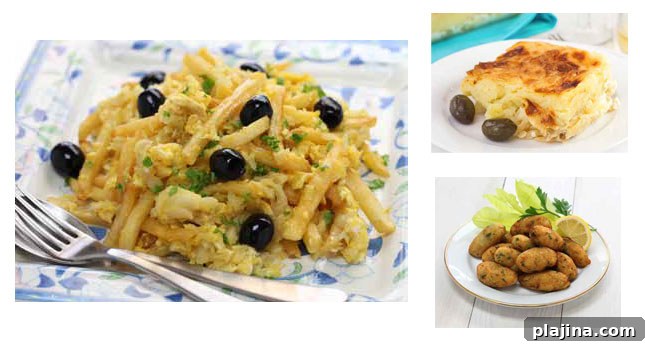
Bacalhau, the dried and salted cod that has become synonymous with Portuguese cuisine, is surprisingly not native to Portugal. Though a popular saying claims there are 365 ways to prepare bacalhau—one for each day of the year—many Portuguese cooks insist there are as many as 1,001 recipes featuring this versatile fish.
Originally harvested off the coasts of Norway, Iceland and Newfoundland, bacalhau entered Portuguese kitchens roughly 500 years ago. Before modern refrigeration, salting and drying were essential preservation methods. Portuguese sailors and fishermen found that cod from the North Atlantic retained its flavor and texture through salting and drying, and soon established regular fishing and trade. Over time the preserved fish became a pantry staple and a culinary cornerstone, especially in a predominantly Roman Catholic country where abstaining from meat on numerous religious days made bacalhau an ideal substitute. Today, due to changes in fish stocks and other factors, bacalhau is more costly and often reserved for special occasions, including Christmas in many regions.
Properly rehydrating and desalting bacalhau is the critical first step before cooking. Place the salted cod in a large container with cold, fresh water and soak it for at least 24 hours, changing the water several times to remove excess salt. After soaking, the fish is typically simmered for about 15 minutes in fresh water. To infuse flavor, you can add a splash of vinegar and aromatics such as carrots, celery, onion, parsley and whole peppercorns to the poaching liquid. Once cooked, the skin and bones are removed and the meat is flaked or cut as required for the chosen recipe.
After rehydration and poaching, bacalhau adapts to many cooking methods: grilling, roasting, frying, stewing or baking. It is commonly paired with potatoes and finds its way into both rustic and refined dishes. Popular traditional preparations include:
- Bacalhau com Todos — a simple, hearty plate of boiled cod served with potatoes, seasonal vegetables, hard‑boiled eggs, olive oil and garlic.
- Bacalhau à Brás — a comfort dish made by combining shredded cod with thinly sliced fried potatoes, onions, scrambled eggs and black olives, creating a creamy, well‑seasoned scramble.
- Bacalhau à Gomes de Sá — a layered casserole where soaked cod (often briefly soaked in milk), potatoes and onions are baked together and finished with slices of hard‑boiled egg and olives.
- Bolinhos de Bacalhau — savory fritters made from mashed potatoes mixed with flaked cod, formed into balls and deep‑fried until golden and crisp.
- Bacalhau à Zé do Pipo — milk‑soaked cod baked with onions and a mashed potato topping, often enriched with mayonnaise and garnished with olives.
- Bacalhau com Natas — a rich, gratin‑style dish of cod and potatoes baked in cream or béchamel until bubbling and lightly browned.
These recipes illustrate bacalhau’s adaptability: from simple home cooking to celebratory meals, the preserved cod delivers satisfying texture and depth of flavor. Whether broiled, stewed, fried or baked, it remains a defining element of Portuguese culinary identity.
Respecting the proper soaking and cooking techniques ensures the best results and preserves the fish’s delicate taste. For both everyday meals and festive occasions, bacalhau continues to hold a special place at Portuguese tables, a testament to how a non‑native ingredient was embraced and transformed into a national classic.