What is ATLNext?
Over the past four decades, air travel has changed dramatically. To meet those evolving demands, Hartsfield‑Jackson Atlanta International Airport (ATL) launched a comprehensive $6 billion capital improvement program called ATLNext. This long-term initiative is focused on increasing capacity, renewing aging infrastructure, and improving the passenger experience across the airport.
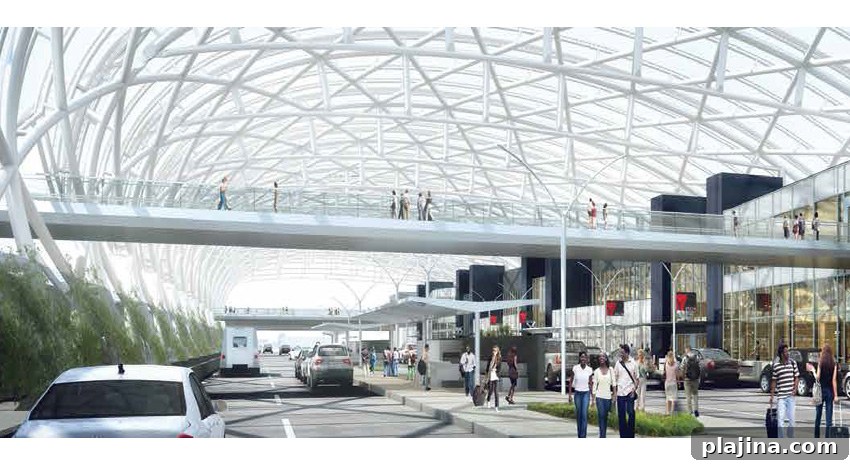
ATLNext is a coordinated series of projects planned over roughly 20 years. The program emphasizes a curb-to-gate modernization of the domestic terminal, with a signature multipurpose canopy designed to shield travelers from the elements during arrivals and departures. Beyond weather protection, these improvements aim to streamline passenger flow, expand gate capacity, and upgrade amenities to reflect contemporary traveler expectations.
The work under ATLNext is grouped into six major areas. Collectively, these projects are intended to reinforce Hartsfield‑Jackson’s role as one of the world’s busiest and most efficient airports while enhancing service, safety, and convenience for passengers and airline partners.
ATLNext Project Areas
Air Cargo Development: New cargo infrastructure will include modern warehouse facilities, expanded aircraft parking, and dedicated staging and parking areas for cargo vehicles. These upgrades are intended to support growing cargo demand and improve handling efficiency.
Third-Party Development: The plan includes mixed-use development opportunities such as a four-star, 440-room hotel, office space, and a travel plaza. These additions will provide convenient lodging and services for travelers, airport visitors, and business users.
Central Passenger Terminal Complex: A centerpiece of the program, this component will revitalize the domestic terminal and Concourses T South through C, upgrade the transportation mall, and add gates by constructing Concourse G and extending Concourse T North. The initiative also calls for increased capacity and reliability of the Plane Train system to improve intra-airport connections.
Parking Decks/Facilities: To address parking demand, ATLNext plans to replace the existing North and South domestic parking decks, build a new West domestic parking deck, and add a Park‑Ride lot. These changes will increase parking capacity and create more efficient access to terminal areas.
Support Facilities: Project plans include rebuilding a LEED-certified fire station and a modern maintenance complex, along with relocating and upgrading staging areas for commercial vehicles and taxis. These improvements are designed to boost operational resilience and sustainability.
Airfield: To improve airfield efficiency and safety, ATLNext proposes construction of two new end-around taxiways and replacement of airfield pavement. Long-term planning also contemplates the eventual addition of a sixth runway to support future traffic growth.
Together, these targeted investments are intended to modernize ATL’s core systems, expand capacity where needed, and enhance the overall passenger experience while maintaining the airport’s operational excellence. ATLNext represents a strategic approach to future proofing one of the world’s busiest aviation hubs for decades to come.