
While Budapest certainly deserves attention, Hungary’s other regions are often overlooked despite their rich histories and natural wonders. Altogether, Hungary is home to eight UNESCO World Heritage sites, ranging from subterranean karst systems to centuries-old monastic centers. If your itinerary allows time beyond the capital, add these three UNESCO sites to deepen your experience of the country.
Here are three must-see UNESCO sites to include in your travels across Hungary:
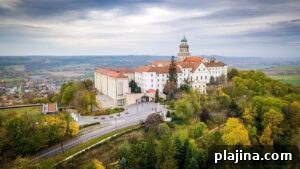
Pannonhalma Abbey © Visit Hungary
Pannonhalma Archabbey
Founded in 996, Pannonhalma Archabbey stands on the Sacred Hill of Pannonia and preserves over a millennium of Benedictine monastic tradition. The complex includes a 13th-century basilica, a 19th-century Classicist library that houses the oldest surviving Hungarian manuscript, and well-tended herbal and botanical gardens. The abbey remains a living religious community where monks follow the Rule of St. Benedict, and it continues to serve as a cultural and ecumenical center with exhibitions, concerts and guided tours that illuminate its role in the spread of Christianity throughout Central Europe.

Baradla Cave © Visit Hungary
Baradla Cave (Aggtelek Karst)
Located within the Aggtelek Karst, Baradla Cave is Hungary’s most famous dripstone cave, with more than 15 miles of passageways carved into Triassic limestone over 200 million years ago. Visitors can explore vast chambers filled with stalactites and stalagmites and discover ancient marine fossils embedded in the rock. The cave’s steady microclimate and clean air appeal to wellness-minded travelers and have led to guided meditation sessions held underground. Its exceptional acoustics also make Baradla a memorable venue for concerts staged deep within the cavern.

© Visit Hungary
Budapest and the Banks of the Danube
Budapest and the banks of the Danube form one of the world’s most striking urban ensembles, with a skyline that blends medieval, neoclassical and 19th-century architecture. The UNESCO-listed area includes the Buda Castle Quarter, the riverside promenades along the Danube and Andrássy Avenue. Visitors can see Gothic remnants from the 13th century in the castle district, walk across the historic Chain Bridge—the first permanent link between Buda and Pest—and admire the neo-Gothic Hungarian Parliament building, a signature landmark of the city. A stroll along the river at dawn or dusk best reveals the dramatic interplay of light across Budapest’s monuments.