
I don’t gamble as a rule, and I oppose animal cruelty. So why, every April, do I set those convictions aside and indulge in a little betting?
The reason is a single horse race — not just any fixture, but one seared into the British consciousness. It brings the country together in a way few events do; in cultural terms it sits alongside Liverpool’s greatest exports as a defining contribution to national life.
Many countries have a signature race that transcends the sport to become a national ritual: the Kentucky Derby in the United States, the Melbourne Cup in Australia, the Prix de l’Arc de Triomphe in France. For the hours around each of those meetings, casual punters pick a horse, and for two or three breathless minutes bars and living rooms alike are filled with the sound of hooves and commentators building to ecstatic crescendos.
England’s Grand National shares the pageantry and communal excitement of those events, but it differs fundamentally in nature. While those famous contests are flat, relatively short sprints, the National is a brutal steeplechase — a true test of stamina and courage.
Steeplechasing began in Ireland in the 17th century. The earliest contests were cross‑country matches between landmarks such as church steeples, which riders used to navigate while jumping hedges, ditches and streams on the way to the finish.
By the late 18th century formal steeplechase meetings were established on British and Irish courses, with purpose-built fences and water jumps. The season traditionally runs through winter, when softer ground helps reduce the impact of landings for horse and rider.
Even so, steeplechases are demanding. Runners complete multiple laps and clear numerous obstacles. The Grand National, run at Aintree near Liverpool since 1839, is the sternest of all.
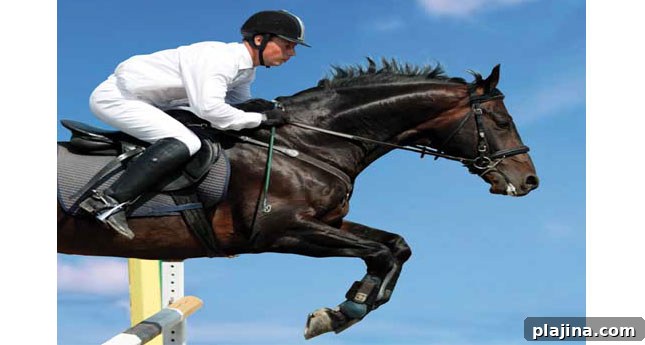
Covering around four miles and four furlongs, the field of 40 horses must negotiate 30 fences before the final, exhausting run to the line. Many fail to finish: riders are unseated, horses refuse, and, distressingly, fatalities occur.
One grim statistic often quoted is that the odds of a single horse dying in the National are about 73-1 — roughly one death for every 73 starters. That means when you back a horse here, the chance it will be injured or worse can be higher than the chance it will win.
In 2012 I backed Synchronized, the third favourite. He was unseated at the notorious Becher’s Brook and then suffered a catastrophic fall at the 11th fence. On the second circuit the riders were routed around that obstacle and a small tent had been set up nearby — a clear sign that the horse had been put down. Seeing his name on my betting slip made me feel complicit in the outcome.
Campaigners have good reason to demand the National’s abolition; given my own concern for animals, I should be among their number. Yet the memory of joy can be overpowering. In 2001, when Red Marauder won at 40-1, I experienced a rush of elation and a financial return that was hard to forget. That thrill is addictive. I worry that without the yearly excuse of the National I might be tempted toward other, perhaps more harmful, forms of gambling.
So each spring I pore over the racecards and pundits’ notes, weighing horses and jockeys before placing my modest annual bet. My hope is simple: that every horse makes it round safely, and that the one I pick crosses the line first.