
At the Wings Over the Rockies Air & Space Museum in Denver, more than 100,000 square feet are dedicated to the history of aviation and space exploration. Exhibits of historic aircraft and space-related artifacts are displayed at the former Lowry Air Force Base in Hangar 1 in eastern Denver, and at a second site, the 15-acre Exploration of Flight campus at Centennial Airport.
© Wings Over the Rockies
The museum offers a mix of artifacts, memorabilia and interactive experiences. Visitors can try realistic flight simulators or book real, 30-minute flights with a certified pilot in aircraft such as a Beechcraft T-34, Varga 2150A, or Tecnam P2010. On static display are notable aircraft like the Bell UH-1M Iroquois “Huey,” widely used during the Vietnam War as an ambulance, gunship and troop and cargo transport. For fans of popular culture, there is a ¾-scale replica of a Star Wars Incom T-65 X-Wing Fighter—the same model Luke Skywalker piloted in the attack on the Death Star—with an R2-D2 unit positioned behind the cockpit that reacts to visitors nearby.
© Wings Over the Rockies
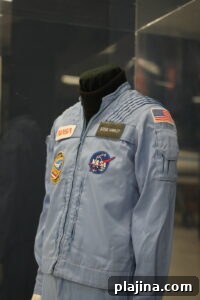
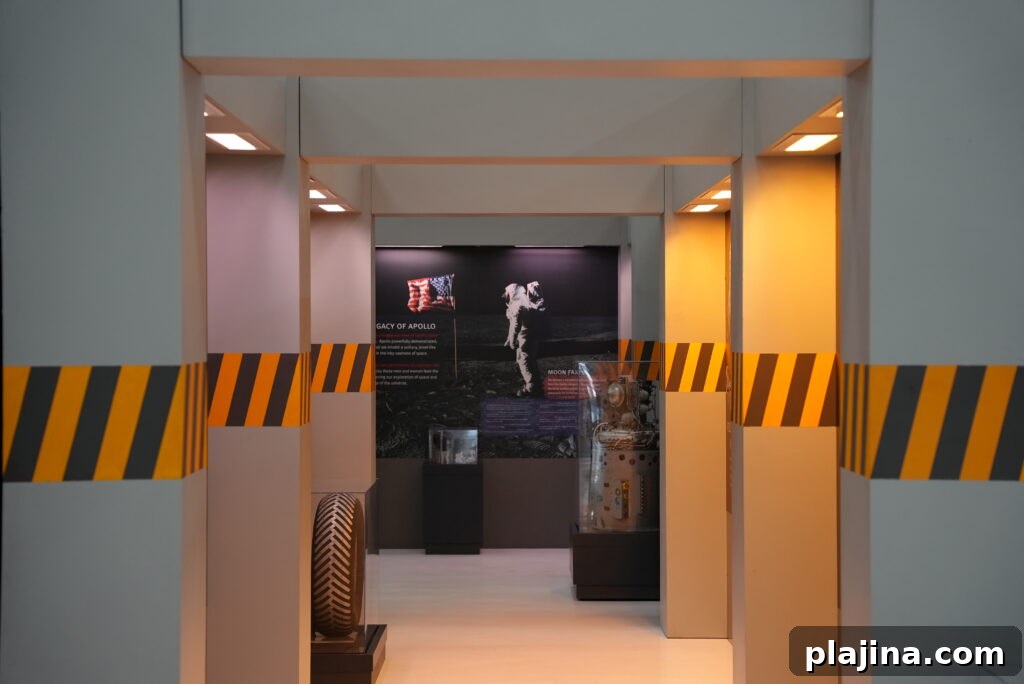
Recently added to the museum is the Space: A Journey to Our Future! exhibit, produced by Evergreen Exhibitions of San Antonio, Texas, in collaboration with NASA. According to Stewart W. Bailey, curator at Wings Over the Rockies, NASA supplied much of the scientific and technical content for the exhibit’s activities, audio and visual elements. Through April 13, visitors can explore space through interactive displays, immersive environments and genuine artifacts.
The exhibit traces humanity’s efforts to explore the Moon and the solar system and highlights the tools scientists use today—telescopes, space probes and the International Space Station. It also looks forward, presenting an immersive lunar habitat and displays focused on Mars exploration, helping visitors understand planned missions and long-term goals for human spaceflight.
Highlights include touchable samples derived from meteorites that originated on the Moon and Mars, alongside an authentic Moon rock returned by the Apollo 15 mission. The exhibit encourages hands-on learning, with stations where visitors can design spacecraft for interplanetary travel, plan a Mars base, and experience increased G-forces in a rideable centrifuge. These interactive elements are intended to engage guests of all ages and inspire interest in future space exploration.