
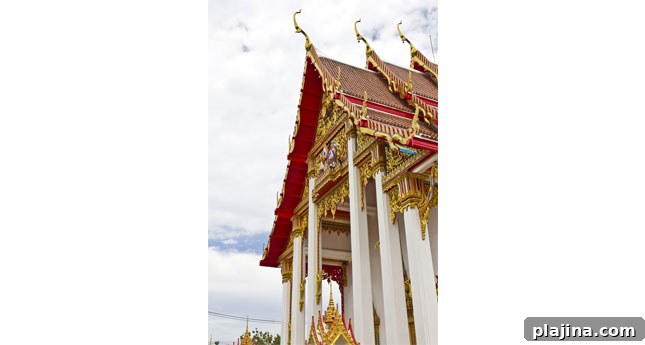
Wats — Buddhist temples — are among Thailand’s most important cultural landmarks. They reflect the country’s predominant faith, showcase elegant architectural styles, and preserve centuries of history and local tradition.
Phuket is home to 29 Buddhist temples, with Wat Chalong standing out as one of the island’s most visited and cherished sites. Open to visitors for more than a century, Wat Chalong combines spiritual significance with striking design. In the temple’s western hall stands the statue of Poh Than Jao Wat, regarded as a central religious icon. Nearby is the statue of an elderly man known locally as Ta Khee-lek (Grandpa Khee-lek), a respected figure in Phuket folklore who is remembered for his good fortune in lotteries after seeking guidance from the Poh Than Jao Wat statue.
The Grand Pagoda is the focal point of the temple complex. It is said to contain a sacred relic—a bone fragment of the Buddha—and serves as a place for quiet reverence. Inside the pagoda, visitors will find detailed wall paintings that illustrate scenes from the life of the Buddha alongside a variety of Buddha images. These artworks and statues offer insight into Buddhist teachings and Thai religious art.
Visiting the pagoda and moving through the halls takes time to appreciate fully; allocate at least an hour to explore the shrine, examine the paintings, and absorb the atmosphere. Wat Chalong welcomes guests daily from 7 a.m. to 5 p.m., giving ample opportunity for both contemplative visits and photography. As with most Thai temples, visitors should dress respectfully—covering shoulders and knees—and speak softly while on the grounds.
Whether you are interested in religious history, traditional architecture, or local stories and customs, Wat Chalong provides a meaningful glimpse into Phuket’s spiritual heritage and the broader Buddhist culture of Thailand.