
Few European capitals are as easy to explore on foot as Dublin. Compact and pedestrian-friendly, the city lets you visit major sights with minimal travel, and its popular bike‑share program makes it simple to cycle between attractions.
Once you’ve parked the bike, head into Temple Bar’s medieval, cobblestone streets. Stretching south from the River Liffey to Dame Street, Temple Bar is widely regarded as the city’s cultural heart, where arts, music and nightlife converge.
The neighborhood takes its name from Sir William Temple, a 17th‑century provost of Trinity College, whose riverside garden—or “bar”—gave the area its title. Over the centuries Temple Bar underwent dramatic changes: by the 18th century parts of it were notorious, and by the 20th century many of its buildings had fallen into decline. Because it escaped large‑scale redevelopment, however, the area retained its historic character and was revived in the 1980s as a cultural quarter. Today its narrow lanes host more than 50 organizations dedicated to showcasing Irish history, visual arts, fashion, performance and food.
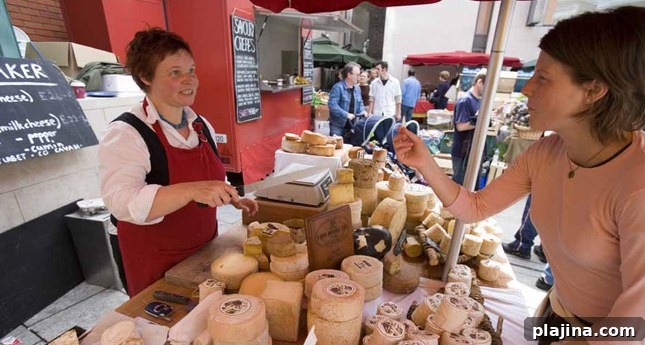
Meeting Place Square acts as Temple Bar’s open‑air stage, regularly hosting theater, circus, readings, concerts and film screenings. Every April the square fills with vocalists performing Handel’s Messiah, commemorating its 1742 premiere on Fishamble Street. On weekends, Cow’s Lane and other streets bustle with food stalls, book markets and designer pop‑ups.
Cultural venues abound. The Project Arts Centre, with two theaters and a gallery, stages a diverse program of exhibitions and performances—many of them free or affordably priced—and helped launch the careers of artists such as Liam Neeson and the members of U2. Temple Bar Gallery + Studios supports a community of resident artists who both create and exhibit their work. The Graphic Studio Gallery sells thousands of prints by Irish and international artists, and the National Library of Ireland’s National Photographic Archive presents free exhibitions drawn from tens of thousands of historical images, some dating back to the 1840s.
As evening falls, Temple Bar’s pubs come alive with live music and warm conversation—the Irish concept of craic. Sample classic Irish dishes like boxty (potato pancakes) at local eateries, or visit the long‑standing Temple Bar Pub for nightly music sessions. For a snug, traditional pub atmosphere, squeeze into the Palace Bar, one of Dublin’s oldest public houses and once a gathering place for writers and journalists.
Temple Bar’s mix of history, culture and nightlife makes it welcoming to visitors. If you want a more personalized introduction to the city, Dublin’s “City of a Thousand Welcomes” program can pair you with a local ambassador to help you explore like a resident.