HIKING ALONG A PATH THROUGH THE FOREST, the only sounds I heard were the wind through the leaves, a distant waterfall and occasional low conversation among the others in my group. Absent were traffic noise, car horns and the constant bustle of daily life. On this section of the Japan hiking itinerary — Kumano Kodo & Nakasendo with REI Adventures — only eight of us were on the trail, with no other people in sight. It was an eco-adventure at its finest.
Earlier this year, Impact Travel Alliance, the world’s largest community for impact-focused travelers, released trends shaping sustainable travel for 2020, including regenerative travel, conscious consumerism, off-season tourism and slow tourism. The alliance educates travelers about how to spend their money mindfully so experiences empower local communities and protect the environment.
Since its founding, REI Adventures has prioritized sustainable travel, designing trips around human-powered activity. The cooperative follows thoughtful practices such as partnering with local operators in destinations worldwide and auditing trip operations to minimize environmental impact while maximizing benefits for local communities.
“It is the responsibility of all travel providers, regardless of size, to have an active role in sustainable travel and lend their voice to care for the global treasures where our guests visit and recreate,” said Jeff Stivers, supervisor program management, REI Adventures. “For REI, we purposely design our trips first around human-powered activity in an off-the-beaten-path model. We focus on local guides and establishments that align with our principles and are mindful of our impact on natural places.”
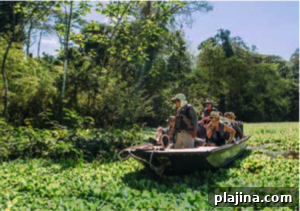
Amazon skiff side trip PHOTO: © AQUA EXPEDITIONS
When it launched in 2007, Aqua Expeditions, a boutique luxury river and yacht cruise line, committed to sustainability and conservation in the ecologically and culturally important regions where its vessels sail — the Peruvian Amazon, the Mekong River in Cambodia and Vietnam, and the seas of East Indonesia. Aqua’s eco-friendly operations include fuel-efficient practices, low-emission launch boats and the use of non-toxic, biodegradable cleaning products on board.
The company also supports wildlife preservation and conservation projects. In the Peruvian Amazon, Aqua has worked with local river communities to improve fish farming techniques and rehabilitate native paiche populations. That project contributed to a growth in the paiche population from just a few hundred in 2010 to several thousand by 2018.
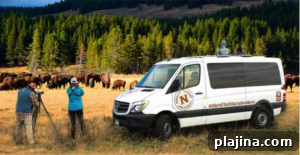
PHOTO: © NATURAL HABITAT ADVENTURES,
Natural Habitat Adventures led the industry with the world’s first Zero Waste Adventure in Yellowstone in July 2019 and began offsetting emissions from guests’ international flights in 2019. For its 35th-anniversary Climate Change & the Wild World series, the company announced it will offset a year’s worth of carbon output for anyone who joins one of the 2020 trips in that program.
“Ever since we became completely carbon-neutral in 2007, we’ve been ramping up our commitment to conservation every year, and this year is no exception,” said Ben Bressler, founder and president of Natural Habitat Adventures. “Travel needs to become more sustainable, and we feel it’s our responsibility to keep raising the bar on what that looks like — and we challenge other travel companies to do the same.”
To offset guests’ carbon emissions, Natural Habitat Adventures invests in carbon credits that fund community and conservation projects: building wind farms in India, distributing fuel-efficient cookstoves that generate electricity in Rwanda, and developing a rainforest biodiversity corridor in Zimbabwe.
“The tourism industry has a unique role to play in promoting conservation because we can help people understand — through the power of experience — why we must protect this one planet we call home,” said Court Whelan, director of sustainability and conservation travel at Natural Habitat. “When we act as leaders and lead by example, we set a precedent for the travel industry and for travelers themselves.”
Offsetting carbon is gaining traction among airlines, too. Earlier this year JetBlue announced it will go carbon-neutral on all domestic flights beginning in July 2020, making it the first major U.S. carrier to take that pledge. The airline also said it will begin using sustainable aviation fuel in mid-2020 out of San Francisco International, partnering with Neste, a major producer of renewable diesel and pioneering renewable jet fuel. Neste MY Renewable Jet Fuel is produced entirely from waste and residue raw materials and offers a substantially smaller lifecycle carbon footprint than fossil jet fuel.
“Air travel connects people and cultures and supports a global economy, yet we must act to limit this critical industry’s contributions to climate change,” said Robin Hayes, chief executive officer of JetBlue. “We reduce where we can and offset where we can’t. By offsetting all of our domestic flying, we’re preparing our business for the lower-carbon economy that aviation — and all sectors — must plan for.”
“It’s heartening to see so many sustainability and conservation ideas at the forefront of discussions,” said Kelley Louise, founder and executive director of Impact Travel Alliance.
This year REI introduced two new human-powered adventures. The seven-day Norway Fjords Cycling trip follows routes past majestic fjords, waterfalls, serene lakes, soaring mountains and villages with Viking-era history. Cyclists also board ferries with their bikes to reach additional scenic routes.
REI also debuted the Japan — Shimanami, Shikoku and Kyoto Cycling trip. Over 11 days, cyclists traverse island networks and mountain roads, including Shikoku, known for its 88-temple Buddhist pilgrimage.
Aqua Expeditions offers a seven-night Amazon Expedition Cruise that takes guests deep into the Pacaya-Samiria National Reserve. While staying in comfortable suites aboard the vessel, travelers explore jungle trails, hidden lakes and lagoons, search for pink river dolphins, visit local villages and try piranha fishing.
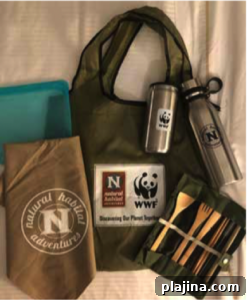
© ALI WUNDERMAN
The Amazon Rainforest is also featured in Natural Habitat Adventures’ Climate Change & the Wild World series, alongside Greenland’s Arctic, wildlife conservation in Southern Africa and polar bears in Churchill. Natural Habitat partnered with the World Wildlife Fund for these trips; experts on board educate guests about how the organization protects wildlife, habitats and communities from climate change.
For wildlife-focused eco-travel, one of Impact Travel Alliance’s highlighted trips visits Chumbe Island Coral Park off the coast of Zanzibar, the first protected marine area of its kind. The expedition, led by Earth Changers, supports the island’s conservation, research, education center and eco-lodge, which are funded by travelers.
Finally, consider a 4×4 tour of the Alladale Wilderness Reserve from Alladale Lodge in Scotland. The lodge works to restore the Highland ecosystem by reintroducing native plant and animal species, contributing to efforts to recover the threatened Scottish wildcat and strengthen the region’s biodiversity.