
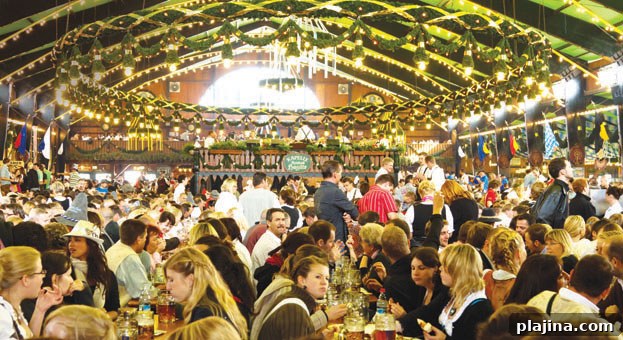
Munich, Germany, presents a compelling blend of tradition and modernity: refined Bavarian customs sit alongside cutting-edge industry and design. One moment you arrive at a highly modern airport; the next you may find yourself raising a stein in a 19th-century beer hall among locals in dirndls and lederhosen, joining in an enthusiastic “Ein Prosit.”
With roughly 1.4 million residents, Munich is Germany’s third-largest city and the capital of Bavaria in the southeast. In contrast to Berlin’s bohemian and experimental spirit, Munich often reflects a more established, conservative sensibility where stability and quality are prized.
Although Bavarians value tradition—often identifying as Bavarian first and German second—Munich’s character extends far beyond festivals. The city hosts a dense cluster of technology and engineering firms: around 22,000 companies operate in electronics, telecommunications, aviation, aerospace, and mechanical and automotive engineering. Major global firms such as Munich RE and Allianz have headquarters here, alongside Siemens and numerous banks. A thriving information and computer technology sector supports consulting firms, embedded systems companies and app developers that choose Munich as their base.
Munich’s universities and research institutes—14 in total, enrolling nearly 100,000 students—drive innovation and help keep the city competitive. Ludwig-Maximilians-Universität and Technische Universität München rank among Germany’s top universities. Collaborations between academia, industry and six technology incubators have contributed to breakthroughs in areas such as quantum communication, synthetic RuBisCo, next-generation antibiotics, and self-powered environmental sensors.
The BMW Museum © Anton Chuiko | Dreamstime.com
Automotive manufacturing is one of Munich’s long-established sectors. BMW—Bavarian Motor Works—maintains its headquarters, original plant, museum and research center in the city. Audi also has strong ties to the Munich region. Bavaria has been designated a model region for electric-vehicle development, and public and private initiatives have tested hybrid buses and electric cars. BMW, for example, introduced its i-series electric models as part of that shift toward electrification.
Media and publishing are also important: Munich is home to the Süddeutsche Zeitung, major public broadcaster ARD, book publishers, and Bavaria Film Studios in a nearby suburb. The city hosts influential events such as the invitation-only Digital–Life–Design conference, drawing leaders from business, technology and the creative sectors.
High quality of life is a hallmark of Munich. Organizations like Monocle and Mercer routinely rank the city highly for livability due to factors such as a diverse population—around 23 percent of residents are immigrants—low crime and unemployment rates, strong health care, good housing and abundant cultural and recreational options.
Politically Munich can differ from the rest of Bavaria. While the state tends to be conservative, the city has often been governed by a liberal coalition. Long-serving local leadership reflects the city’s unique political mix.
Economically, Munich benefits from Germany’s overall resilience. Despite a slowdown in GDP growth in some years and sensitivity to global demand for exports, local industry has diversified. German exporters have increasingly targeted emerging markets—trade with Brazil, Russia, India and China grew substantially between the late 1990s and the 2010s—while ties to the United States also strengthen. These shifts have helped stabilize Munich’s export-driven economy.
Things to Do in Munich
The Alte Pinakothek Museum © Dragan Jovanovic | Dreamstime.com
Munich is widely known for Oktoberfest, but the city offers attractions year-round. The three Pinakothek museums—Alte, Neue and Pinakothek der Moderne—showcase masterpieces ranging from medieval and classical art to modern and contemporary works, all within walking distance of one another. The Alte Pinakothek houses works by Rubens and Da Vinci; the Neue Pinakothek highlights 19th-century masters such as Monet and Renoir; the Pinakothek der Moderne presents modern art by Picasso, Kandinsky and Warhol.
Opera has a prominent place in Munich’s cultural life. The National Theater, home to the Bayerische Staatsoper, stages world-class productions and has embraced modern distribution methods by streaming some performances online.
For lively evening entertainment, the GOP Variety Theatre pairs dinner with acrobatics, music and comedy in shows that often work without language barriers. The performance style can be interactive, and audience participation is common.
Car enthusiasts should visit the BMW Museum and BMW Welt near the Olympic Park. The museum traces BMW’s history through more than 120 exhibits of cars, motorcycles and engines, while BMW Welt hosts events, demonstrations and architectural interest.
The Deutsches Museum features one of the largest technology and science collections in the world, including early aircraft and historic submarines. Its Verkehrszentrum annex focuses on transportation milestones such as Karl Benz’s first car.
Football fans will want to see the Allianz Arena, home to FC Bayern Munich and TSV 1860 München. The stadium’s illuminated facade changes colors depending on the home team, and matches are frequently sold out.
Swans at Nymphenburg Palace © Anyaivanova | Dreamstime.com
Nymphenburg Palace and Park, a Baroque complex built by generations of Bavarian rulers, displays period art and furniture and offers expansive grounds for strolling. Notable interior highlights include the Gallery of Beauties, a collection assembled by Ludwig I.
Checking in with Dieter Reiter
Chief Executive and Governing Member of the Munich City Council
WHAT IS THE CURRENT ECONOMIC CLIMATE IN MUNICH AND GERMANY?
Unemployment in Germany has fallen to levels not seen since reunification, and Munich’s jobless rate—around 4 percent—makes it one of the strongest local labor markets in the EU. The city’s economy proved resilient during the financial crisis and has moved onto a balanced growth path.
WHAT INDUSTRIES SHOW PROMISE AND WHAT IS CONTRIBUTING TO THEIR RISE?
Munich’s diverse economy emphasizes technology-oriented sectors. Engineering, automotive, optics, medical technology and the information and communication industries all rely on high-quality, innovative products. The service sector also performs well, supported by companies with strong competitive positions.
WHAT CHALLENGES DO BUSINESSES FACE IN MUNICH?
Rapid population and economic growth have tightened the local labor market and increased demand for skilled workers. The success of Munich has driven up housing prices, which may reduce the city’s affordability and attractiveness. The city has launched programs to ease housing pressure, but managing housing supply will remain a major challenge.
HOW DID MUNICH DEVELOP AS AN ECONOMIC POWERHOUSE?
Post-war economic development favored new technology sectors over large traditional industries, creating space for innovative firms. Investments in education, vocational training and metropolitan infrastructure—regional rail, subway, a new airport and trade fair facilities—helped establish Munich as a high-tech and research-focused hub. Two leading universities and an extensive vocational system support a skilled workforce.
BEER IS A SERIOUS BUSINESS LOCALLY. WHAT DO YOU RECOMMEND?
Oktoberfest beer is specially brewed by Munich’s six major breweries for the festival and is quite strong. About six million liters are served during the event each year. Enjoy it responsibly, and don’t drive afterward.
Munich: Just The Facts
Time Zone: GMT +1 (+2 in summer)
Phone Code: Country: 49 City: 89
Currency: Euro
Entry/exit requirements: U.S. citizens need a valid passport and may stay up to 90 days without a visa.
Official language: German
Key industries: Insurance, automotive manufacturing, pharmaceuticals, technology
Where to Stay in Munich
Cortiina Hotel Minimalist design and a prime location in Munich’s historic center make this boutique option appealing despite compact rooms. Free WiFi is a plus. Ledererstrasse 8 $$
Hotel Bayerischer Hof A landmark hotel favored by visiting dignitaries and celebrities, with notable bars and event spaces. Promenadeplatz 2-6 $$$
Sofitel Munich Bayerpost Set in a former royal post office building, this hotel blends historic architecture with modern French-influenced interiors near the main train station. Bayerstrasse 12 $$
Restaurants in Munich
Biergarten Chinesischer Turm Located in the English Garden, it’s a classic spot to enjoy pretzels, dumplings, sausages and local beer in a relaxed outdoor setting. Englischer Garten 3 $$
Restaurant Dallmayr An upscale restaurant within a historic deli and market complex, known for its extensive wine selection and elegant dining. Dienerstrasse 14-15 $$$
Tantris A Michelin-starred restaurant offering imaginative cuisine and tasting menus for a high-end dining experience. Johann-Fichte-Strasse 7 $$$
Munich Info to Go
Munich Airport (MUC), Germany’s second-busiest airport, offers many services: rest pods, nearly 200 shops, bars and restaurants. Airbräu in Terminal 2 serves traditional Bavarian food and beer from early in the morning. The S-Bahn connects the airport to the Hauptbahnhof (main station) in about 40 minutes, while taxis take a similar time but cost substantially more.