
INDONESIA IS HOME TO TWO of the most visited travel destinations in the world — Bali and Jakarta. With tourism steadily increasing, Soekarno-Hatta International Airport faces growing pressure. As Indonesia’s largest and busiest airport and the busiest in the Southern Hemisphere, Soekarno-Hatta plays a vital role in connecting the region.
Known also as Cengkareng Airport, Soekarno-Hatta serves the greater Jakarta area on the island of Java. It is located in Benda, Tangerang, about 12 miles northwest of central Jakarta, making it the primary gateway for both domestic and international travelers to the capital.
Airline data provider OAG ranked the airport among the world’s most connected, placing it seventh globally. Despite that recognition and its regional importance, Soekarno-Hatta has struggled with capacity constraints in recent years. The airport currently operates above its intended limits, handling approximately 72 aircraft movements per hour on two runways. Both runways face pavement and strength limitations that restrict the airport’s ability to handle larger wide-body aircraft and reduce operational flexibility.
Plans are under way to relieve congestion and expand capacity. A third runway is being developed to increase throughput with a goal of reaching 100 flights per hour. In addition, authorities are discussing upgrades to the existing runways so they can support wide-body aircraft. Once runway improvements and the third runway are completed, annual movements are projected to rise significantly, supporting growth through at least 2030.
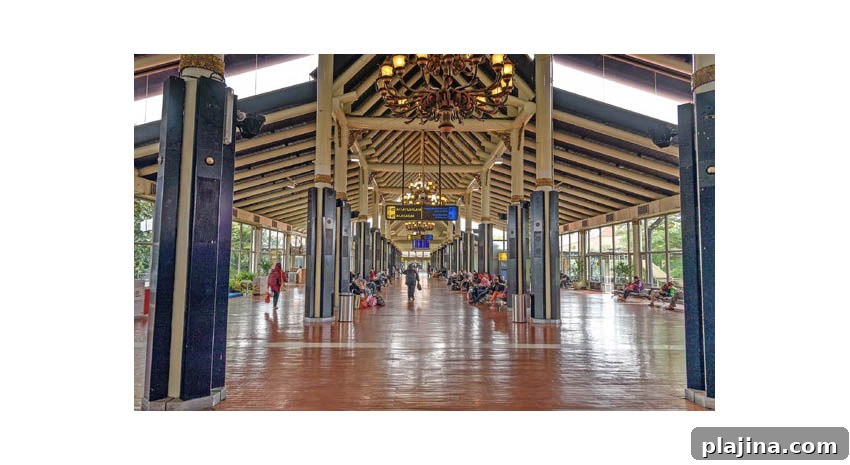
Improvements are not limited to airside infrastructure. Soekarno-Hatta is known for its “garden within the airport” concept, and the terminals feature tropical plants and floral displays in corridors, waiting areas and boarding zones. The airport’s architecture, designed by French architect Paul Andreu, incorporates Indonesian design elements, especially in the roof structures that draw from traditional Javanese pendopo and joglo styles, blending modern functionality with local cultural references.
Terminal 3 opened in 2016 with an eco-conscious contemporary design and improved passenger amenities. It currently hosts all Garuda Indonesia flights, both domestic and international, and also serves Saudia flights until international operations are consolidated there. When Terminal 3 becomes the main international hub, it will streamline passenger flows and improve connectivity.
Operator Angkasa Pura II has announced plans to add Terminal 4 and to revitalize Terminals 1 and 2. While Terminal 4 remains in the planning stage and will require time to finalize, the revitalization of Terminals 1 and 2 focuses primarily on expanding capacity rather than changing their exterior appearance. These upgrades will increase throughput while preserving the airport’s existing architectural character.
Today, Terminals 1 and 2 together handle roughly 9 million passengers annually. After the revitalization, their combined capacity is expected to double. Along with Terminal 3’s capacity, the airport is being prepared to serve around 61 million passengers per year, positioning it to meet projected demand from tourism and business travel.
To enhance services for international visitors, Angkasa Pura II and Indonesia’s Tourism and Transportation Ministry launched a Tourist Information Center in Terminal 3. The center offers assistance on regional destinations and attractions, transportation options and reservations, providing travelers with practical information and support upon arrival.
Although some challenges remain and certain project details still need resolution, the planned runway expansions, terminal revitalizations and passenger facilities signal a major upgrade for Soekarno-Hatta. These improvements will strengthen its role as a key Southeast Asian aviation hub and better accommodate the growing flow of travelers to and through Indonesia.