
Which comes first: the road or the vehicle? Will your journey be driven by scenery or by the pure thrill of being behind the wheel?
The world offers countless extraordinary routes, from dramatic coastal stretches to high mountain passes and charming rural lanes. For many of these drives, a practical rental car is perfectly adequate—the delight comes from the ever-changing views as you travel.
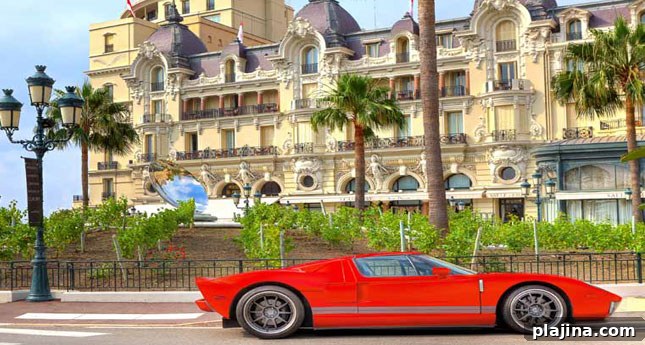
But in some places, the choice of car can make or break the experience. On France’s Côte d’Azur, for example, do you blend in with a modest Toyota or make a statement in a gleaming Ferrari?
Upscale rental firms such as Europe Luxury Car Hire maintain offices across Europe, including Monaco, the spiritual home of supercars. For roughly $800–$1,700 per day you can rent models like Ferraris or Lamborghinis. The roads around Monaco provide sensational driving, and the spectacle of being seen matters here. Monaco hosts some of the most glamorous traffic jams in the world—so drop the top, rev the engine and enjoy the attention as you cruise through Monte Carlo.
At the other extreme, certain environments demand specially prepared vehicles. Iceland’s volcanic interior is among the most unforgiving terrains on Earth. You need an SUV, but not just any SUV: it should be reinforced and equipped to handle snow, ice, rocks and powerful river fords.
The Nissan Patrol Arctic, for example, features strengthened suspension, increased ground clearance, a tougher drivetrain and a roof-mounted snorkel. Geysir Car Rental offers such specialized vehicles for around $275 per day or $1,780 per week, and unlike many rental firms that restrict you to paved roads, Geysir expects drivers to tackle remote and rugged tracks.
All too often travelers collect a rental and drive off immediately. In unfamiliar countries and unfamiliar cars it pays to spend time preparing: learn local driving conditions, practice with the vehicle, and plan routes that avoid immediate exposure to heavy traffic. If you’re driving a manual in left-hand traffic, map a course that keeps you out of downtown rush hour until you’re comfortable.
Driving on the “wrong” side is the most obvious adaptation. Countries that drive on the left include the United Kingdom, Ireland, much of South and East Africa, many Caribbean islands, India, Southeast Asia, Australia, New Zealand and Japan.
Other local rules are less obvious, but ignorance is not an excuse. In France it is mandatory to carry two roadside warning triangles, a breathalyzer kit, spare headlight bulbs, a fire extinguisher and a high-visibility jacket. In Spain drivers who wear prescription glasses must carry a spare pair. Thailand makes it an offense to drive without a shirt. Sweden requires headlights on at all times, even in daylight. And in Saudi Arabia women are not allowed to drive.
The U.S. Department of State provides guidance for Americans driving abroad. Beyond legal compliance, the Department highlights a sobering reality: hundreds of U.S. citizens are killed or injured on foreign roads each year. Road conditions can be hazardous and local driving standards may differ significantly from those you’re used to.
Some destinations reward self-driving despite the risks. South Africa, for instance, presents both great attractions and dangers. Carjacking rates are high generally, but rental cars are rarely the primary target. The nation’s elevated accident rate—partly driven by alcohol—means caution is essential. Avoid driving at night when possible and limit weekend travel.
Self-drive specialists such as Cedarberg African Travel offer a variety of itineraries in South Africa. The 140-mile Garden Route, stretching from Mossel Bay to Plettenberg Bay, is a top draw, with lagoons, white-sand beaches, ancient forests and wildflower-strewn countryside. The area’s popularity ensures plentiful services, accommodations and dining along the way.
A giraffe stands on a road in Kruger Park, South Africa. © UROS RAVBAR | Dreamstime.com
For a more quintessentially African experience, drive east from Johannesburg across the Highveld to Kruger National Park, an expanse of wilderness roughly the size of New Jersey. There the risk shifts from drivers to wildlife: elephants have been known to overturn vehicles, so always keep a safe distance and be prepared to move away quickly if necessary.
Wild animals are also a hazard for drivers in Australia. Kangaroos may bound into the road unexpectedly and can even break through windshields. Setting that aside, many of Australia’s main routes offer excellent road conditions and relatively light traffic outside major cities.
The Twelve Apostles on the Great Ocean Road, Victoria, Australia © BO LI | Dreamstime.com
One iconic drive in Australia is the Great Ocean Road, a 150-mile coastal route in Victoria. Its best-known feature, the limestone stacks called the Twelve Apostles, continue to be reshaped by the Southern Ocean; after the most recent collapse in 2005 only eight of the formations remain standing.
A view along the Great Ocean Road © JF123 | Dreamstime.com
For a far tougher undertaking, consider the 2,000-mile Savannah Way across northern Australia, from Cairns to Broome. This Outback route requires careful preparation and a robust SUV, as you’ll travel long stretches with few other vehicles. If you prefer guidance, escorted trips run the eastern section from Cairns to Normanton with local operators.
South America presents a broad range of self-drive possibilities, from arduous expeditions across Chile and Argentina—terrain that forms the backdrop to the Dakar Rally—to leisurely drives through Chile’s Lake District. Chile Discover and similar operators provide self-drive itineraries for many tastes.
Brazil is generally less suited to self-drive touring in its megacities; places like Rio de Janeiro and São Paulo demand confident, experienced drivers because of heavy traffic and an aggressive driving style. One notable exception is the wine region around Porto Alegre in Rio Grande do Sul, where rural roads and wineries make for a pleasant three-day self-drive escape.
In Europe, the main challenge is often negotiating narrow medieval streets and dense urban traffic. Fortunately, GPS navigation is now standard with most rental cars, helping to demystify complex one-way systems and narrow city lanes.
Autotours Europe and like-minded companies offer self-drive routes across the continent, from single-country loops—such as an eight-day exploration of Portugal—to multi-country journeys spanning Amsterdam, Berlin, Prague and Vienna. If you prefer gentler driving, the Low Countries provide flat, open roads; for alpine hairpins and snow-covered passes, choose Austria or Switzerland.
A view of the Quiraing Mountains, Scottish Highlands © Martin Molcan
Arguably the premier driving destination in Europe is the Scottish Highlands. Quiet roads wind through bracken-covered hills and past glassy lochs. You can stay in castles, try world-class fly-fishing in clear mountain streams, and elevate the experience further with the right car.
Scotland-based tour companies can arrange vehicles to suit the mood: a compact Mini Cooper for nimble country roads, a Ferrari 360 Spider for a string of luxury hotels, or an Aston Martin DB9 for a James Bond–style tour complete with an overnight on a private island.
Motor vehicles are more than a means of getting from A to B. In the right place and the right car, climbing into the driver’s seat, turning the key and heading onto the open road can be one of travel’s greatest thrills.