
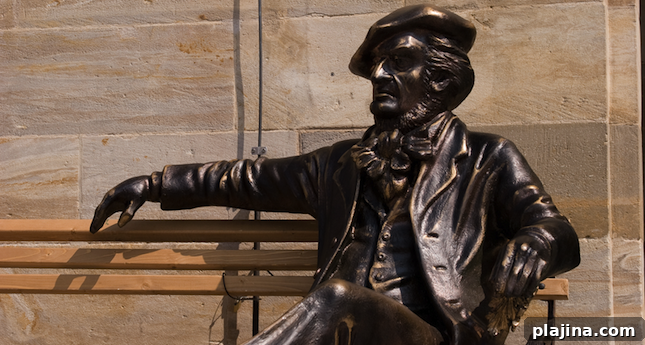
Composer Richard Wagner remains a figure of intense debate because of his controversial social and political views, yet his impact on the world of opera is indisputable. He is celebrated as a musical innovator whose works — including Tristan and Isolde, The Flying Dutchman and The Ring of the Nibelungen — transformed the operatic tradition and continue to influence composers and performers today.
In honor of the 200th anniversary of Wagner’s birth, the German state of Saxony is presenting a wide-ranging program of events. Festivals, concerts and exhibitions across the region highlight his life, creative process and legacy. In Dresden, the exhibition “Richard Wagner in Dresden — Myth and Legend” is on view at the city history museum through Aug. 25, offering historical context and artifacts that illuminate his connection to the city. Dresden’s Semper Opera is also marking the anniversary: guided tours are available by request through the end of the year, allowing visitors to explore the house that hosted many important moments in Wagner’s career.
Leipzig, a city long associated with musical figures such as Bach, Telemann and Schumann, also preserves Wagner’s early ties to the German musical world. Local lore holds that a youthful Wagner’s affection for an opera singer in Leipzig helped shape his destiny. Visitors can see the permanent exhibition “Richard Wagner as a Young Man” at the Old St. Nicholas School in central Leipzig, which traces his formative years and early influences.
Beyond Leipzig and Dresden, the Wagner Experience brings together sites linked to the composer’s life and work. The house in the village of Pirna-Graupa, where Wagner composed the score for Lohengrin, serves as a starting point for this itinerary. The Experience connects residences, rehearsal spaces and other locations where Wagner lived and created, and it is complemented by a calendar of concerts and festival events that bring his music to life in authentic settings.
These commemorations offer multiple perspectives on Wagner: they explore the artistic achievements that secure his place in music history while also acknowledging the controversies that surround his personal views. Museums and performances emphasize primary sources, historical context and musical analysis, encouraging visitors to understand the full complexity of Wagner’s legacy.
For music lovers and cultural tourists, the anniversary programming across Saxony provides opportunities to hear Wagner’s works performed in historically resonant venues, to study original manuscripts and artifacts, and to participate in guided tours and lectures that explain his innovations in harmony, leitmotif technique and dramatic structure. Whether encountered through an exhibition, an opera staging or a regional festival, Wagner’s compositions continue to provoke strong responses and invite close listening.
As the bicentennial events unfold, they create a robust cultural conversation about how to celebrate an artist whose technical and creative achievements remain influential while also confronting the problematic aspects of his thought. The region’s museum exhibits, opera house tours and curated concert series are designed to present a balanced, informative experience for contemporary audiences.
Visitors planning to attend exhibitions or performances should check local schedules for dates and booking details. Many venues are offering special programs through the anniversary year, and guided tours or curated concerts may require advance reservation.