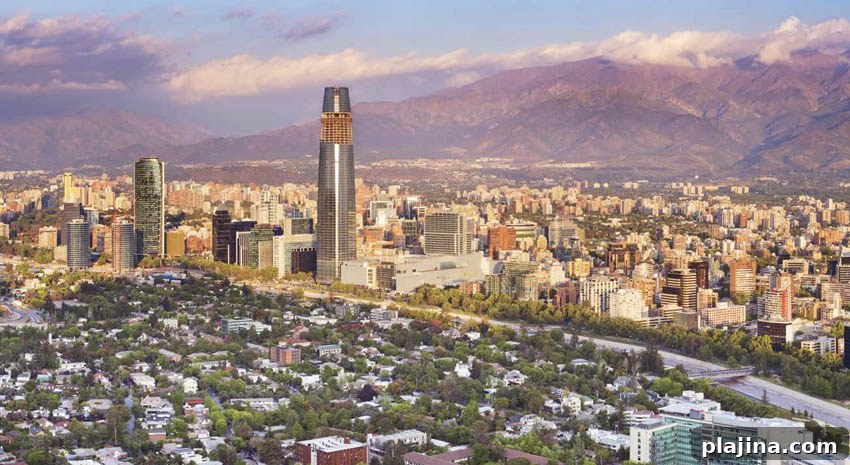
SANTIAGO, CHILE: This region feels remote — the nearest capital, Buenos Aires, is more than 900 miles away. Santiago itself sits about 70 miles from the Pacific, beyond which the continent gives way to the long Pacific crossing toward New Zealand.
Still, Santiago can feel familiar to travelers from Western Europe. The city is walkable, easy to navigate, and dotted with impressive architecture, lively markets and pedestrian-only streets. That blend of accessibility and character makes it comfortable for both leisure and business visits.
In recent years Santiago has invested heavily in transportation and hotel infrastructure to attract more business travelers. The Santiago Convention Bureau reports thousands of hotel rooms across 3- to 5-star properties and substantial meeting space growth. By 2018 the bureau projected nearly 13,800 rooms citywide alongside hundreds of thousands of square feet dedicated to meetings and exhibitions.
Comodoro Arturo Merino Benítez International Airport — commonly called Santiago International Airport — is the primary gateway for long-haul flights, served by about 20 national and international carriers and handling roughly 16 million passengers annually. This year British Airways launched its first nonstop service from London Heathrow to Santiago, a nearly 15-hour nonstop that is the carrier’s longest route. The airport is conveniently close to downtown — roughly an 18-minute taxi or rideshare ride to the city center at a modest cost by international standards.
Santiago’s appeal to business travelers is reflected in visitor patterns. North American delegates, especially from the United States, have long been among the most frequent convention attendees, typically staying about a week and contributing significant per-person spending to the local economy.
The city also serves as a regional hub for meetings and incentives. For example, FIEXPO — the Latin American & Caribbean Meetings and Incentives Exhibition — has been hosted in Santiago, drawing participation from more than a dozen countries across the region. The event has used venues such as CasaPiedra, located on the northeastern edge of the city, which offers flexible space that can accommodate everything from intimate gatherings to large-scale trade shows.
The Santiago Business & Conference Center, recently opened in Parque Titanium, adds nearly 40,000 square feet of modern meeting space with easy access from two metro stations, El Golf and Tobalaba, enhancing the city’s connectivity for local and international delegates.
Growth in convention business has spurred investment in hotels. In recent years the city saw significant development, including numerous new properties and the arrival of well-known international chains. Santiago even became the first city in South America to welcome a Mandarin Oriental hotel, underlining its rising hospitality profile.
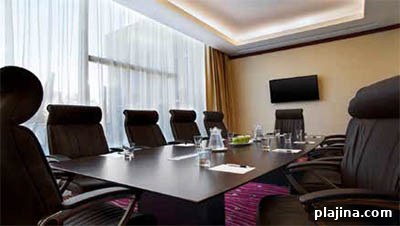
Sheraton Santiago Hotel and Convention Center’s Boardroom © SHERATON SANTIAGO HOTEL AND CONVENTION CENTER
The Sheraton Santiago Hotel and Convention Center, one of the city’s largest meeting-focused hotels, offers hundreds of rooms and multiple meeting spaces, including a main hall that can accommodate large conferences and events. Such properties reinforce Santiago’s capacity to host conventions of various scales.
International rankings and trade publications have recognized Santiago’s progress. Studies highlighting urban infrastructure and business-travel friendliness have placed the city near the top among Latin American destinations, reflecting its transportation improvements, growing meeting capacity and expanding hotel inventory.
In short, Santiago is well-equipped to handle MICE (meetings, incentives, conferences and exhibitions) needs, offering a mix of modern venues, improving transit options and a broad selection of hotels.
UNIQUE VENUES
Casa Almarza is a restored mid-19th-century mansion located south of Parque de los Reyes along the Mapocho River in the Balmaceda neighborhood. After decades of neglect, the property was rescued and carefully restored to preserve its original architectural style while updating essential elements for contemporary use. Today it provides an elegant and historic setting for private events and gatherings.
Club Militar hosts a wide range of functions, from weddings and baptisms to seminars and business conferences. The club offers rooms for groups from small to mid-sized, as well as garden and poolside spaces. Onsite dining blends Chilean favorites with international dishes, providing flexible options for meals and receptions.
Círculo Español de Santiago traces its origins back more than a century to a group of Spaniards who first organized to assist flood victims in Murcia. The institution has retained a recognizable Spanish cultural influence and continues to serve as a venue for civic, cultural and private events, welcoming dignitaries and local residents alike.