
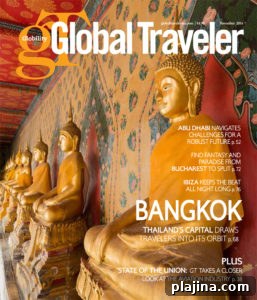
BUDDHA STATUE AT ARUN TEMPLE, BANGKOK, THAILAND © KHWANEIGQ | DREAMSTIME.COM
Bangkok’s rich tapestry of culture and religion is perhaps best symbolized by the serene Buddha statues that grace its many temples. One striking example stands at Wat Arun, the Temple of Dawn, where an elegant Buddha figure draws both worshippers and visitors alike. Nestled along the Chao Phraya River, Wat Arun is known for its riverside location, intricate porcelain mosaics, and distinct prang towers that reach toward the sky. The temple’s sculptures, including the Buddha statue captured here, reflect centuries of Thai craftsmanship and devotional practice.
Visitors to Wat Arun often comment on the contrast between the bustling city surrounding the temple and the calm atmosphere found within its grounds. The temple complex offers multiple vantage points for observing the Buddha statue—each angle revealing different details in posture, facial expression, or ornamentation. Photographers are drawn to the way sunlight plays on the gilded surfaces and mosaics, creating a luminous effect that enhances the sense of reverence.
Beyond its aesthetic appeal, the Buddha statue at Wat Arun serves as a focal point for prayer and ritual. Local residents and pilgrims come to leave offerings, light incense, and make merit, engaging in practices that have sustained Thai Buddhist life for generations. Monks in saffron robes participate in daily chants and ceremonies, and visitors are encouraged to observe respectfully, dressing modestly and following temple rules.
Wat Arun’s history adds depth to any encounter with its images. The temple’s origins date back to the Ayutthaya period, and it was later expanded and embellished during the Rattanakosin era. Each restoration and addition introduced new artistic influences, resulting in an eclectic yet harmonious visual language. The Buddha statue is a product of this layered history: while firmly rooted in Thai tradition, it also reflects the broader exchange of styles and materials that has characterized Southeast Asian Buddhist art.
For travelers, experiencing the Buddha statue at Wat Arun often becomes a highlight of a Bangkok itinerary. Many combine a visit to the temple with a river cruise or a trip to nearby Wat Pho and the Grand Palace, creating a fuller picture of Thailand’s spiritual and historical landscape. Guides frequently point out symbolic elements in the statue’s posture and hand gestures, explaining their meanings within Buddhist teachings—topics such as meditation, protection, and the transmission of the Dharma.
Preservation efforts at Wat Arun aim to protect both the physical fabric of the temple and the intangible heritage it embodies. Conservation work addresses weathering, pollution, and the effects of high visitor numbers. At the same time, caretakers maintain the living traditions associated with the Buddha statue: ongoing rituals, community festivals, and educational programs that pass knowledge to new generations.
Whether seen at dawn, when the temple’s silhouette is crisply outlined against the morning sky, or at dusk, when lamps and candles add a warm glow, the Buddha statue at Wat Arun remains a powerful emblem of Bangkok’s spiritual heart. It invites quiet reflection amid a city of contrasts and offers insight into Thailand’s enduring devotion to Buddhist practice and artistic expression.