
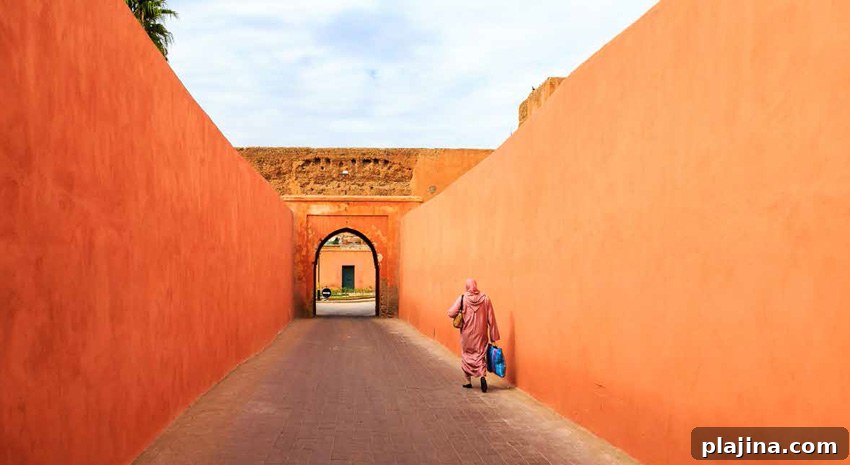
The North African nation of Morocco remains deeply rooted in tradition even as it embraces conferences, entrepreneurship and modern development. From the bustling souks of Marrakech to the camel-lined stretches of the North Sahara, Morocco is often sought by travelers looking to step away from the frenetic pace of contemporary life. Many visitors come to rediscover slower rhythms and to enjoy a culture that values craftsmanship, hospitality and history over fleeting trends.
Marrakech, Morocco’s third-largest city, is among its most visited destinations thanks to a careful blending of tradition and modern amenities. The city offers visitors the rare experience of a thriving urban center set against a backdrop of centuries-old culture. While its winding streets and historic sites draw tourists, Marrakech is also engaging global conversations about sustainability, technology and transportation, attracting leaders and experts from around the world.
In fall 2016 Marrakech hosted COP22, the United Nations Climate Change Conference, where delegates advanced the goals of the Paris Agreement and emphasized actionable steps toward cleaner energy. The conference culminated in the Marrakech Action Proclamation, a call by 200 countries to accelerate the adoption of alternative energy sources and to implement stronger climate measures sooner than previously planned.
Morocco’s commitment to environmental progress is visible in international rankings and local initiatives. It is the only African country—and the sole non-European nation—featured among the top 10 in Germanwatch’s Climate Change Performance Index. Locally, steps toward cleaner transport and urban mobility include plans for electric vehicles and the introduction of Africa’s first large-scale bike-sharing program, launched in conjunction with the climate conference.
Sustainable development is also a focus in construction and infrastructure. In October Marrakech hosted GeoAfrica 2017, a conference on geosynthetics and sustainable engineering in Africa, where experts explored energy-efficient construction methods and materials to improve waste management, agriculture and environmental protection across the continent.
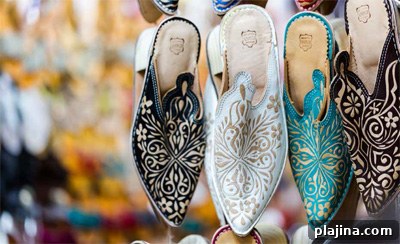
Handmade shoes for sale in the Médina © PETER WOLLINGA | DREAMSTIME.COM
Preservation and urban renewal are priorities for Marrakech’s leaders. In December, King Mohammed VI launched a rehabilitation program aimed at restoring the city’s main attraction: the ancient Médina. This centuries-old, UNESCO-listed marketplace is a living centre of commerce where artisans sell handcrafted goods and visitors come to experience authentic Moroccan culture. The project focuses on repairing deteriorated structures while protecting the Médina’s historic character so it can continue to support both tourism and local livelihoods.
The restoration will benefit the many artisans who depend on the Médina for income—carpenters, coppersmiths, weavers and other craftspeople whose stalls and workshops are integral to the city’s economy and identity. These efforts support the king’s vision of Marrakech as a “City of Permanent Renaissance,” improving living and working conditions for residents while preserving the city’s genuine spirit for visitors.
Modern transportation plans are progressing as well. Morocco has entered negotiations with China Railway to build a high-speed rail line linking Marrakech with the coastal city of Agadir, a route of roughly 162 miles. The national rail operator, ONCF, has signed agreements with China Railway for engineering and design work, with the potential to extend high-speed connections to other regions in the coming years.
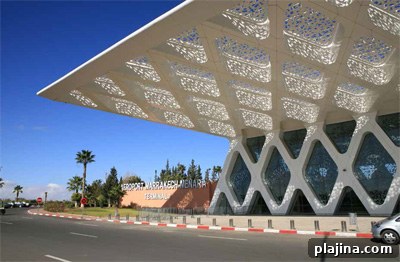
Blue sky over the airport in Marrakech © IRABEL8 | DREAMSTIME.COM
Menara Airport in Marrakech received a major upgrade with a new 600,000-square-foot terminal that expands capacity and increases the number of aircraft slots, raising annual passenger capacity significantly. Improved air links include Air France’s expanded service from Paris, which helps connect the French capital to Morocco with multiple weekly flights.
Marrakech’s artistic atmosphere continues to draw creatives and collectors. The city has long inspired photographers, designers and artists—among them Yves Saint Laurent, who spent much time in Marrakech and whose influence is visible throughout the city. The Musée Yves Saint Laurent Marrakech, located beside the Jardin Majorelle, opened to showcase thousands of couture pieces, accessories and sketches, celebrating the designer’s legacy and attracting fashion and art enthusiasts from around the world.
International designers have also made their mark locally. English designer Jasper Conran converted a 19th-century riad into L’Hôtel Marrakech, a small luxury hotel built around a central courtyard, private pool and traditional décor, blending contemporary comfort with historic charm.
CHECKING IN WITH HANANE EL MRABET-EL HADI
Director of Communications, Jardin Majorelle, Musée Yves Saint Laurent Marrakech
Where are you from, and how long have you worked at Jardin Majorelle?
I was born and raised in Châteauroux, France, and I hold both French and Moroccan citizenship. I have worked at Jardin Majorelle since September 2016.
How has tourism to the city changed in the past 10 years? What has been the catalyst for change?
Despite regional instability and global challenges, Morocco has remained one of the most stable countries in the region, which has helped protect tourism. Local authorities’ efforts to maintain social and political stability have been a key factor in preserving visitor confidence and supporting the tourism sector.
What effect will the new Musée Yves Saint Laurent have on Marrakech’s tourism sector?
Located next to Jardin Majorelle, which receives more than 700,000 visitors annually, the Musée Yves Saint Laurent will become an important cultural hub. It will attract art lovers, fashion enthusiasts and international visitors, fostering multicultural exchange and enriching Marrakech’s cultural offerings.
What can you tell us about the museum that may interest our readers?
Designed by Studio KO, the museum spans approximately 43,000 square feet and includes a permanent exhibition area devoted to Yves Saint Laurent’s work, a temporary exhibition hall, an auditorium, a café and a library of some 5,000 books. The museum’s displays and programming aim to explore both the designer’s legacy and broader historical and cultural contexts.
Things to Do in Marrakech
Known as the Red City for the hue of its buildings made from local tabia clay, Marrakech’s heart is the Médina—a maze of alleyways and markets where artisans sell everything from rugs and ceramics to silverwork and textiles. The UNESCO-listed Médina offers a shopping experience like no other and provides opportunities to take home authentic handmade goods.
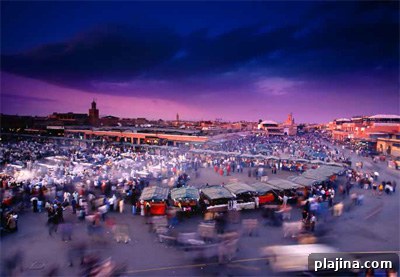
Sunset at Jemaa el-Fna Square © ZLIKOVEC | DREAMSTIME.COM
The lively Jemaa el-Fna square offers free, memorable entertainment: snake charmers and storytellers by day, with music, dancers and magicians animating the space at dusk. It is a place to soak up local life and witness centuries-old performance traditions.
An authentic hammam experience is a must for many visitors. This traditional public bath ritual typically involves a steam session, an exfoliating scrub, oil massage and aromatherapy. Hammams are usually gender-segregated and are commonly recommended by hotels or locals for a genuine and restorative visit.
Marrakech Info to Go
Menara Airport is about four miles from the city center. Travelers can take a petit taxi—agree on the fare before starting the ride; daytime fares generally do not exceed 70 dirham and nighttime fares about 100 dirham. Public transport options include Bus 11, which takes roughly 20 minutes and costs around 3.50 dirham, and Bus 19, which also serves the route. From the main train station, city buses 3, 8 and 10 provide inexpensive access to the city center.
Marrakech: Just the Facts
Time zone: GMT
Phone code: Country code: 212; City code: 44
Currency: Moroccan dirham
Key industries: Automotive parts, phosphate mining and processing, aerospace, food processing, leather goods, textiles, construction, energy and tourism
Coming and going
U.S. citizens need a passport valid for at least six months beyond the entry date. Visas are not required for stays up to 90 days.
Official language
Arabic and French
Where to Stay in Marrakech
LA MAMOUNIA With views of the Atlas Mountains, this hotel-palace blends Moroccan aesthetics and royal comforts, offering traditional courtyards and a full-service spa. Avenue Bab Jdid $$$$$
MÖVENPICK HOTEL MANSOUR EDDAHBI Inspired by Saadian heritage, this hotel features grand design and direct access to the Palais des Congrès. Avenue Mohammed VI, Hivernage $$$
RIAD KNIZA MARRAKECH An 18th-century riad with 11 guestrooms and a traditional hammam, offering intimate hospitality and a sunlit terrace for tea. 34 Derb l’Hotel, Bab Doukala $$$
Restaurants in Marrakech
BÔ-ZIN A stylish venue where Moroccan flavors meet Asian influences, set among palm trees with live music and a lively atmosphere. Douar Lahna, Route de l’Ourika $$$
LE MARRAKCHI Classic Moroccan fare in a romantic setting, complemented by nightly entertainment; alcohol is served. 52 Rue des Banques $$$$
THE RED HOUSE RESTAURANT Elegant dining in a guesthouse setting, serving traditional dishes such as pastilla and harira. Avenue El Yarmouk & Rue Abdelaziz El Malzouzi $$$