
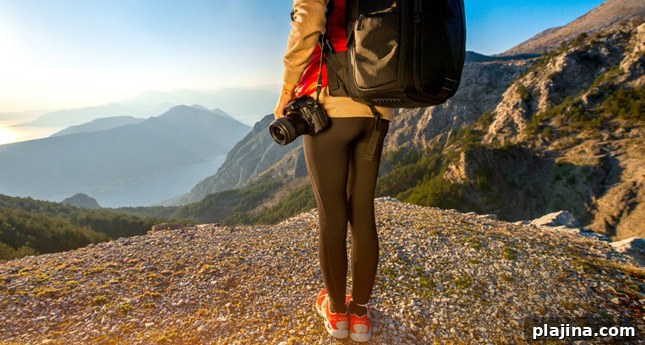
Dustin Reason’s coffee table doesn’t hold the latest gadgets but instead displays photographs and keepsakes from trips around the world — rappelling, canyoning and backpacking across Norway, Venezuela and Thailand. Financially cautious yet adventurous, the 35-year-old represents the leading edge of the loosely defined millennial generation, generally those born between 1980 and 2000. “I want to live my life full of experiences rather than things. I don’t have a mortgage or kids to tie me down yet,” said the Connecticut resident. “I don’t want to work until I’m 60 and then try to cram all my travel in at the end.”

World traveler Dustin Reason, 35, of Connecticut, enjoys the view from Kjerag mountain in Norway, a heart-thumping 3,642 feet high. © DUSTIN REASON
That focus on experiences over possessions is common among people who travel with Contiki, a group travel company for 18- to 35-year-olds, says president Melissa da Silva. “When you talk to millennials, they’re more interested in creating memories than acquiring material objects. This generation came of age during a recession when many people lost savings and found that bucket-list travel was out of reach. Millennials are not going to wait to start,” she said.
Contiki’s Easy Pay program, a travel-focused payment plan similar to layaway, lets customers spread out the average tour cost — around $2,200 — over time. According to da Silva, fewer than a quarter of Contiki travelers incur debt to vacation; most are young professionals who save specifically for trips.
While budgeting remains important, it is not the sole concern when millennials book travel, da Silva notes, referencing Contiki focus groups and research from travel data firm Skift. Recent marketing by Contiki has shifted away from emphasizing price or even specific destinations, instead highlighting travel styles. “Do I want to check iconic sights off my list, relax on a beach, or get culturally curious and immerse myself in local life? We studied how the Contiki consumer shops and redefined our messaging to align with those preferences,” she said.
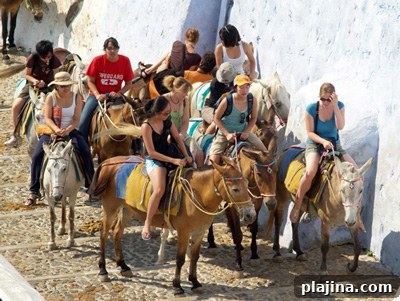
Millennial travelers riding mules to Thíra on Santoríni © ROSSHELEN | DREAMSTIME.COM
For travelers like Kate Grieves of Massachusetts, the distinction between a trip and a vacation matters. The 32-year-old saves her tax refund for cultural exploration rather than a traditional beach holiday; a recent trip to China offered experiences she couldn’t get from reports or videos. “Standing in Tiananmen Square, witnessing a place I’d only seen in news clips or online, was very different in person. Stories and videos are interpretations — you have to be there. Social and economic situations have changed so much in the past 30 years,” she said. “You have to visit where you can, when you can.”
Working as a social worker leaves Grieves mindful of spending, but travel remains a priority after a formative semester abroad in college. “I learned about ‘The Troubles’ and Northern Ireland on long bus rides home from Dublin. We’d save for a cab not because it was easy but because the conversations with drivers were fascinating,” she recalled.
Skift explored this desire for meaningful cultural connection in its January 2016 report “Portrait of the Millennial Traveler: A Study in Contradictions.” Although often associated with selfie culture and heavy social media use, millennials frequently seek deeper, real-life human interactions while traveling, the report found. Contrary to assumptions that millennials drove Airbnb’s rise, surveys suggest many prefer hotel stays: a 2015 Skift survey reported fewer than 4 percent of millennials used Airbnb for their last leisure trip, while roughly 33 percent chose hotels.
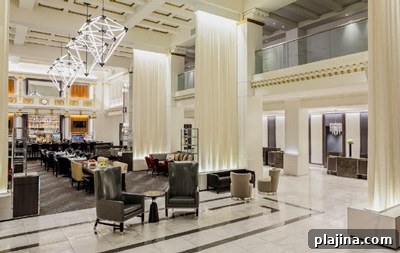
Boston Park Plaza Hotel’s spring 2016 renovation geared toward millennial travelers created an open concept with a dining room and larger, brighter communal spaces in the lobby. © BOSTON PARK PLAZA
June McDougall, managing director of the Boston Park Plaza Hotel, invested in a renovation aimed at millennial travelers, blending modern technology and communal spaces with the hotel’s historic character. “We upgraded infrastructure for mobile devices and streaming, added smart TVs with Spotify and increased bandwidth. We also transformed the lobby into a living room—moving the restaurant closer, creating community tables where people can charge devices, play chess or meet others,” McDougall explained.
She highlights playful, photo-friendly design elements such as birdcage chairs that encourage guests to linger and share images on social platforms. “Those signature pieces are fun and conversational. They’re very popular for vacation photos and social sharing,” she said.
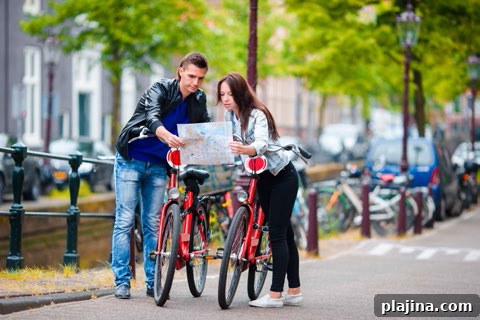
A young couple on bikes mapping a route around Amsterdam © TRAVNIKOVSTUDIO | DREAMSTIME.COM
Millennials span a wide range of experiences and preferences: some remember using card catalogs and idealize past political eras, while others grew up with social media. That makes trends within the group nuanced. “Those aged 25 to 34 include subgroups — some gravitate toward Facebook, others toward Snapchat and Instagram,” said Sebastian Neylan, director of online marketing at Lonely Planet. “What they don’t want is to be labeled budget travelers. They embrace low-cost carriers and independent travel but still value autonomy and original experiences.”
Lonely Planet appeals to that desire for independence by offering flexible tools rather than prescriptive itineraries. Neylan points to city guides with offline maps and multisensory recommendations, designed to serve as a resource rather than a rigid plan. “I use my phone as my guide. We want our content to help people find their own way rather than dictate every step,” he said.
As for Dustin Reason, his travel ambitions include sharing discoveries with others, possibly by guiding trips someday. “I like backpacking not just because it’s economical but because you meet incredible people. I’ve made lasting memories with strangers, and my dream job would keep me on the road,” he said — adding with a laugh that he does hope to find WiFi now and then so he can stay connected with friends around the world.