
Throughout 2019, Austria marked the 500th anniversary of the death of Emperor Maximilian I with a year-long program of exhibitions, performances and events across Tyrol, centered on Innsbruck. Many activities focused on sites closely connected to the emperor’s life and legacy.
One of the principal venues was the Court Church, home to the emperor’s empty tomb and often regarded as one of the country’s most important monuments. The church is famed for its marble reliefs that illustrate scenes from Maximilian’s life and for the 28 imposing bronze statues that surround the tomb. Known locally as the Schwarzmanderkirche (Black Men Church), the Court Church also houses the historic Ebert Organ, which is more than four centuries old.
As part of the commemorations, the Imperial Palace in Innsbruck hosted LIGHTSHOW MAX 500, a large-scale 3D projection and mapping production running through Jan. 20, 2019. The show used multiple high-performance projectors and immersive audio to transform the palace façade into a vivid narrative canvas. The choice of the Imperial Palace was significant: it was one of Maximilian’s preferred residences and remains an important historical landmark in the city.
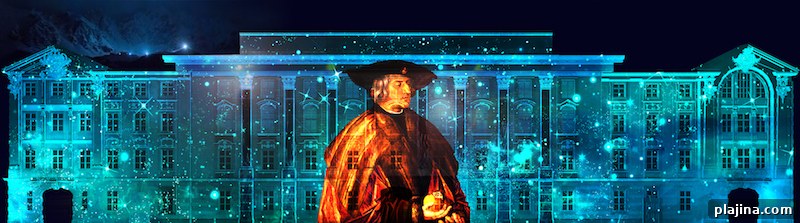
Lightshow Max © Innsbruck Tourismus
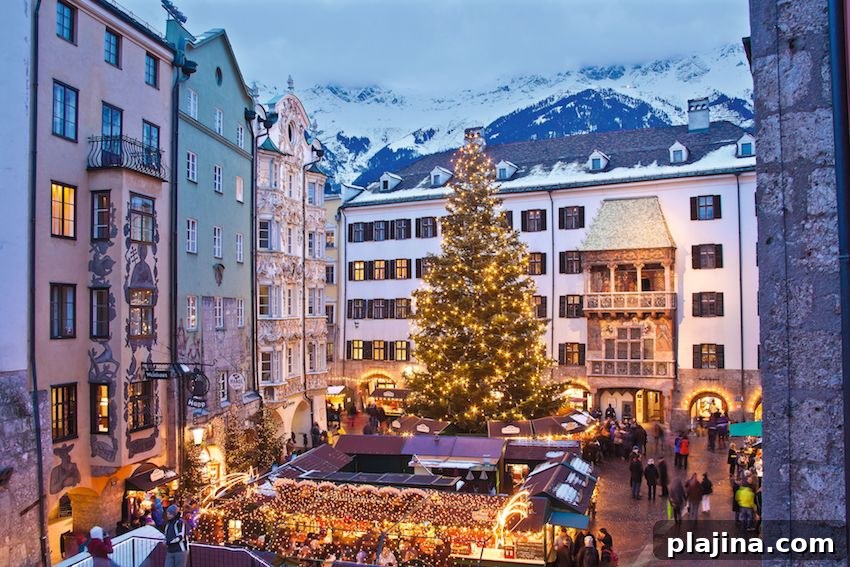
Another highlight in Innsbruck’s historic centre is the Golden Roof, commissioned by Maximilian I and one of the city’s iconic sights. The ornate balcony is covered with 2,657 fire-gilded copper tiles and features a series of sculptural motifs, some of which remain puzzling to visitors. One small, cheeky detail — the exposed backside of a figure among the decorations — has prompted speculation and amused commentary for generations; with no definitive explanation, it invites personal interpretation and adds to the landmark’s charm.
The anniversary programming in Tyrol offered a mix of historic interpretation and contemporary presentation, from curated exhibitions and guided tours to audiovisual spectacles. Together these events emphasized Maximilian’s enduring influence on regional architecture and culture, while making the historical material accessible and engaging for modern audiences.