
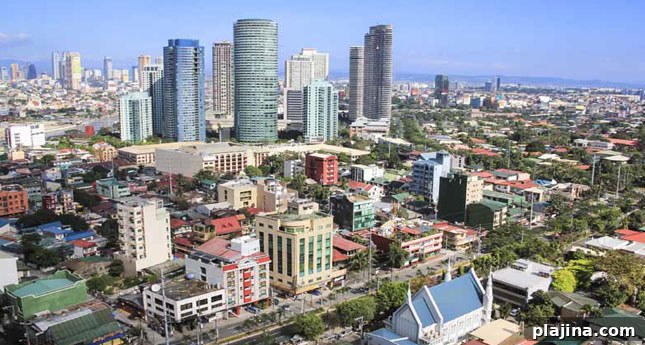
While Manila is officially the capital and the second largest city in the Philippines, the wider Metro Manila area is an enormous urban conglomeration that ranks among the world’s top 20 metropolitan regions. Within this dense sprawl—home to some of the planet’s most tightly packed neighborhoods—you can see the full contrast of wealth and poverty that shapes the nation.
Manila first entered Western chronicles in 1521, when Magellan claimed the islands for Spain. Spanish rule lasted until the Spanish–American War, after which the Philippines became an American possession. During World War II the city was occupied by Japan, and the country finally achieved full independence in 1946. These layers of colonial history, together with the archipelagic geography of the nation, have produced a multicultural society in which English is widely spoken.
Manila’s airport merits a practical note. It has three terminals: Terminal 3 serves carriers such as Cebu Pacific and ANA, Terminal 2 is used by Philippine Airlines, and Terminal 1 handles most other airlines. Terminal 1, in particular, has a reputation for overcrowding and substandard facilities. Arrivals can be slow, but departures are often the most trying—long waits in cramped, worn spaces are not uncommon. Travelers who can avoid spending extra time there should do so.
Roxas Boulevard traces the curve of Manila Bay and remains one of the city’s most prestigious addresses. Its broad promenades and parks offer sweeping sunset views over the water, providing rare green open space in a compact metropolis. Yet Roxas Boulevard is also a major traffic artery, and congestion is frequent—like much of the city’s road network. Public transport options are limited compared with some other Asian capitals, and the light rail system is often overcrowded and less intuitive than systems such as Bangkok’s Skytrain. When planning travel in Metro Manila, allow generous extra time for journeys.
Manila fountain © Joyfull | Dreamstime.com
Makati, just southeast of central Manila, is the financial heart of the metropolitan area. From the 1960s onward it developed into a modern business district that feels more like parts of Los Angeles than historic Manila: a skyline of high-rises, wide avenues (still frequently jammed), and large shopping complexes. Many of Metro Manila’s most exclusive residential communities lie in or near Makati. While central Manila preserves many visible reminders of the country’s past, Makati reflects the contemporary Philippines, with upscale shops and businesses dominating the landscape.
Many of the city’s major hotels are found along Roxas Boulevard or in Makati; properties on Roxas generally offer the more scenic views. The Manila Hotel, opened in 1912, is notable as a surviving landmark of the city’s 20th-century history. Restored rather than replaced, it remains a piece of living history and sits conveniently close to several other national historical sites—worth a visit even if you choose to stay elsewhere.
Hotel rates in Manila are typically lower than in many other world capitals. Even premium hotels and suites are often significantly cheaper than comparable accommodations in cities such as Tokyo or Hong Kong, making the city relatively affordable for international travelers.
Although business attire such as suits are always acceptable, the local climate and custom often favor the barong—a lightweight, embroidered long-sleeved shirt considered formal wear across the Philippines. For those spending an extended period in the country, a custom-made barong is a practical, culturally appropriate option.
Manila’s climate is hot and humid year-round; the so-called “cool season” is modest at best. Heavy rains are common during the wet season, and the Philippines lies in a path frequently crossed by typhoons. Air-conditioning is ubiquitous indoors, but any significant time spent outside will usually lead to sweating and heat discomfort.
Business culture in the Philippines tends to be hierarchical, with clear distinctions of status and responsibility in many organizations. Punctuality can be flexible, and interactions often prioritize harmony and respect for “face.” This nonconfrontational approach can feel slow or indirect to visitors accustomed to brisk, direct business styles; patience and tact are rewarded in professional and social settings.
Higher education has a long tradition in the Philippines, and widespread English proficiency makes communication easier for many foreign visitors. At the same time, the country is linguistically diverse—nearly 100 dialects are spoken—and code-switching between English, Pilipino, and regional languages is common. Local speech and media sometimes shift languages mid-sentence, which can surprise newcomers.
One small cultural tip: instead of pointing with a finger or an arm, people may indicate direction by pursing their lips and making a sound toward the object or place. It’s a subtle gesture—take your cue and respond politely.
Filipino cuisine reflects the country’s multicultural roots, blending Malay, Spanish, Chinese, and Western influences. Celebratory meals might feature lechon (a whole roasted pig), adobo in its many regional variations, or pancit noodles in several styles. Adventurous eaters sometimes try balut, a fertilized duck egg usually eaten with beer. Local beer, notably San Miguel, is plentiful, affordable, and widely enjoyed.