
The imperial capital of Japan for more than a millennium (794–1868), Kyoto remains the nation’s cultural heart. Home to roughly 1.5 million people, the city contains more than 1,500 Shinto shrines and Buddhist temples, 17 UNESCO World Heritage sites and several imperial palaces, including Nijo Castle with its famous “nightingale” floors once designed to warn the shogun of intruders. Highlights not to miss are the shimmering Temple of the Golden Pavilion at sunset and Fushimi Inari Shrine with its thousands of vermilion torii gates climbing the forested slopes.
Many of Kyoto’s well-preserved streets are lined with machiya, the traditional wooden townhomes that define neighborhoods such as Gion. These lattice-fronted buildings once sheltered craftsmen and merchants; today they house restaurants, teahouses, small specialty shops, galleries and workshops where centuries-old techniques are still practiced. Expect to find Kiyomizu pottery, red-and-gold lacquerware, indigo-dyed textiles, silk kimono designs and woodblock prints—many crafted with a distinctly contemporary sensibility.
© S35KTMO | DREAMSTIME.COM
Kyoto is also the birthplace of kaiseki, the hyper-seasonal multi-course haute cuisine that emphasizes balance, presentation and the finest seasonal ingredients. Hanamikoji Street in Gion is home to many of the city’s most celebrated restaurants, and some intimate venues—such as tiny 12-seat establishments—require reservations months in advance. For those seeking variety, food tours provide an excellent way to sample Kyoto’s culinary scene: wander lantern-lit streets, drop into cozy bars, slurp ramen at hole-in-the-wall shops and dine at welcoming neighborhood eateries.
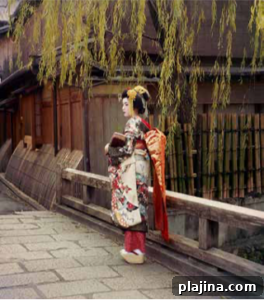
Seeing a geisha (or maiko, an apprentice geisha) is a quintessential Kyoto experience for many visitors. Gion’s narrow cobblestone lanes are among the best places to glimpse kimono-clad figures moving gracefully toward their evening appointments. For a more immersive encounter, you can arrange a visit to a traditional teahouse to experience ochaya-asobi, or book cultural experiences that include a geisha makeover, kimono dressing and a commemorative photo session. These options offer respectful, structured ways to learn about the arts and etiquette surrounding geisha culture.
Cruise passengers arriving at Osaka Port can reach Kyoto in about an hour by taxi. Beyond Gion, other neighborhoods worth exploring include Nishijin, Kyoto’s historic silk-weaving quarter; Higashiyama, noted for its concentration of ancient temples and preserved streets; Arashiyama, famous for its towering bamboo grove and scenic river views; and the Fushimi area, known for its long tradition of sake brewing along tree-lined canals. The best times to visit are during cherry blossom season in spring (March–May) and in the autumn months of October and November, when Japanese maples transform the city with vivid fall colors.