
This paragraph will bridge centuries, span the globe and deposit us somewhere unexpected. The story begins with the invention of the kite in China nearly 3,000 years ago, moves to Maui where surfers combined kites with boards in the late 1990s to create kitesurfing, and arrives in 2010 at a lagoon in Western Sahara.
Western Sahara occupies a liminal space. It exists geographically, yet its political status remains unresolved. The United Nations does not officially recognize either of the main claims to sovereignty. For decades the territory has been administered as the southernmost provinces of Morocco, while many African nations recognize the Sahrawi Arab Democratic Republic and maintain ties with a provisional government based in exile in Algeria.
How do kites connect to a long-standing territorial dispute on the edge of the world’s largest desert? The answer is the wind.
When ancient Chinese artisans launched delicate silk-and-bamboo kites, they established a direct relationship between people and the air currents that swirl around us. Over millennia, humans have learned to harness that invisible motion for transport, energy and recreation.
Kitesurfing represents the recreational branch of that tradition. Initially conceived partly to help surfers move from wave to wave, the sport evolved as specialized boards and purpose-built kites appeared, adding a new dimension: flight. Riders harness the wind to glide over water and to soar above it, transforming the sea into a playground of speed and elevation.
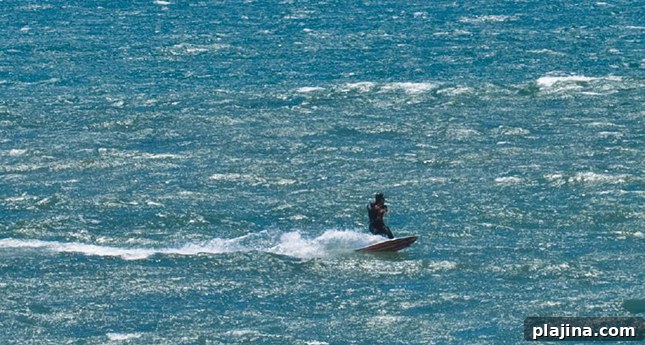
From the shore the sport looks almost effortless. Kitesurfers skim across the water and then, at will, lift into the air. Free—if only briefly—from gravity’s hold, they climb 20 or 30 feet, twist and spin, then return to the surface with little more than a spray of water. That exuberant display hides the skill and discipline required to perform it safely, and it downplays the real dangers the sport presents.
Every takeoff rests on a careful decision made on land. Riders bring a selection of kites in different sizes and must choose the correct one for the wind and water conditions. The wrong choice can lift a rider too high or carry them too far; improper spacing and disregard for safety margins can lead to entanglement with other kitesurfers and catastrophic accidents. Mastery of equipment, weather reading and situational awareness is essential.
Kitesurfing developed through experimentation. Early practitioners mapped safe operating ranges, refined gear and raised standards—often learning the hard way. As the sport has grown more mainstream, enthusiasts began searching for optimal locations. An ideal site combines a reliable onshore breeze, relatively calm water and a soft, unobstructed shoreline.
By fortunate geography, one of the world’s premier kitesurfing destinations is Dakhla in Western Sahara: a 15-mile-long coastal lagoon encircled on three sides by sand dunes. A steady, warm wind sweeps off the Atlantic and has long sustained local fishermen. That same breeze has become a valuable resource for tourism, drawing kitesurfers from around the globe and giving the area a surprising economic boost.
We arrive loaded with gear and camp along the lagoon beneath the Saharan sky. Each day we rig our kites and ride the wind. Experience tempers nerves, but every launch still quickens the pulse. We rely entirely on the elements and on careful judgment, hoping the wind delivers us where we expect and not somewhere else—like farther down the beach than planned.