
High-quality, private cultural tours in China that avoid compulsory, commission-driven shopping stops do exist. China Guide, a branch of Beijing Freedom Travel Agency owned by American Peter Danford, offers carefully designed private tours led by English-speaking guides who prioritize authentic cultural experiences and efficient travel between attractions.
One of the standout itineraries in China Guide’s extensive program focuses on the country’s remarkable grottoes and cave art. This tour highlights three of the most important Buddhist cave complexes in China: Longmen Grottoes near Luoyang, the Yungang Grottoes near Datong, and the Dazu Rock Carvings in the Chongqing area.
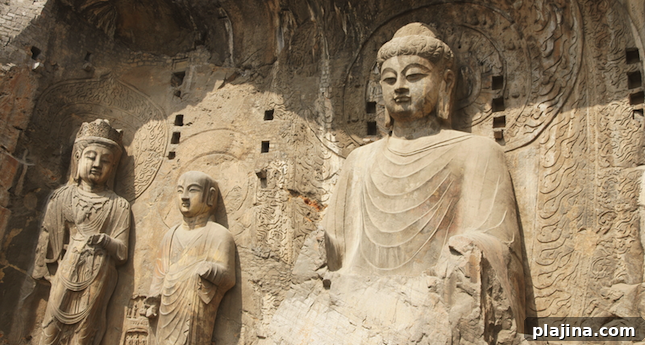
The Longmen Grottoes are a vast collection of carved temples and niches stretching along the Yi River. With more than a thousand caves and over 100,000 statues, the site showcases a wide range of Buddhist sculpture and relief work spanning many centuries. Guides on this itinerary explain the historical context, artistic styles, and symbolism found throughout the grottoes, while helping visitors appreciate both the grand monuments and the finer sculptural details.
Further north, the Yungang Grottoes present an earlier phase of Buddhist cave art. Carved into sandstone cliffs, these caves feature large-scale statues and complex architectural façades that reflect the cultural exchanges and artistic innovation of their time. Guides provide insights into the technical challenges of the original craftsmen as well as the religious and historical influences behind the site’s development.
Near Chongqing, the Dazu Rock Carvings are a later but distinct body of work that combines religious devotion with vivid narrative scenes. Some carvings in this area continued to be produced into the Song dynasty, showing evolving artistic approaches and local interpretations of Buddhist, Taoist, and Confucian themes. The Dazu sites are known for their expressive figural groups and detailed storytelling panels, which tour guides use to illustrate shifts in iconography and devotional practice.
All of these grotto visits are arranged with flexibility in mind. China Guide tailors each itinerary to match travelers’ interests, whether that means focusing on art history, religious studies, photography, or simply enjoying the landscapes and local culture surrounding the cave complexes. Private, customizable tours allow groups to set their own pace and prioritize specific elements of the sites they most want to explore.
Beyond grottoes, China Guide’s broader offerings cover a wide range of cultural attractions across the country. The company emphasizes knowledgeable, English-speaking guides who can communicate complex historical and artistic topics in clear, engaging terms. This approach helps travelers gain a deeper appreciation for China’s layered past without feeling rushed through attractions or diverted by mandatory shopping stops.
Travelers often value the logistical benefits of a private tour: dedicated guides handle transportation details, timing, and ticketing, allowing visitors to focus on the experience. For those interested in archaeology, religious art, or regional history, the grotto-focused itinerary provides concentrated exposure to some of China’s most important sculptural sites, while still offering the option to expand the trip to include nearby cities and cultural landmarks.
For visitors planning a cultural exploration of China, a privately guided, customizable tour that avoids forced shopping provides a more meaningful and relaxed way to experience the country’s artistic heritage. By combining expert guides with flexible itineraries, tours like those offered by China Guide enable travelers to engage directly with China’s monumental cave art and the historical contexts that produced it.
You may also like:
Secrets Of China’s Silk Road
Guangzhou: Polishing The Pearl