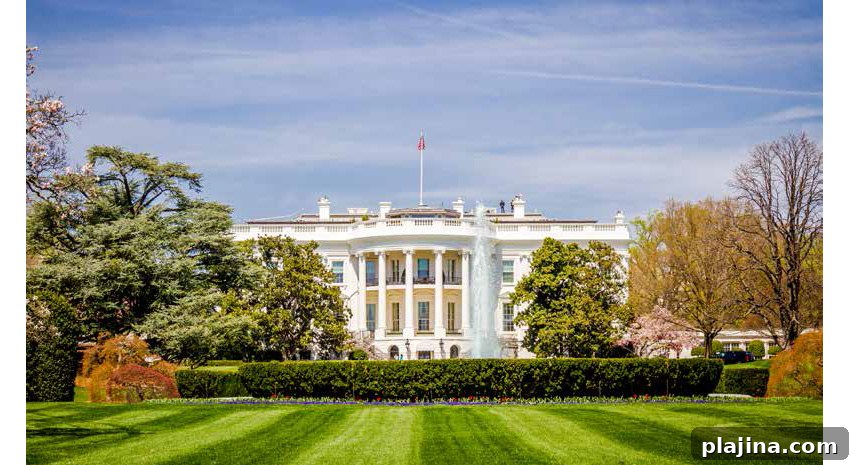
More than anywhere else, the outcome of the U.S. election will be felt in Washington, D.C., where a new president will soon take office. Locals are used to political change, but what stands out now is the city’s strong economic momentum: roughly $9.6 billion in physical developments are revitalizing neighborhoods and improving quality of life across the district.
Running the nation is the primary mission in the District of Columbia, where the federal government accounts for nearly 30 percent of local employment. As the nation’s capital, Washington is home to leaders who respond to domestic and international events. History is made here — in the U.S. Capitol, the White House, the Supreme Court and at the 175 foreign embassies and residences. With all of that history — past, present and future — tourism naturally ranks as the city’s second-largest industry. More than 20 million people visit Washington annually to see memorials, monuments, museums, parks and civic events and to experience the city’s politically charged atmosphere.
As 2016 drew to a close, the city celebrated the centennial of the National Park Service, headquartered in D.C. The region includes roughly 150 national park sites, including the White House grounds, which have been the president’s residence since 1800. The National Mall — a 146-acre greensward stretching from the U.S. Capitol to the Lincoln Memorial — is managed by the NPS and is lined with iconic memorials: Franklin Delano Roosevelt, Thomas Jefferson, the Korean War Veterans Memorial, the Martin Luther King Jr. Memorial, the Vietnam Veterans Memorial, World War II memorials, the Washington Monument and the Smithsonian museums. Exploring the two-mile Mall is easier than ever through guided options like Bike and Roll, City Segway Tours, and free walking tours organized by DC by Foot.
Visitors this season will notice recent restorations and new cultural additions on the Mall, including the renovated U.S. Capitol dome and the Smithsonian’s National Museum of African American History & Culture. The National Gallery of Art’s East Building reopened after a two-year, $30 million renovation that added more than 12,000 square feet of exhibition space and a rooftop sculpture garden.
Major neighborhood transformations are also reshaping the waterfronts. The $3 billion Capitol Riverfront project converted a World War II–era wharf and naval site on the Anacostia River into a mixed-use neighborhood with parks, playgrounds, a boathouse, restaurants and the 41,000-seat Nationals Park. Along the Potomac, The Wharf — a $1.5 billion development in southwest D.C. — will deliver 3.2 million square feet of residential, office, hotel, restaurant, retail and cultural space, including a rebuilt yacht club linked by a 450-foot public boardwalk.
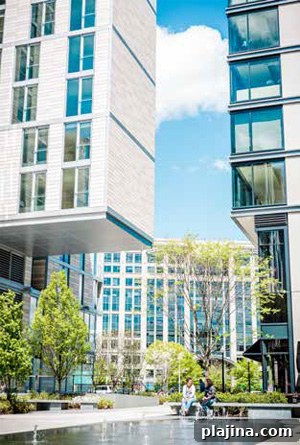
CityCenterDC © DESTINATION DC
CityCenterDC, the redeveloped former convention center, is emerging as a 10-acre, $700 million mixed-use complex of shops, residences and offices. Plans on the horizon for 2018–2020 include Capital Crossing, three city blocks constructed over Interstate 395 between Union Station and the Verizon Center. The 80-acre RFK Stadium and DC Armory site is also under consideration for mixed-use redevelopment.
The John F. Kennedy Center for the Performing Arts is undergoing a $50 million expansion; the center hosts the National Symphony Orchestra, Washington National Opera and Washington Ballet. Nearby, the historic Watergate complex reopened as an upscale riverside hotel, offering refined guestrooms, restaurants, ballrooms and a spa. The Old Post Office building on Pennsylvania Avenue has been repurposed as a luxury hotel, adding to the city’s growing hospitality scene.
More than 20 new hotels, totaling over 5,000 rooms, are under construction. They complement roughly 110,000 rooms across the Greater Washington metropolitan area, which includes suburban Maryland and Virginia, and support some 4 million square feet of event and meeting space. The Walter E. Washington Convention Center remains the region’s primary exhibition venue, with 703,000 square feet of exhibit space and 198,000 square feet of meeting space.
Dining in the District reflects a wide range of global influences and culinary sophistication, with more than 2,100 restaurants across the city. Craft cocktails and small-batch local distilleries and breweries are in vogue, and bars featuring games such as billiards, bocce, minigolf and table tennis are increasingly common. Small plates and tapas-style dining remain popular, while regional specialties like Maryland crab cakes and Virginia wines continue to draw loyal fans.
Getting around D.C. is convenient on the clean, modern Metro, which continues to receive upgrades across its original 117 miles of track. The new Silver Line inaugurated service with five stations and is being extended to Washington Dulles International Airport. The DC Circulator links key destinations — Union Station, Georgetown, the Convention Center, Nationals Park, the National Zoo and the National Mall — with $1 rides. Streetcars returned to the District in 2016 to bridge transit gaps between neighborhoods, and Capital Bikeshare, with about 3,000 bikes at roughly 350 stations, remains a popular option as bike lane infrastructure expands.
Frenetic activity and constant reinvention are the norm in the nation’s capital — making Washington one of the liveliest and most engaging cities in the world.
SCENIC DRIVES
Great Falls is a favorite quick escape for Washingtonians craving dramatic natural scenery. Located about 15 miles from the city along the George Washington Parkway, the Potomac River plunges over jagged rocks through the Mather Gorge, creating a striking riverside landscape within an 800-acre park. The Parkway itself is managed by the National Park Service and prohibits commercial vehicles, so the drive is pleasant and scenic, with historic stops along the way.
Heading west on Route 50 into Virginia delivers another scenic option. Outside of rush hour the road quickly leads into Virginia’s hunt country — a region long favored by figures such as Jackie Kennedy and Paul Mellon — where rolling countryside gives way to horse farms, vineyards and quaint villages. About 43 miles from the city lies Middleburg, with boutique shops on Washington Street, restaurants such as Market Salamander tied to the nearby Salamander Resort, and the National Sporting Library, which celebrates the literature, art and history of equestrian and field sports.