
For the ninth consecutive year, Global Traveler recognizes the industry’s top performers, naming the 2019 Airline of the Year and Hotel of the Year.
What once felt like insurmountable distances between oceans now seem far closer and more reachable. Advances in aviation and hospitality let travelers experience more of the world than ever before, but with that increased reach comes responsibility — to customers, communities and the planet.
Every provider in travel must not only keep pace but consistently impress: deliver reliable service, innovate, and exceed expectations to rise above fierce competition.

Hotel Kabuki lobby © HYATT
Air Canada and Hyatt each climbed a long ladder to reach this year’s honors, driven by rigorous standards, dedication and a focus on customer service. Their achievements set them apart and earned them GT’s 2019 Airline of the Year and Hotel of the Year awards.
The award selection is made annually by a group of Global Traveler staff and Advisory Board members who evaluate nominees across many criteria: financial health, operational performance, boarding efficiency, safety protocols, onboard offerings and overall brand identity. Winning reflects a convergence of excellence across these areas.
When you consider a travel brand that endures, constantly seeks improvement, adapts to change, invests in communities and introduces meaningful initiatives, a few names come to mind — and this year two stood head and shoulders above the rest.
AIR CANADA
AIRLINE OF THE YEAR 2019
The story begins in 1937, a year of aviation milestones: Howard Hughes shattered transcontinental speed records, Amelia Earhart attempted a global circumnavigation, and Trans-Canada Air Lines (TCA) launched its first commercial service. TCA’s inaugural flight, operated with a Lockheed 10A Electra, carried mail and a few passengers from Vancouver to Seattle for $14.20 each.

Air Canada service PHOTO: © AIR CANADA
Founded as a Canadian National Railway subsidiary, TCA — renamed Air Canada in 1965 — began with modest resources but strong ambition. Early investments, a focused pilot training program and experienced staff helped open domestic and transcontinental routes, shrinking Canada’s vast distances for travelers.
Innovation marked TCA’s early years. In 1938 the airline introduced de-icing nozzles for windshield ice removal and later pioneered electric de-icing systems. That year also saw the development of onboard oxygen systems and the hiring of the airline’s first flight attendant, Lucile Garner Grant, a trained nurse who shaped early inflight service and uniform design.
Throughout World War II and the postwar era, TCA expanded routes and services. The airline added a landmark route to New York City in 1941 and saw a significant passenger increase, which drove enhancements in inflight service and operational capacity. Over subsequent decades, TCA introduced in-flight meals, redesigned crew uniforms, and continuously improved employee incentives and passenger amenities.
Many industry milestones followed: TCA helped develop the multichannel flight recorder — the precursor to today’s black box — and implemented the first computerized reservations system. The airline evolved with technology and changing passenger expectations, hiring its first female pilot in 1978, banning smoking, and growing its fleet with modern jets.
After merging with Canadian Airlines International Ltd. in 2001, Air Canada expanded its global footprint and refined its in-flight experience, focusing on service, entertainment, safety and sustainability. The airline has since placed strong emphasis on four pillars: safety, environment, employees and communities.

Boeing 787 pod PHOTO: © AIR CANADA
Recognition for Air Canada’s efforts includes multiple Skytrax World Airline Awards in 2019: Best Airline in North America (its third consecutive win), World’s Best Business Class Lounge Dining, Best Airline Staff in Canada, Best Business Class in North America and Best Airline Cabin Cleanliness in North America. Voted on by millions of travelers, these accolades underscore the airline’s consistent commitment to quality.
With a long history of innovation, operational excellence and passenger-focused service, Air Canada earns the title Airline of the Year 2019 — a recognition of its sustained performance and leadership in the industry.
HYATT
HOTEL OF THE YEAR 2019
Timing and location defined Jay Pritzker’s early success when he purchased the Hyatt House motel near Los Angeles International Airport in 1957. That single acquisition laid the foundation for what would become one of the world’s most recognized hospitality brands.
Located near a busy international airport, the original Hyatt property benefited from steady business travel. Over the next decade, Jay and his brother Donald expanded the company into a hotel management and ownership enterprise across North America.
In 1967 the Hyatt Regency Atlanta unveiled a dramatic 22-story atrium lobby, a striking architectural statement that helped establish Hyatt’s reputation for distinctive design and elevated guest experiences. The brand then expanded internationally: Hyatt Regency Hong Kong opened in 1969, and later decades brought further strategic investments and innovations.
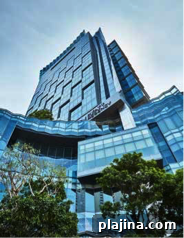
Hyatt Regency Bangkok Sukhumvit exterior. © HYATT
Hyatt’s growth was steady and strategic. The company launched a central reservations office, established a toll-free customer line, and introduced guest loyalty initiatives. Park Hyatt and Grand Hyatt properties became iconic addresses, and the Hyatt Gold Passport program rewarded frequent guests.
By the 2000s Hyatt accelerated its expansion and diversified its portfolio. New brands and concepts arrived: Hyatt Place and Hyatt House addressed evolving traveler needs, Andaz brought a boutique sensibility, The Unbound Collection preserved unique hotel character within Hyatt’s network, and Centric targeted urban travelers seeking convenient, stylish accommodations.
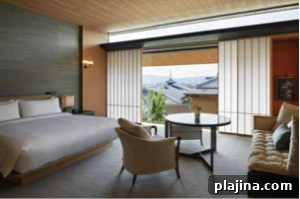
Park Hyatt Kyoto King Deluxe guestroom © HYATT
Hyatt also expanded its commitment to corporate responsibility with the Hyatt Thrive platform, and it evolved its loyalty offerings into World of Hyatt to deepen connections with guests. Strategic acquisitions and a refined rewards ecosystem, including the World of Hyatt Credit Card, further strengthened guest loyalty and engagement.
Today Hyatt operates more than 700 hotels in 56 countries, with nearly 1,000 additional properties in development. The brand’s deliberate growth, focus on guest experience and ability to preserve distinct hotel identities while offering the assurance of a recognized name have helped Hyatt earn Hotel of the Year 2019.
From a single motel to a global hospitality leader, Hyatt’s story is one of thoughtful expansion, service-driven innovation and a clear understanding of what travelers value most.