
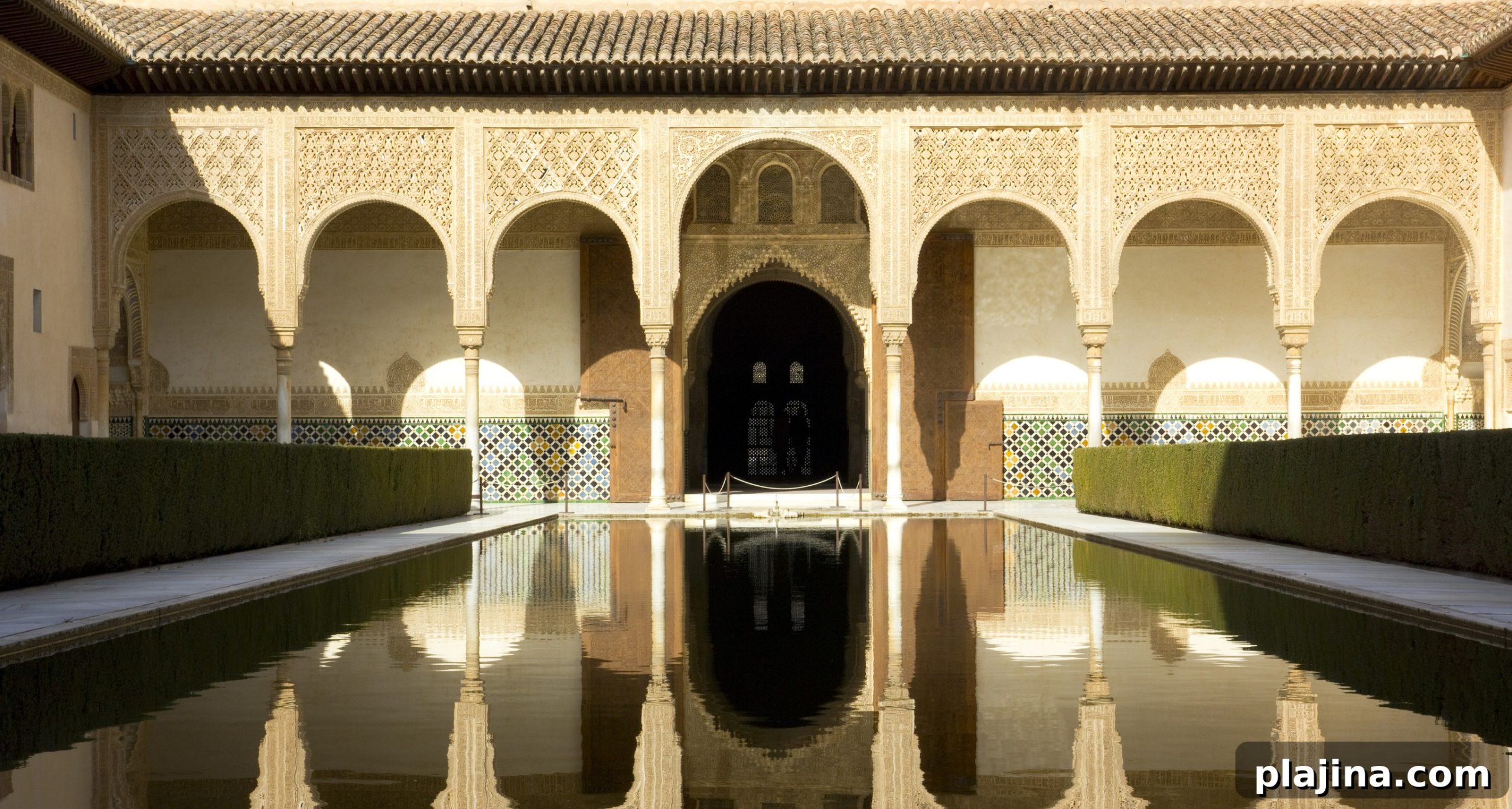
Granada, in southern Spain, is a vibrant city shaped by a rich blend of cultures, with strong Arabic influences that are especially evident in its architecture. The most iconic example is the Alhambra, a UNESCO World Heritage Site renowned for its intricate Nasrid palaces, manicured Generalife gardens, and commanding hilltop setting overlooking the city.
Beyond the Alhambra, Granada’s narrow, winding streets reveal a fusion of Moorish and Andalusian character: whitewashed houses, leafy courtyards, and tiled facades give the Albaicín neighborhood a timeless feel, while the Sacromonte quarter preserves the city’s flamenco and cave-dwelling traditions. The city’s cathedral and the Royal Chapel reflect later Renaissance and Gothic influences, showing how Granada evolved after the Reconquista.
Granada is also celebrated for its lively tapas culture—many bars still serve complimentary small plates with drinks—alongside markets, tea houses, and traditional bakeries where you can taste local specialties. Street life centers around plazas and promenades, and a range of museums and cultural centers showcase the city’s history, art, and music. Seasonal festivals and flamenco performances in intimate venues further highlight the region’s artistic spirit.
Surrounded by the Sierra Nevada mountains, Granada offers easy access to outdoor activities such as hiking and skiing, providing a dramatic contrast between snow-capped peaks and the warm climate of the city below. This combination of natural beauty, layered history, and vibrant contemporary life makes Granada an appealing destination for travelers seeking architectural splendor, culinary delights, and cultural experiences.
For visitors, practical tips include booking Alhambra tickets in advance, exploring neighborhoods on foot to appreciate the city’s atmosphere, and sampling local cuisine in both traditional and modern establishments. Whether drawn by history, architecture, music, or gastronomy, Granada rewards curiosity with a wealth of memorable sights and experiences.