
Outlandish costumes, clear-cut heroes, hyperbolic villains, raucous fans, soda and peanut vendors, and an excitable announcer whipping up the crowd before each bout — all of it building toward the eagerly awaited main event. Yes, it’s wrestling, but not the version many of us are used to.
The venue is a vacant lot in Serekunda township, within easy walking distance of the Atlantic beaches in tiny The Gambia. The space is framed by red-brick walls on three sides and a temporary corrugated iron fence along the road. A gap in that makeshift fence doubles as a ticket booth and turnstile.
Hundreds of spectators have paid a modest admission fee. Local dignitaries and visiting tourists are shown to the scattered rows of plastic chairs and wooden benches nearest the fighting area. Everyone else jockeys for standing room. The atmosphere is charged, informal and alive with expectation.
In one corner, traditional drummers pound a relentless rhythm. The beat never lets up; it becomes the event’s heartbeat. As the percussion drives on, you can feel your breath and pulse settling into its cadence.
All eyes are on the arena as the announcer calls the first two combatants. They are young, lanky and visibly nervous, wearing only simple briefs. Each splashes water on his torso; under the late-afternoon sun they glisten before grasping one another. At a shouted signal, their taut muscles spring into action.
Variations of this spectacle play out across cultures, from Mongolia to the Amazon, from the Nubian Desert to major urban arenas. Wrestling began as one of the purest contests: two people testing strength and skill against one another. In much of Africa, that tradition endures. Strip away the pageantry, and what remains is an honest duel that produces a deserving winner and a disappointed loser.
“First fight for both,” remarks the Gambian man standing beside me as the two young wrestlers push and pull. “They are trying very hard.” He shakes his head and laughs in appreciation of their effort.
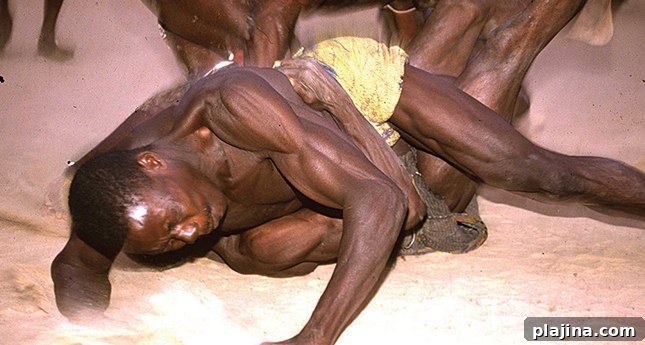
Soon both men are near breathless. Sharp bursts of energy give way to longer lulls, during which the fighters seem to prop each other up like two exhausted companions. Eventually one reaches the point of collapse and is thrown to the earth. The crowd explodes in approval. The drumming crescendos and the announcer’s voice rises to a frantic pitch.
As the card progresses, fighters grow older, more muscular and more theatrical. The seasoned competitors adopt colorful nicknames and make dramatic entrances in animal-skin cloaks and wooden masks, shedding the costumes before combat begins.
Drums beat, whistles screech and the crowd’s noise swells and wanes. In the background, the event’s two headliners prepare for the main event. One is Yuba Jatta Combat, a prominent wrestler from neighboring Senegal. Opposite him stands Tyson of The Gambia — Abdoulie Sonko — the local favorite. Back-to-back, they dab small bottles of liquid onto their skin, applying potions and rituals they hope will boost performance.
Finally they step into the arena, seemingly unaffected by the surrounding tumult. Their gazes are intense. As they bend into the opening hold, their bodies look sculpted and taut. The announcer roars and the bout begins. The contest that follows is fierce and rhythmic, muscles straining for leverage, legs absorbing blows and counters. In the end, Yuba Jatta Combat prevails. Tyson of The Gambia is left bloodied and defeated.
It is wrestling, but not as many of us know it from televised spectacle. This is the authentic sport in its elemental form: raw, communal, ritualized and utterly compelling.