
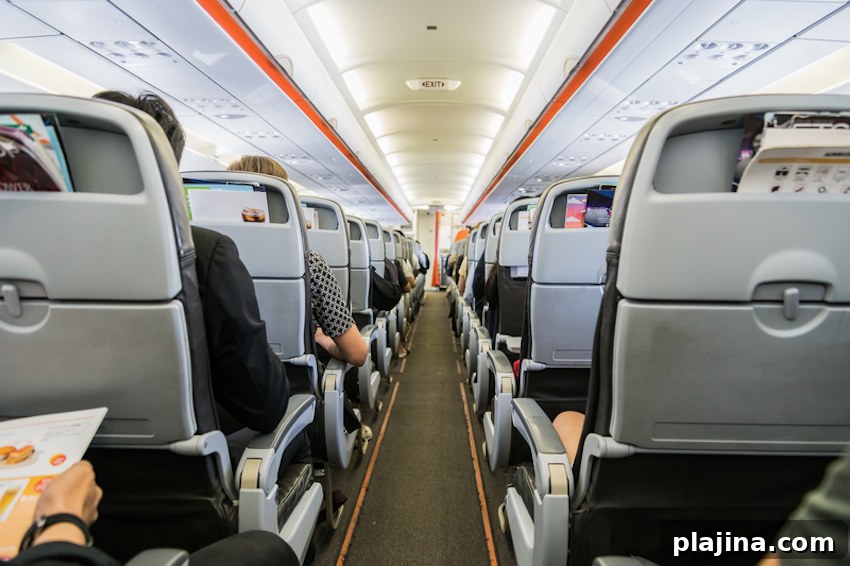
Finding an entire row of airplane seats to yourself is becoming increasingly rare as flights around the world grow more crowded. Recent data indicate that passengers are less likely to have an empty seat beside them than in past years.
A Forbes analysis reports that the global average load factor for commercial airlines reached 81.9 percent in 2018, meaning more than eight out of ten seats on a typical flight were occupied. That represents a clear rise from 2005, when the global average load factor was 75.2 percent.
The change has been especially pronounced in the United States. U.S. airlines saw average load factors climb from 67.88 percent in 2002 to 86.08 percent in 2018. Low-cost carriers typically operate with the highest load factors, and the expansion of basic-economy fare options among larger airlines has contributed to fuller flights.
Some carriers consistently report especially high load factors. In 2017, Ryanair topped the list with an average load factor of 94.7 percent. Other airlines with load factors exceeding 90 percent included India’s SpiceJet and Europe’s easyJet, Wizz Air and AirAsia. High load factors reflect strong demand and tight capacity management, which can make it harder for travelers to secure extra space onboard.
With load factors trending upward globally, passengers should expect busier flights and plan accordingly—whether that means booking earlier, choosing premium seats, or preparing for less personal space during travel.