
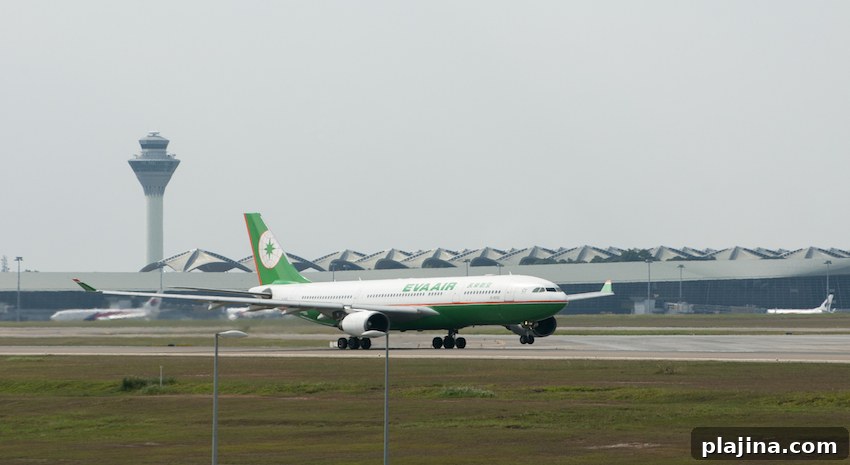
Last month, an EVA Air Boeing 777 departing Los Angeles International Airport for Taipei (TPE) climbed toward nearby mountains after an air traffic control error.
A San Diego-based controller mistakenly instructed the pilot to turn left instead of right, which directed the aircraft into the flight path of an Air Canada jet and caused the plane to fly unusually low over the hills outside Los Angeles.
The controller quickly recognized the mistake and ordered the crew to halt the climb and change course to prevent a collision. The flight crew followed the correction and returned the aircraft to a safe trajectory before any incident occurred.
Local residents spotted and heard the aircraft. “It sounds like it’s getting lower and lower and really loud, really big,” said Altadena resident Kate Sullivan. “Like a really big … jet is going right over the house really slowly.”
The Federal Aviation Administration is investigating the event. Officials have stated there was no immediate risk of a midair collision, but the aircraft’s proximity to the mountains may have breached federal safety regulations governing minimum safe altitudes and terrain clearance.
Air traffic controllers and airline personnel are trained to respond quickly to incorrect instructions or unexpected flight paths. In this case, the prompt recognition of the error and corrective actions by both the controller and the flight crew prevented what could have been a more serious situation.
Investigations like this typically review controller communications, radar data, flight crew reports, and procedures to determine how the error occurred and what measures could reduce the chance of recurrence. The FAA’s review will likely assess whether additional training, revised procedures, or system changes are needed to enhance safety around busy airports and nearby terrain.
For communities near airports and hilly terrain, such incidents highlight the importance of maintaining strict air traffic management standards and ongoing oversight to ensure both aircraft and people on the ground remain protected. The FAA’s findings will clarify whether any regulatory violations occurred and what steps will follow to address the issue.