
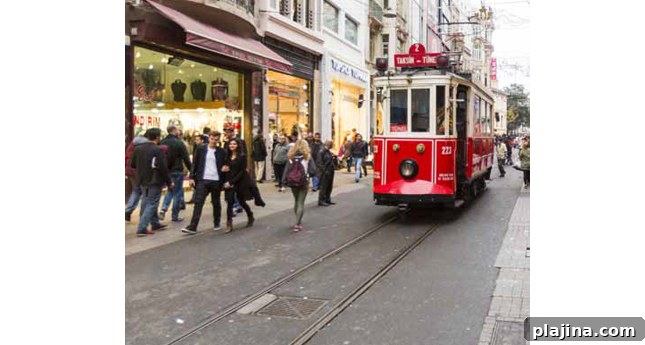
You can certainly find more famous tourist spots in İstanbul — Nişantaşı for luxury shopping, Sultanahmet for centuries-old cultural landmarks, and Cihangir for the trendiest cafes and galleries — but it is Taksim that remains the literal and symbolic heart of this vibrant city.
Taksim captured international attention in 2013 when local residents protested plans to redevelop Gezi Park, one of the neighborhood’s oldest and last green spaces. While tensions have eased since then, Taksim continues to be the social and cultural core of İstanbul.
Musicians performing in Taksim Square © Adeline Yeo Hwee Ching | Dreamstime.com
There is no better place to experience the city’s energy than Taksim. As İstanbul’s main transport hub, the square and its surroundings are a constant flow of commuters and visitors. During weekday rush hours the atmosphere is electric: the city moves more than a million people, many of them passing through Taksim’s major train and bus terminals. İstiklâl Caddesi, the bustling pedestrian avenue that runs from Taksim to Tünel Square, is lined with shops, cafes, restaurants, live musicians and nightlife venues. The historic red tram that traverses İstiklâl adds a nostalgic touch to the busy thoroughfare.
For panoramic views and a lively dining scene, the rooftop 360 Istanbul restaurant-bar offers sweeping vistas of the city and a stylish place to spot both locals and visitors.
İstiklâl’s side streets reward exploration with cozy eateries and hidden gems. Fıccın is a popular choice for traditional Turkish dishes; its mantı, a local stuffed pasta, is particularly memorable when served with garlicky yogurt and spiced oil.
Taksim is also a hub for contemporary culture. SALT transformed a multi-story apartment building into an expansive cultural center with exhibition spaces, a cinema, a rooftop garden and a bookstore, hosting exhibitions and programs that spark creative dialogue. Arter, housed in an early 20th-century mansion, showcases contemporary Turkish artists and has presented works by interdisciplinary and avant-garde creators. The Atatürk Cultural Center, currently undergoing renovation, will further strengthen Taksim’s cultural offerings when it reopens.
If you prefer to stay near the action without sacrificing comfort, several hotels offer quiet retreats in the midst of the district’s bustle. The Martı İstanbul Hotel, opened in 2012 with interiors designed by Zeynep Fadıllıoğlu, provides a peaceful courtyard and a large wellness center that includes traditional hammams—a restful contrast to Taksim’s lively streets.