
TWENTY. FORTY. SIXTY.
Seventy was the highest number I reached while counting the blacktip sharks that glided past our small dive group as they went about their midmorning routines. They seemed unaware of our presence about 100 feet below the surface of incredibly clear water. When I reached 70, I was only about two-thirds of the way across the constantly moving wall of sharks in Fakarava’s South Pass.
As I floated and watched, what surprised me most was how calm and steady my breathing felt at that depth, despite activity on every side. Gently swaying with the current, I found the scene unfolding before me more beautiful than frightening. A peaceful sense of wonder washed over me as I observed life simply existing in this undersea realm.
Bora Bora, Tahiti and much of French Polynesia sit high on many travelers’ bucket lists, fueled by images of crystal-clear waters in shades of blue, white-sand beaches framed by palms and iconic overwater bungalows. For scuba divers, the attractions grow: exceptional visibility, warm water and world-class dive sites make these islands particularly enticing.
Visibility often reaches about 130 feet, water temperatures range from roughly 79°F in winter to 84°F in summer, and the temperature difference from the surface down to 166 feet is typically only about half a degree. With lagoons, drop-offs and swift passes, plus more than 1,000 species of marine life and around 20 shark species, French Polynesia offers outstanding diving conditions. Marine biodiversity here is so abundant that scientists have called the 2.5 million–square-mile Polynesia sea zone the “richest aquarium on Earth.”
During a week of diving in French Polynesia, I visited Tahiti, Fakarava, Rangiroa and Bora Bora with TOPDIVE, discovering that each island has a distinct personality. Fakarava, in the Tuamotu Islands, is famous for the wall of sharks as well as vast coral reefs, massive schools of fish and underwater passes where currents can turn drift dives into high-speed adventures.
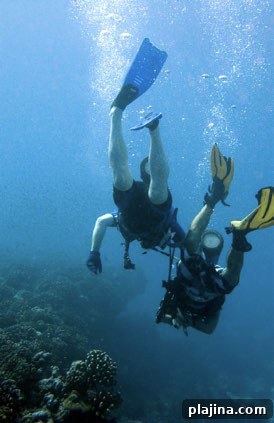
Divers exploring a reef off Bora Bora © MARCO LIJOI | DREAMSTIME.COM
Rangiroa, the world’s second-largest atoll and also part of the Tuamotus, is ringed by about 240 islets that enclose a deep lagoon called Moana-tea, or Peaceful Ocean. On the outer side, Moana-uri, or Wild Ocean, brings encounters with larger pelagics—whales, manta rays, sharks and dolphins—especially during drift dives. One unforgettable moment on Rangiroa was when a pair of curious wild dolphins approached our group to investigate.
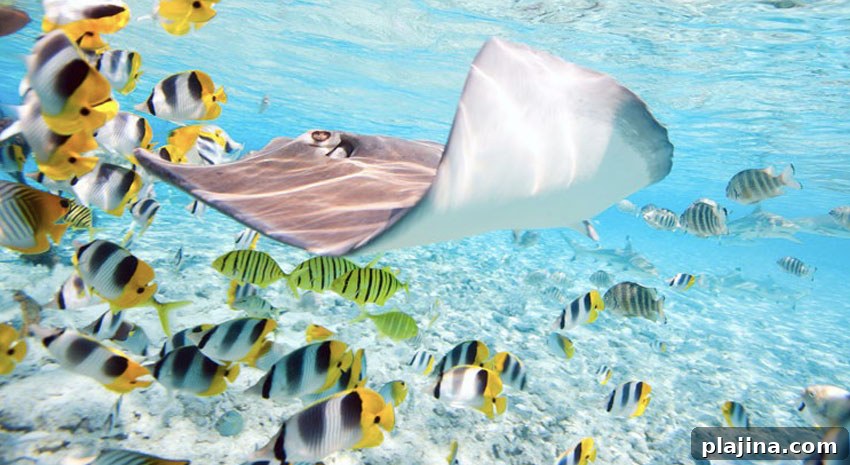
Bora Bora’s calm, crystal-clear lagoons in the Society Islands are rich with life as well: bright tropical fish weave through coral gardens while manta rays glide over underwater canyons.
There’s plenty to enjoy topside on non-diving days. Take a personal island tour in Fakarava with a local guide like Enoha, who also shares a lagoon-front art gallery with his wife, Cecile. Explore island interiors by ATV with Fakarava Adventure, pick a freshly harvested oyster to see its pearl, or cycle the roads to soak in island life. Of course, many visitors choose simply to relax and savor the scenery after a day of diving.
Accommodations in French Polynesia range from traditional Tahitian guesthouses, or pensions, to beachfront hotels and luxury resorts. Options include simple, welcoming stays like Tokerau Village on Fakarava, waterfront hotels such as Hotel Kia Ora on Rangiroa, and high-end resorts like Conrad Bora Bora Nui.
On the boat back to the north side of Fakarava after two dives in South Pass, TOPDIVE dive master Mana and I reflected on the underwater wonders we had seen.
“If I could live my life underwater, I would,” Mana said, gazing toward the horizon. After a week exploring the islands’ underwater world, I understood his feeling. Fakarava—its name evoking beauty and excellence—has inspired artists and conservationists alike; it was visited by painter Henri Matisse in 1930 and is now a UNESCO Biosphere Reserve.
Tahitian Islands Info to Go
The Islands of Tahiti are reachable via daily direct flights from Los Angeles (LAX) to Papeete, Tahiti (PPT). Inter-island service within French Polynesia makes island hopping straightforward, with flights connecting more than two dozen of the outlying islands so you can spend more time diving and exploring.