
I counted blacktip sharks as they glided past our small dive group, moving through their midmorning routines about 100 feet below the surface in the crystalline waters of Fakarava’s South Pass. At seventy sharks, I was only about two-thirds of the way across the wall of animals that flowed continuously by our dive team.
What surprised me was how calm my breathing remained at that depth, surrounded by constant motion. Drifting gently with the current, I felt no fear—only peace—watching the natural choreography of life unfold around us. The scene was quietly beautiful: sharks and schools of fish simply being themselves in a vast underwater world.
Bora Bora, Tahiti and the other islands of French Polynesia often top travel wish lists, and for good reason. Photos of deep-blue waters, powder-white beaches and iconic overwater bungalows create an irresistible image. For scuba divers, the appeal grows even stronger: excellent visibility, comfortable water temperatures and an extraordinary variety of dive sites.
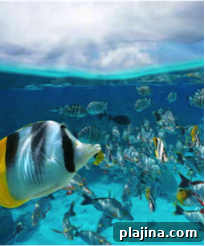
Visibility commonly reaches about 130 feet, and water temperatures range from roughly 79°F in winter to about 84°F in summer, with minimal thermal change between the surface and depths around 166 feet. Those conditions, combined with lagoons, drop-offs and swift passes, make this one of the world’s finest diving regions. Marine biodiversity here is exceptional—scientists call the 2.5-million-square-mile Polynesia sea zone the “richest aquarium on Earth.” Divers can encounter more than 1,000 marine species and around 20 shark species across the islands.
© SEADAM – DREAMSTIME .COM
On a week-long trip I dove around Tahiti, Fakarava, Rangiroa and Bora Bora with TOPDIVE, and I quickly realized each island has its own character. Fakarava, in the Tuamotu archipelago, is famous for its shark walls, extensive coral reefs and powerful passes where currents turn drift dives into thrilling rides. Rangiroa, the world’s second-largest atoll, offers a different kind of drama: a ring of roughly 240 islets encloses the deep lagoon Moana-tea (Peaceful Ocean), while the outer Moana-uri (Wild Ocean) brings encounters with whales, manta rays, sharks and dolphins. During one dive, two curious wild dolphins came over to investigate our small group, a highlight I won’t forget.
Bora Bora’s calm lagoons in the Society Islands are alive with colorful reef fish and coral gardens, while manta rays and other large species cruise the deeper canyons. Each island’s marine habitats present unique opportunities for both novice and experienced divers.
There’s plenty to enjoy topside as well. On Fakarava you can take a guided island tour with a local like Enoha, visit his lagoon-front art gallery hosted with his wife Cécile, or explore rugged trails by ATV with Fakarava Adventure. Pearl farms let you choose freshly harvested oysters and inspect pearls up close, while quieter days invite bike rides or relaxing on a beach after a morning of diving.
Accommodation options match the islands’ diversity: traditional Tahitian pensions such as Tokerau Village on Fakarava, beachfront hotels like Hotel Kia Ora on Rangiroa, and luxury resorts such as Conrad Bora Bora Nui. Whether you prefer simple island hospitality or high-end comforts, there are lodging choices to suit most travelers.
After two dives in Fakarava’s South Pass, TOPDIVE divemaster Mana and I rode back across the lagoon. He looked out across the water and said, “If I could live my life underwater, I would.” After a week exploring the Islands of Tahiti beneath the waves, I understood exactly why.
INFO TO GO
Daily direct flights arrive from Los Angeles (LAX) to Papeete, Tahiti (PPT) on Air Tahiti Nui, and inter-island flights connect more than 25 of the outlying islands, making island hopping straightforward. Since July, French Polynesia has reopened to international visitors; travelers must present a negative COVID-19 test taken within three days before international departure and register the result on the Electronic Travel Information System. During the stay, visitors are required to self-test four days after arrival in the Islands of Tahiti.