In the stark, stunning landscape of West Greenland, on the edge of the UNESCO-protected Kangia Icefjord (Kangiata Illorsua), the Ilulissat Icefjord Centre sits naturally within the terrain, offering visitors a striking vantage point to experience the immense icefjord and surrounding landscape. The centre also serves as a thoughtful interpretation of the dramatic effects of climate change on this fragile and globally significant environment.
Known in the native Greenlandic language Kalaallisut as Kangiata Illorsua, the Kangia Icefjord is central to the Ilulissat Icefjord Centre’s mission: to deepen public understanding of the Greenland ice sheet, its dynamic processes, and its broader importance to the planet.
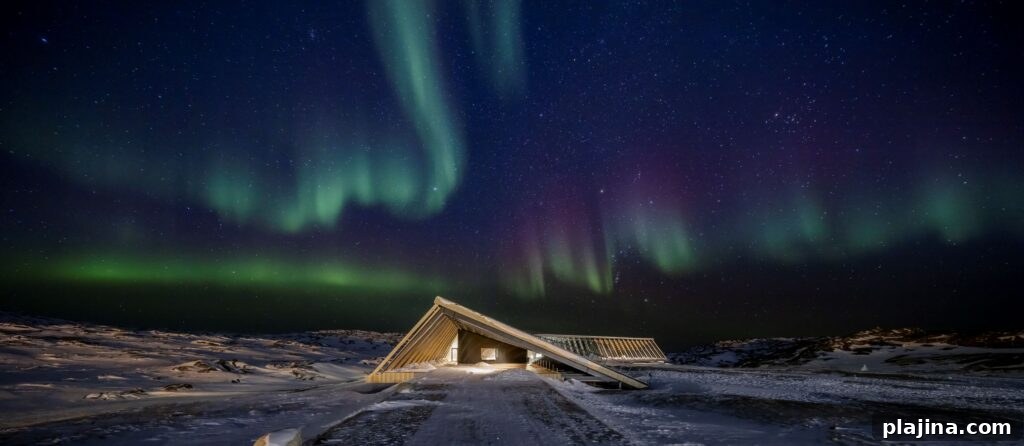
© Adam Mørk
The Ilulissat Icefjord Centre opened in 2021 to a gathering of Greenlandic officials and local residents of Ilulissat. COVID-19 restrictions limited international visitors at the opening, but the centre was designed with the expectation that more visitors would arrive in subsequent seasons.
Designed by Danish architect Dorte Mandrup of Dorte Mandrup Arkitekter, the 1,000-square-meter centre is positioned roughly 155 miles north of the Arctic Circle. The building houses exhibition spaces, a café and a shop, and its distinct sequence of steel frames forms a gentle curve—from triangle to square and back—creating a sculptural, aerodynamic silhouette that responds to the environment.
Mandrup has said the design was inspired by the sight of a snowy owl in flight. The building’s light, elevated appearance resembles a wing hovering above the rugged bedrock, framing views toward the Kangia fjord while reducing snow accumulation and sheltering visitors from harsh winds. The roof is accessible, providing vantage points from which visitors can look out over the icefjord and the surrounding landscape.
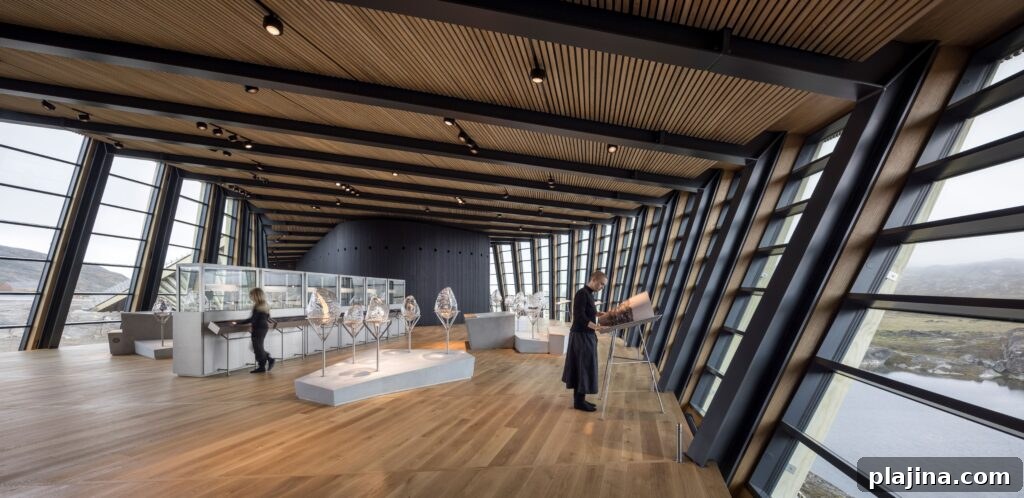
© Adam Mørk
Local scientists, residents and frequent visitors know that Sermeq Kujalleq—the glacier behind Ilulissat—has long calved enormous icebergs into Disko Bay. In recent years, the glacier’s melting zone has shifted inland and the fjord no longer consistently freezes over each winter. Observing these changes firsthand at Disko Bay offers a concrete and sobering lesson in climate change.
To manage visitor flow and protect the site, the Ilulissat Icefjord Centre limits occupancy to 120 people at a time. Tickets are sold in 90-minute time slots; visitors should consult the centre for current ticket prices and opening hours.
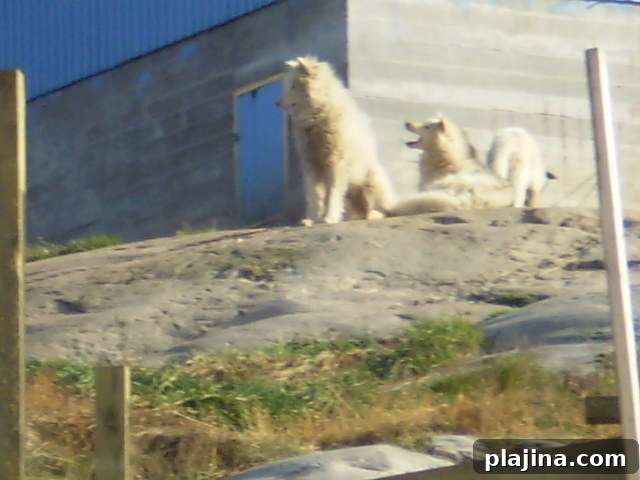
Sled dogs in Ilulissat © Ron Bernthal
Ilulissat itself is a small fishing town on Disko Bay that provides a dramatic maritime setting and excellent summer whale-watching opportunities. In the warmer months, humpback, minke and fin whales pass through the bay, sometimes approaching the drifting icebergs that float among the fjord’s channels. Most visitors travel to Ilulissat in summer, when the harbor is busy with fishing boats and heavy winter clothing is not required. The town’s nearly 5,000 year-round residents care for large numbers of sled dogs used for winter transport, and the dogs’ barking is a constant part of local life year-round.