
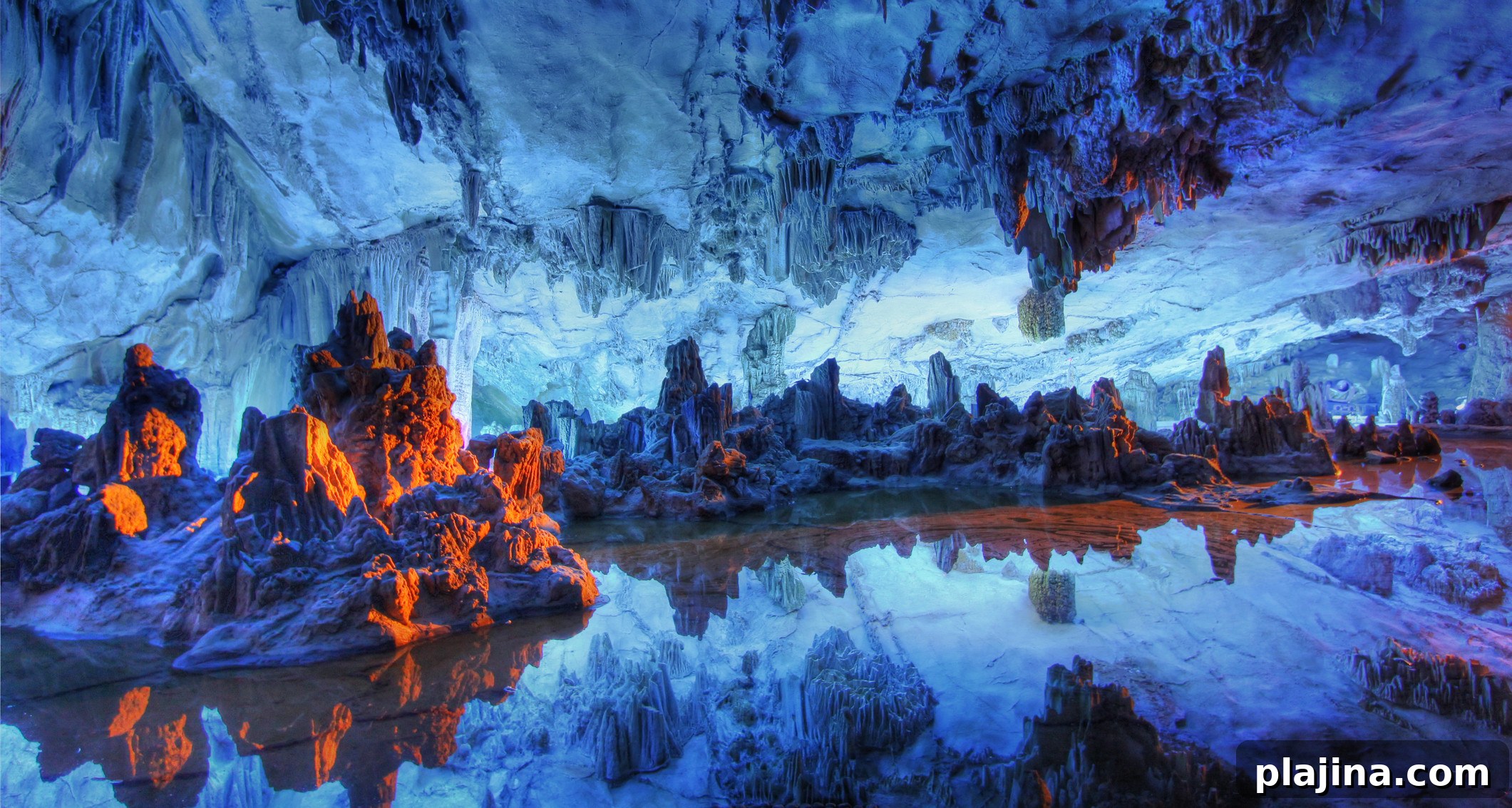
Located on the Taohua River just outside the city of Guilin, Reed Flute Cave is one of China’s most enchanting natural attractions. For centuries, locals collected the tough reed stalks that grow near the cave entrance to fashion woodwind instruments, but the true wonder was concealed inside the mountain until later discoveries revealed its dramatic interior.
The cave is renowned for its vast chambers, intricate limestone formations and stalactites and stalagmites that have formed over millions of years. Early explorers were struck by the scale and variety of these mineral sculptures, which range from delicate, needle-like spears to massive, curtain-like flows of calcite. Over time, the cave has been illuminated with careful lighting to accentuate the colors and textures of these formations while preserving the natural atmosphere.
Visitors encounter a sequence of vaulted halls and winding passages, each with distinct geological features. Some chambers open into cathedral-like spaces where light and shadow play across the rock surfaces; others present narrow corridors that lead to intimate grottos revealing fine crystalline details. The patterns and shapes within the cave often invite imaginative interpretations—many formations are given poetic names that reflect their appearance, such as “Dragon Palace,” “Crystal Palace” or “Pillars of Heaven.”
Beyond its geological significance, Reed Flute Cave holds cultural and historical value. Inscriptions and sketches found on the cave walls date back centuries, offering glimpses into how past generations experienced and recorded this remarkable site. These marks, combined with local traditions tied to the reed instruments made nearby, create a layered narrative of human interaction with the landscape.
Tour routes are designed to balance public access and conservation. Walkways and viewing platforms guide visitors safely through the main sections without disturbing fragile formations. Lighting is used to highlight key features and improve visibility, while measures are taken to minimize impact on the cave’s microclimate and delicate mineral deposits. Guided tours often provide geological context, explaining how water, time and mineral-rich seepage sculpted the cave’s interiors.
Reed Flute Cave is set within a broader landscape that enhances the visitor experience. The surrounding waterways, karst peaks and verdant countryside form a scenic backdrop typical of the Guilin region. Many travelers combine a visit to the cave with boat rides on nearby rivers, hikes among limestone hills or explorations of nearby villages to gain a fuller sense of the area’s natural beauty and cultural traditions.
For photographers and nature enthusiasts, the cave offers abundant opportunities to observe textures, colors and forms rarely seen elsewhere. Patience and careful composition can yield striking images of the interplay between light and stone, while quieter areas invite close study of crystalline details and the subtle variations in mineral layers.
Conservation remains a priority. Authorities and site managers work to protect the cave from damage caused by excessive foot traffic, inappropriate lighting, or climate changes driven by human activity. Visitors are encouraged to follow established paths, avoid touching formations and respect guidelines provided by staff to help preserve the cave for future generations.
Whether approached from a scientific, aesthetic or cultural perspective, Reed Flute Cave stands as a compelling destination. Its combination of dramatic geology, historical traces and careful stewardship makes it an essential stop for anyone exploring the Guilin area and interested in the extraordinary ways in which natural processes can create breathtaking underground landscapes.