
Dubai International Airport (DXB) remains the city’s primary aviation hub, while Al Maktoum International Airport (DWC) — also known as Dubai World Central — is being developed to handle far larger volumes in the years ahead. DWC began commercial operations in 2013 and, once fully completed, is planned to become one of the world’s largest gateways, with capacity estimates exceeding 160 million passengers per year.
The airport’s most recent expansion, finished in 2018, increased DWC’s annual capacity from 5 million to 26.5 million passengers. Despite that boost, passenger numbers and airline operations have been gradually catching up with available capacity.
For the first nine months of 2019, DWC handled about 1.3 million passengers, many of whom transited through the facility while runways at Dubai International were temporarily closed for maintenance. By contrast, DXB continued to serve as the dominant hub for the emirate, reporting 64,495,241 passengers in the same period.
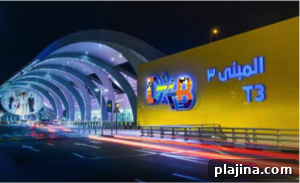
PHOTO: ©DUBAIAIRPORTS
Dubai International continues to invest in capacity and sustainability. In 2018 DXB came close to its 90 million-passenger capacity, handling 89,143,351 travelers. Ongoing development projects are set to raise DXB’s capacity to more than 118 million passengers by the end of 2023. Combined, DWC and DXB are projected to handle in excess of 120 million annual passengers by 2025.
Beyond expansion, DXB has positioned itself as an industry leader on environmental measures. Dubai Airports, the authority that manages both DXB and DWC, has adopted a phased ban on single-use plastics with the goal of cutting waste and lowering the airports’ carbon footprint. The initiative targets items such as straws, coffee lids, disposable cutlery, single-use water bottles and lightweight plastic bags, and it involves collaboration with airport retailers and food outlets to find suitable alternatives.
The first phase began in January, removing plastic cutlery, straws, food packaging and polythene bags from airport operations. Subsequent phases will replace additional products throughout the year while expanding recycling programs across both airports.
While DWC’s long-term role will depend on airline choices and passenger demand as DXB continues to grow, Dubai as a destination and transit point remains a major draw for millions of travelers worldwide. Both airports are evolving to accommodate that demand while placing greater emphasis on sustainability and waste reduction.