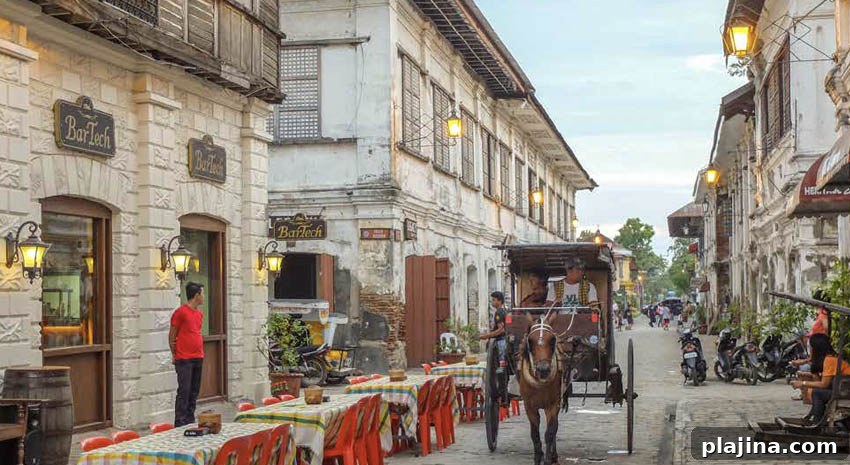
LUZON MAY BE DOMINATED by the bustling capital, Manila, but another gem on the island chain deserves attention: Vigan. This well-preserved town, the Philippines’ only UNESCO World Heritage site, sits roughly 250 miles north along Luzon’s west coast, facing the South China Sea. Wandering its cobblestone streets and admiring the unique Philippine-Oriental-Spanish architectural fusion reveals one of Asia’s finest examples of a colonial-era town.
Originally an island in the Mestizo River and settled by early Chinese immigrants, Vigan developed as a thriving port on historic trade routes. The locals called it Bee Gan, meaning “Beautiful Shore,” a name later adapted by the Spanish when they arrived in 1572 to oversee trade in gold, timber and beeswax. Renamed Villa Fernandina for a Spanish prince, Vigan’s history is rich and sometimes turbulent. In the 17th century it became a center of resistance against colonial rule; later episodes include the assassination of revolutionary leader Diego Silang and the public execution of his successor, Gabriela. Remarkably, during World War II the city escaped large-scale destruction when Japanese forces passed through. Today, Vigan’s three interlinked plazas and preserved streets still echo colonial life.
With a population just over 50,000 and very few cars, Vigan is compact and easy to explore on foot, by horse-drawn carriage or by tricycle. Kalesas, the traditional horse-drawn carriages, move at a relaxed pace and are inexpensive, while tricycle taxis — motorbikes with sidecars — provide a quick, budget-friendly way to get around town.
Built according to the Spanish “Law of the Indies” grid plan, the city centers on Plaza Salcedo. The plaza is framed by religious and civic landmarks: the Casa Real, the Municipal Hall, the Bishop’s Palace and the imposing St. Paul’s Cathedral. The cathedral, dedicated to St. Paul the Apostle, is an example of Earthquake Baroque architecture: low, wide and heavily buttressed to withstand tremors. Its detached bell tower prevents collapse onto the main church in case of an earthquake. Chinese motifs on the brass communion handrails and other decorative details reflect the multicultural influences that shaped Vigan’s buildings.
Adjacent to the cathedral is Plaza Burgos, a lively square that diverges from strict Spanish planning by hosting numerous food stalls and street vendors. Locals and visitors gather at picnic tables to savor regional favorites: arroz caldo (chicken rice porridge), soupy miki noodles, ukoy (deep-fried shrimp fritters), poqui-poqui (mashed eggplant with egg) and Vigan’s renowned empanadas, crisp on the outside and tender within. For a touch of familiarity, there is even a vintage-style McDonald’s with a three-piece meal option housed in a picturesque ochre-plastered building.
Plaza Burgos honors Padre José Burgos, the 19th-century priest whose martyrdom helped ignite the Philippine Revolution. His former residence, a sprawling 18th-century structure a few blocks away, now houses the Burgos Museum and displays relics that chronicle his life and the injustices he opposed. Burgos’ outspoken calls for reform and his involvement in social unrest led to his arrest and execution by garrote in Manila in 1872.
Old Town, known as the Mestizo District, covers 24 blocks lined with ancestral homes in soft pastel hues. These well-preserved mansions blend Oriental and Spanish design: arched windows, filigree ironwork, crenellated awnings and ventilated walls. Many ground floors serve as boutiques selling pottery, woven goods, baskets and other souvenirs while their upper floors remain private residences. The main thoroughfare, Crisologo Street, is closed to motor traffic, allowing horse-drawn carriages and pedestrians to enjoy the historic atmosphere.
Several heritage houses are open to the public by appointment. The Quema House showcases period wood furniture, family heirlooms and oil paintings; Syquia Mansion, once home to President Elpidio Quirino, displays presidential memorabilia; and the Crisologo Museum preserves family artifacts and personal items connected to local political history, including the clothing worn by Congressman Floro Crisologo on the day he was assassinated in 1970.
For a brief coastal escape, a short tricycle ride takes visitors to the black-sand stretch of Mindoro Beach. Another popular excursion is a 40-minute boat cruise on the Mestizo River, where covered open boats glide along narrow channels. An audio guide accompanies the trip, explaining five sculpted tableaus on the riverbank. These life-size dioramas depict scenes from Vigan’s pre-colonial past, the arrival of Juan de Salcedo in 1572, and displays celebrating local trades such as weapon-making, vinegar production and fish paste.
Vigan’s cuisine reflects its location at the crossroads of regional, Chinese and Spanish culinary traditions. Ilocano specialties favor a balance of sweet, sour and salty notes and showcase local vegetables and preserved flavors. Pinakbet, a signature dish, combines bitter melon, eggplant, squash and okra often flavored with bagoong (fermented shrimp paste) or paired with bagnet, crispy fried pork belly. Variations include dinengdeng, a soupy squash-based dish with fewer vegetables, and dinoydoy, which balances squash with bitter melon. Adventurous eaters might try local delicacies such as lumo, a pork-blood soup, or sinanglao, a beef broth with various innards. Meals are commonly accompanied by local sugarcane wine.
As evening falls, Plaza Salcedo becomes a gathering place for a nightly fountain show. At 7:30 p.m., the plaza’s fountains are illuminated and choreographed to music that ranges from cinematic themes to the Philippine national anthem, providing a colorful and atmospheric end to a day of exploration.
Philippine Islands Info to Go
Travelers can choose a scenic six-hour drive or bus ride up Luzon’s west coast, passing small towns, mango groves and sun-drying maize. A quicker option is a one-hour flight from Manila to Laoag, followed by a 40-minute road transfer to Vigan. Regional airlines operate frequent flights on the route.
Where to Stay in the Philippine Islands
CORDILLERA INN: A blend of history and modern comfort in 24 refurbished, air-conditioned rooms furnished with traditional wood pieces and four-poster beds draped in netting. 29 Mena Crisologo St. $$
HOTEL LUNA: A boutique museum hotel with an excellent location, service and food. Decorated historic rooms surround an arcaded courtyard and pool. Luna Street. $$
HOTEL VENETO DE VIGAN: Recently renovated and centrally located, this white-plastered hotel offers a coffee shop, bar, restaurant, free Wi-Fi, airport transfers and ample parking. Bonifacio Street. $$
Restaurants in the Philippine Islands
CAFÉ BIGAA: A cozy spot in a converted pub serving Vigan samplers, including bagnet and pinakbet. Vigan Plaza Hotel, Mena Crisologo Street, Plaza Burgos. $$
CAFÉ LEONA: A long-standing favorite on Mena Crisologo Street, popular for Philippine specialties and brick-oven bagnet pizza; outdoor seating draws an evening crowd. $$
LILONG & LILANG: Situated within the Hidden Garden two miles west of town, this Asian-inspired outdoor restaurant serves authentic Ilocano dishes amid lush tropical landscaping. Hidden Garden, Barangay Bulala. $$
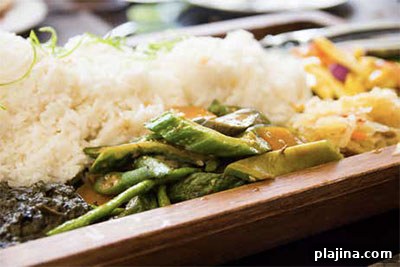
Pinakbet © RECYAP8 | DREAMSTIME.COM
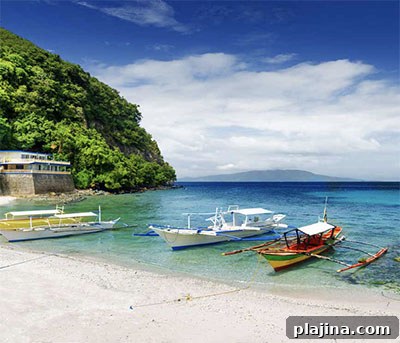
Mindoro Island © EFIRED | DREAMSTIME.COM