
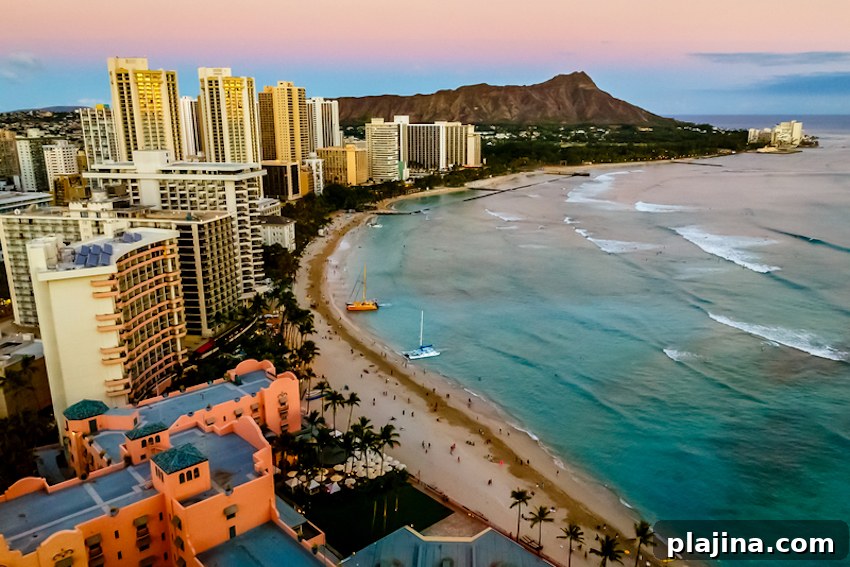
Sure — no visit to Oahu feels complete without spending time at Waikiki Beach. But if you’re heading to Honolulu, step off the sand occasionally to explore the city’s rich cultural and culinary scene. Framed by the iconic slopes of Leahi (Diamond Head), Waikiki’s famous shoreline was once where Hawaiian royalty surfed the same waters as locals. Today it’s lined with hotels, shops and restaurants, yet nearby neighborhoods reveal a more local side of island life.
Just beyond the tourist bustle in downtown Waikiki, the Kapahulu neighborhood offers a distinctly local vibe. Come hungry: sample brightly colored shave ice or pao doce sweetbreads at Waiola Bakery and Shave Ice, grab hot malasadas at Leonard’s Bakery, or enjoy a classic Hawaiian plate lunch at Rainbow Drive In. These simple, flavorful meals provide an easy and delicious way to taste the island’s culinary traditions.
The Bernice Pauahi Bishop Museum presents deep cultural context and rotating exhibitions that illuminate Hawaii’s history. Its current show marking the 150th anniversary of the gannenmono—the first Japanese plantation workers—uses illustrations, firsthand accounts and cultural objects to trace the monumental Pacific crossing from Japan to Hawai‘i. The museum is an excellent starting point for learning about immigration, labor history and the multicultural roots of modern Hawaii.
Beyond museum walls, the island preserves powerful historical sites. The National Memorial Cemetery of the Pacific honors military service members, while Pearl Harbor and the USS Arizona Memorial commemorate a pivotal moment in 20th-century history. For a different kind of landmark, visit the cone of the extinct Puowaina Volcano, which offers perspective on Oahu’s geological past.
Downtown Honolulu features cultural treasures worth adding to your itinerary. The Honolulu Museum of Art holds a broad permanent collection with more than 60,000 works spanning Western, European and Polynesian art, and Shangri La showcases Islamic art and architecture in a Hawaiian setting (note that some areas may be under renovation at times). Together these institutions help visitors understand Hawaii’s global artistic connections and local expressions.
Also essential is Iolani Palace, the royal residence of King Kalākaua and his sister and successor, Queen Lili‘uokalani. The palace’s richly appointed interiors include a throne room influenced by Florentine design, a koa wood stairway, royal portraits and an impressive collection of regalia—swords, jewels and crowns—that tell the story of Hawai‘i’s monarchy and its enduring legacy.
Whether you come for the surf or the museums, Honolulu blends natural beauty with a layered history and a lively food scene. Walk beyond Waikiki’s beachfront to discover neighborhoods, museums and memorials that showcase the island’s culture, resilience and hospitality.