
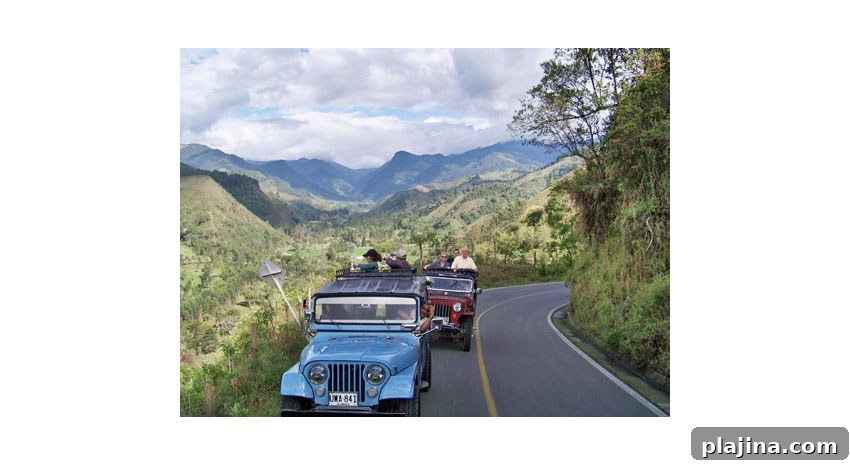
“How many of you put sugar in your coffee?” the barista asked at Café Jesús Martín in Salento. Five of the seven people in our group raised their hands. “I don’t blame you,” he said with a smile. “Most of the coffee you get is probably so bad that you need sugar to make it drinkable. We’re not going to drink coffee like that today.”
When our cappuccinos arrived—carefully brewed with freshly roasted beans from one of the top local farms—we had to agree. This was nothing like burned, bitter coffee from a chain or the weak stuff some diners pour into a cup. The drink was complex, rich and well balanced, with nuanced flavors that unfolded sip after sip. Tasting coffee prepared from quality beans at their origin is a revelation: it changes your expectations about what coffee can be.
Coffee itself did not originate in Colombia. The plant’s earliest use traces back to Ethiopia, and from there the crop spread to Yemen and then around the globe wherever the climate was suitable. Colombia became synonymous with coffee in the 20th century—not because it produced the most beans by volume, but because it developed a reputation for exceptional quality. Colombian growers have long focused on producing standout cups rather than simply maximizing output.
As global tastes shifted from generic blends to specialty coffee, producers in Colombia adapted. Consumers increasingly seek beans labeled organic, fair trade or single origin, and specialty cafés want smaller, better-quality lots rather than bulk commodity sacks. To meet those demands, many Colombian farmers have moved toward sustainable cultivation and careful harvesting practices that highlight the unique characteristics of their regions.
Organizations such as the Colombian Small Coffee Growers Association and the Colombian Coffee Growers Federation play an important role in improving quality and cushioning growers from volatile commodity prices. They also invest in education: a program called Escuela y Café brings coffee production lessons to 55 schools in producing regions, teaching students aged 12 to 18 about cultivation, processing and business practices. The classroom instruction combined with hands-on farm work gives young people constructive opportunities and alternatives to less stable paths they might otherwise follow.
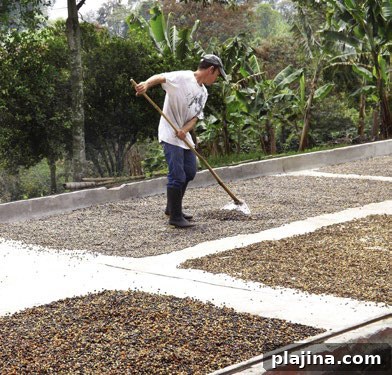
Drying beans © TIM LEFFEL
For coffee lovers, visiting Colombia’s Coffee Triangle feels like a pilgrimage. The region is anchored by three cities—Manzanares, Pereira and Armenia—and is peppered with working farms, haciendas and boutique hotels where guests can immerse themselves in coffee culture. Many accommodations are converted farmhouses, offering comfortable stays on properties where coffee is still grown and processed. Hotel Hacienda Combia, for example, sits on a functioning hacienda and includes a walking trail with stations explaining each stage of coffee production, making it an excellent one-stop experience for visitors.
Russell Coleman, a British native who co-founded the Colombia57 tour company based in Manzanares, notes a rise in higher-end hospitality as more travelers seek refined experiences. “Just outside Pereira is the recently opened Casa San Carlos Lodge,” he says, and he points to the scenic views offered by the boutique Hacienda Buenavista in Armenia as another example of the region’s growing appeal.
Many coffee farms open their gates to visitors much like wineries do. A typical visit begins with a walk through the fields where coffee cherries ripen to a deep red, followed by a look at the drying patios where beans are separated from fruit and moisture is reduced. Indoor processing areas reveal machines used for pulping, washing and sorting, and some farms include viewing areas for roasting. Tours usually culminate in a tasting session where guides explain roast profiles and brewing methods—French press, pour-over or other techniques—so guests can taste the differences produced by processing and preparation.
The Coffee Triangle also offers striking scenery. Cocora Valley is a must-see for many travelers: accessible from the nearby town of Salento, the valley rewards a drive into higher elevations with dramatic views, cloud-kissed hills and towering wax palm trees. The road climbs past 6,500 feet, narrowing the valley and pulling visitors into a misty, pastoral landscape. At the trailhead you’ll find a rustic restaurant, horse rentals and paths that lead deeper into the mountains for hiking and exploration.
Beyond the farms and vistas, the region even features a coffee-themed attraction—Parque Nacional del Café—which combines rides, a museum and lively cultural presentations celebrating the harvest. Between educational tours, tastings and festivals, visitors can learn the story behind each cup while enjoying the natural beauty of central Colombia.
A trip to Colombia’s coffee region is more than a caffeine fix: it is an opportunity to taste carefully nurtured beans, observe sustainable farming practices and connect with a long-standing local culture built around the crop. For anyone curious about where their coffee comes from or eager to savor better coffee, the Coffee Triangle offers both delightful flavors and meaningful context.
Info to Go
The main airport serving the Coffee Triangle of Colombia is El Eden International Airport in Armenia. Airlines such as Spirit operate seasonal direct flights from some U.S. cities, while Avianca provides daily service from multiple cities with connections through Bogotá. Ground transport options include taxis, rideshare services and rental cars, and many hotels and local tour operators can arrange private transfers or drivers.