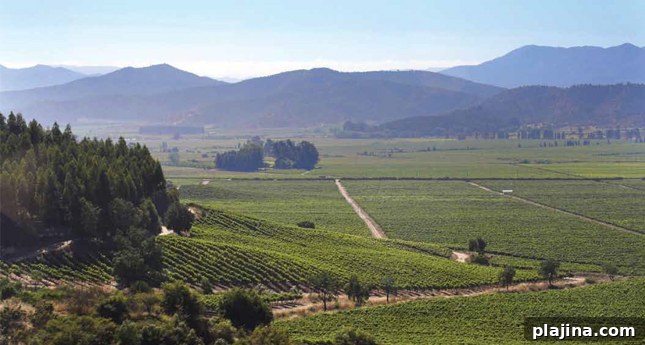
It began in 1982 when Pablo Morandé planted the region’s first vineyards — four acres of Sauvignon Blanc, Chardonnay and Riesling. The area made headlines in 1989 when Ignacio Recabarren released the first commercial wine from Chile’s Casablanca Valley, a Sauvignon Blanc that revealed the valley’s potential. Until then, Casablanca — located north of Santiago and cooled by the nearby Pacific Ocean, about 20 miles away — was not widely considered ideal for cooler-climate varieties.
Today, Casablanca Valley contains approximately 9,000 acres of vineyards, with plantings focused primarily on Sauvignon Blanc, Pinot Noir and Chardonnay. Much of this growth has occurred in the past decade, transforming the valley into Chile’s leading region for cool-climate grapes. While other Chilean regions are better known for Bordeaux-style varieties, Casablanca has become recognized for producing expressive, cooler-climate wines.
At a recent tasting I focused on two varieties that have flourished here: Sauvignon Blanc and Pinot Noir. The Sauvignon Blancs shared a pale lemon-yellow color and alcohol levels that felt balanced with each wine’s body. Veramonte Reserva 2011 is a textbook example of a young Sauvignon Blanc, with citrus and grassy aromas, a fresh, clean palate and lively acidity. Casas del Bosque Pequeñas Producciones 2011 showed an intriguing spiciness but remains youthful and sharply acidic; it would benefit from additional bottle age. Kingston Family Cariblanco 2010, a year older, showed roundness and more development with pleasing balance. Cono Sur 20 Barricas 2009 was softer and silkier, with subtle spicy notes.
Pinot Noir, the signature red grape of Burgundy, can be challenging to adapt to new regions, yet Casablanca has demonstrated an aptitude for capturing the variety’s subtle character. Emiliana Gran Reserva Novas Pinot Noir 2010, sourced from one of the world’s largest organic vineyards, expressed a delicate Pinot profile with a dry palate and an intensely cherry-scented bouquet that almost suggests sweetness. Quintay Q Pinot Noir 2010 remains young and evolving; it shows promise but would gain clarity with a year or two of aging. Morandé Edición Limitada Pinot Noir 2008, also made from organic fruit, offered a restrained, structured expression with attractive cherry tones.
These wines generally fall into a modest price range, typically between $15 and $25, making Casablanca’s cool-climate expressions accessible to many wine lovers. The valley’s combination of coastal cooling influence and recent investment in plantings has positioned it as Chile’s foremost region for Sauvignon Blanc and Pinot Noir, yielding wines that balance freshness, aromatics and varietal character.