
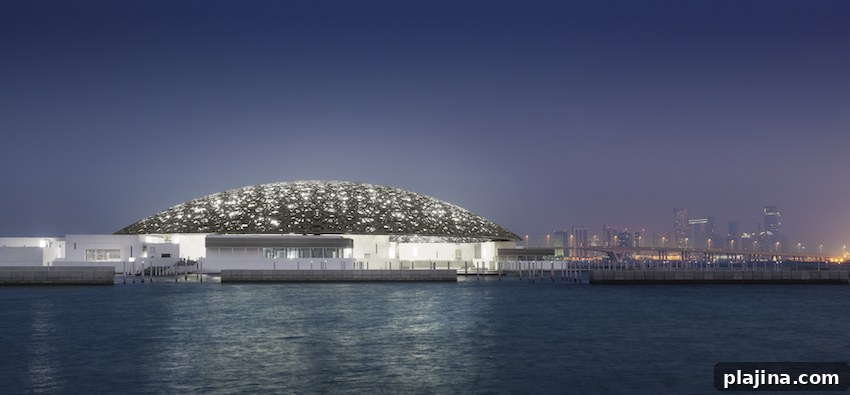
Leonardo da Vinci’s masterpiece, Salvator Mundi, will be on view at the domed Louvre Abu Dhabi beginning September 18. Painted in oil on a walnut panel, the work shows an enigmatic Christ figure holding a transparent orb. Art historians date the painting to the same period as other da Vinci works such as the Mona Lisa and La Belle Ferronnière, and its significance is heightened by the fact that fewer than 20 paintings are widely accepted as Leonardo’s handiwork.
The crystal orb in Salvator Mundi has drawn particular attention. Scholars see it as a symbol of Leonardo’s unique fusion of art and science and as evidence of his sophisticated understanding of optics. The orb’s surface includes carefully observed details—tiny, irregular bubbles and other inclusions—rendered with great subtlety. While the left hand cradles the sphere, the right hand is raised in a traditional gesture of blessing, combining technical precision with spiritual meaning.
Attributed to the years 1490–1515, Salvator Mundi has traveled extensively in recent years, drawing large audiences in Hong Kong, London, San Francisco, and New York. Following its debut at Louvre Abu Dhabi, the painting is scheduled to appear at the Musée du Louvre in Paris as part of a major Leonardo da Vinci exhibition running from October 24, 2019, to February 24, 2020.