
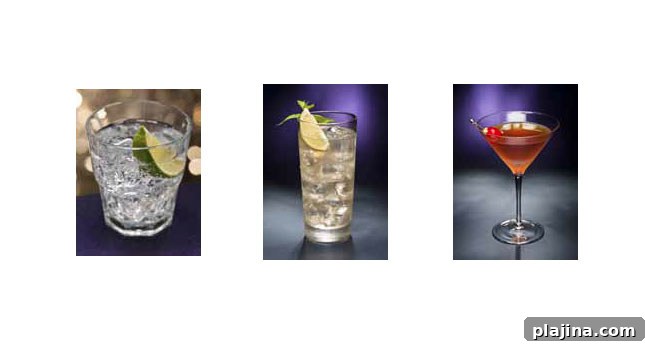
What’s in a name? When it comes to cocktails, a name carries meaning, mystique and history. A drink by any other name might taste the same, but a memorable name can make it more appealing. Would “Alcohol and Quinine” feel as stylish as “Gin and Tonic”?
The Gin and Tonic traces its origin to the 19th-century Far East, when quinine was the main—bitter—remedy for malaria. British servicemen discovered that mixing quinine tonic with gin not only made the medicine more palatable but also produced a refreshing, cosmopolitan drink that endured.
In 1930s Venice, Giuseppe Cipriani of Harry’s Bar combined peach purée with Prosecco. The resulting color reminded him of a painting by Giovanni Bellini, and the cocktail was named the Bellini in honor of the artist.
On the eve of World War II, a serendipitous pairing created the Moscow Mule: a merchant with surplus vodka joined forces with another who had too much ginger beer. They mixed their stock with lime, and the lively, spicy cocktail was born.
The gin-based Singapore Sling originated at the Raffles Hotel in Singapore in 1915. The Mint Julep traces its roots to 1842 in Mint Springs, near Vicksburg, Mississippi, where someone first muddled fresh mint with bourbon, creating a Southern classic.
The Manhattan began in New York City in 1874 when socialite Jenny Jerome hosted a party at the Manhattan Club for Governor Samuel J. Tilden. She asked the bartender to craft a new drink and instructed him to “begin with bourbon.” The cocktail took the club’s name. Jenny later became Lady Randolph Churchill and was the mother of Winston Churchill; the Manhattan went on to become one of the world’s most enduring cocktails.
Stories about how the word “cocktail” itself originated are varied and colorful. One tale tells of a maiden named “Octelle” who served a mixed drink to an army officer. Another suggests a king’s daughter called “Coctel” prepared a potion for a visiting dignitary. Some credit a barmaid named Betsy Flanagan, who stirred drinks with feathers from a cockerel’s tail, prompting a Frenchman to exclaim, “Vive le cocktail!” Yet another anecdote claims a horse trader revived a weary nag with a spirit-based drink to make it lively for sale—so lively that the animal “cocked its tail.”
Whether rooted in medicinal necessity, artistic inspiration or happy accidents, these origin stories illustrate how cocktails grew from practical mixtures to cultural icons. Each name preserves a piece of history—geography, personality or serendipity—reminding us that beyond flavor, a great cocktail carries a story worth telling.