
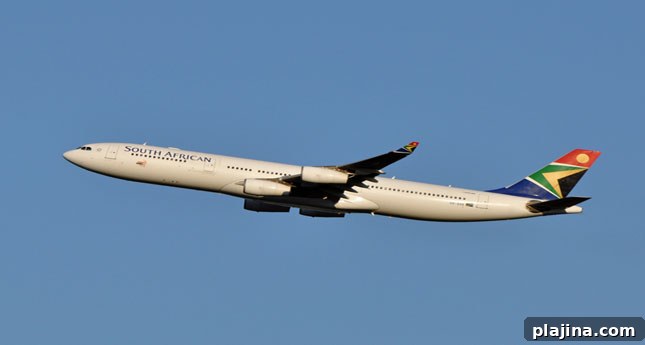
To reduce commercial aviation’s environmental footprint and support rural development in South Africa, Boeing and South African Airways have partnered to produce sustainable aviation biofuel from a specially developed tobacco plant. Working with Dutch aviation biofuels company SkyNRG, the partners are expanding production of a hybrid plant called Solaris. This nicotine-free variety is being cultivated as a dedicated biofuel feedstock rather than for traditional tobacco use. Test farming is already under way, and extraction of seed oil for conversion into sustainable aviation fuel is expected to begin within the next few years. Boeing also anticipates that additional plant components could be processed for future biofuel production.
“By using hybrid tobacco, we can leverage knowledge of tobacco growers in South Africa to grow a marketable biofuel crop without encouraging smoking,” said Ian Cruickshank, group environmental affairs specialist at South African Airways. “This is another way that SAA and Boeing are driving development of sustainable biofuel while enhancing our region’s economic opportunity.”
The collaboration aims to achieve multiple goals: reduce lifecycle greenhouse gas emissions from air travel, create new income streams for rural farmers, and demonstrate scalable supply chains for sustainable aviation fuels (SAF) in Africa. Solaris has been developed to deliver seeds with high oil content and to grow in local climates, allowing farmers to apply existing cultivation skills and infrastructure while producing a feedstock that does not contribute to nicotine markets.
Test plots will help determine best agronomic practices, seed yields, and the most efficient methods for collecting and processing the seeds into oil suitable for conversion into SAF. Using local production reduces the need to transport feedstocks long distances, which strengthens the carbon-reduction case for the resulting fuels. The initiative also seeks to build local processing capacity so that more value is retained in-country rather than exported as raw materials.
Industry experts highlight that sustainable aviation fuel is a critical near-term pathway for lowering aviation emissions while aircraft and propulsion technologies continue to improve. By developing region-specific feedstocks such as Solaris, stakeholders can diversify SAF supply and reduce dependence on food crops or land-use changes that could undermine sustainability goals.
For South Africa, the project could bring additional benefits beyond fuel production. New crops and associated processing facilities can create jobs across the agricultural and industrial sectors, support smallholder farmers, and stimulate rural economic development. The collaborative model between an airline, an aircraft manufacturer, and a specialized biofuels company is intended to align technical expertise, market demand, and farming know-how to scale SAF production responsibly.
Ongoing monitoring will be important to ensure the crop performs as expected, that cultivation does not displace food production, and that overall lifecycle emissions meet sustainability criteria. As the Solaris program advances from test farming to commercial production of seed oil for SAF, Boeing, South African Airways, and SkyNRG plan to assess outcomes and share lessons learned to support broader adoption of sustainable aviation fuels.
You may also like:
Banner Year
Bruce Dickinson, Vice President And Chief Project Engineer, 747 Program, The Boeing Co.