
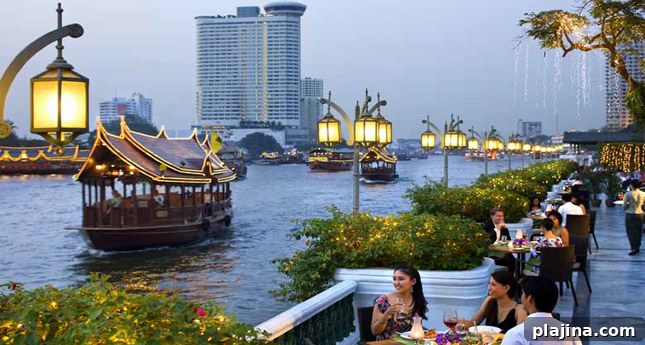
For many business travelers, Thailand’s vibrant capital is the ultimate destination. Once famous for street food and tuk-tuks, Bangkok has grown into a modern, dynamic metropolis that remains welcoming and easy for foreigners to navigate. It’s no surprise it’s often called the “City of Smiles.”
Although the majority of residents practice Buddhism, Bangkok is religiously tolerant and culturally diverse. The city uniquely blends tradition with modernity: gleaming skyscrapers share the skyline with wooden houses, neighborhood shops and aromatic noodle stalls. Its gilded temples sit alongside top-tier restaurants, exceptional shopping, lively nightlife and a wide selection of luxury hotels — plus outstanding Thai massage options for relaxation and stress relief.
Bangkok has been central to Thailand’s history since the late 18th century. In 1782 King Rama I designated the then-modest trading port as the new capital and commissioned many of the city’s most spectacular monuments. Those palaces and Buddha-filled wats continue to draw international visitors. The historic district, bordered on three sides by the Chao Phraya River, remains the cultural heart of the city.
The city’s waterways are essential to its identity. Canals crisscross Bangkok and recall the era when it was nicknamed the “Venice of the East.” In the 19th century Bangkok’s upgraded port made it a regional commerce hub, and over the last few decades this city—barely 250 years old—has emerged as a major Asian commercial center with a population exceeding 10 million and a steady stream of international visitors.
The futuristic Suvarnabhumi International Airport © Tomgigabite | Dreamstime.com
Suvarnabhumi International Airport, opened in 2006 about 16 miles from the city center, announced Bangkok’s arrival on the global stage. Handling roughly 50 million passengers a year, the airport’s striking glass-and-steel design quickly became iconic. City travel is convenient thanks to elevated sky trains (BTS) and a modernized underground (MRT). Free Bangkok Smile Bikes from several riverside locations offer a green way to explore with mapped routes and bike lanes highlighting attractions.
As Thailand’s commercial hub, Bangkok connects foreign businesses to a domestic consumer market of about 67 million and to the wider, fast-growing Asian economy. The city hosts headquarters for international companies, banks and financial institutions, including the Stock Exchange of Thailand. Strong exports and robust domestic consumption underpin Bangkok’s economic strength.
Trade ties with the United States are significant—America ranks among Thailand’s largest trading partners and investors. Thai exports include rubber, fishery products, rice, electronics, computers, jewelry, textiles, automobiles and auto parts, while leading U.S. imports to Thailand include machinery, aircraft, gold, optical and medical goods, and agricultural commodities. Tourism remains a major revenue source, helped by the widespread use of English among service professionals.
Telecommunications and conference facilities in Bangkok are world-class, providing 3G/WiFi, broadband access and international teleconferencing. Venues such as the Queen Sirikit National Convention Centre, Bangkok International Trade and Exhibition Centre (BITEC), and Impact Arena make the city a top choice for conferences and corporate events. Bangkok hosts numerous trade fairs and conventions annually, contributing substantially to the local economy.
MBK Center © Xin Hua | Dreamstime.com
The city has weathered political unrest, and while periodic instability has affected sectors like tourism and investment, Bangkok’s economy has shown resilience. Exports and industrial output have rebounded at times, and tourism continues to attract visitors. Investors remain cautiously optimistic about Thailand’s long-term prospects.
For business travelers, Bangkok’s appeal goes beyond commerce. The city’s culinary scene, fashionable boutiques and contemporary art scene have flourished. Walk the lively streets filled with monks in saffron robes, stylish locals and street vendors. Explore the waterways by water taxi, river cruise or long-tail boat to visit historic temples and traditional neighborhoods. From street stalls to fine dining, Bangkok serves some of the world’s most memorable food, while nightlife stretches into the early hours at night markets, bars and clubs.
Things to Do in Bangkok
The revitalized riverfront is a major draw. With restoration of historic palace buildings and new riverside development, the district now hosts restaurants, galleries, shopping centers and condominiums.
Details from Wat Phra Kaew, the Temple of the Emerald Buddha © Serban Enache | Dreamstime.com
Must-see cultural sites include the Grand Palace and Wat Phra Kaew, home to the Emerald Buddha, and Wat Pho, which houses Thailand’s longest reclining Buddha and well-regarded massage schools. Vimanmek Palace displays royal artifacts, and the National Museum showcases Thailand’s artistic and historical heritage.
Other highlights include the Jim Thompson House, a fine example of Thai architecture with a notable Asian art collection, and the Chao Phraya River and its klongs, where long-tail boats reveal traditional waterside life and temples such as Wat Arun, the Temple of Dawn.
Bangkok’s night scene is vibrant: explore the Old Town and the Night Flower Market (Pak Klong Talad), or head to Chinatown after dark for street-food dining. Day trips include the colorful Damnoen Saduak Floating Market, while Chatuchak Weekend Market offers more than 15,000 stalls selling a wide array of goods. For an unforgettable evening drink, rooftop bars like the Sky Bar at the Lebua Hotel provide spectacular city views.
CHECKING IN WITH SRIMALA WARAPHASKUL
Director, Tourism Authority of Thailand
What’s new in industry and business opportunities, including foreign investment?
The Royal Thai Government is investing heavily in infrastructure—projects aiming to improve trade, tourism and investment include expanding Suvarnabhumi Airport and building new mass transit lines in the Bangkok Metropolitan Area. These developments will support greater tourist arrivals and improve the visitor experience. The Board of Investment offers incentives and support for companies setting up business in Bangkok.
What are the fastest-growing industries?
Tourism remains one of Bangkok’s most important and fastest-growing sectors. Boutique hotels and eco-resorts have attracted significant investment. Travel and tourism contributed notably to GDP and employment, with related databases and planning tools helping promote hotel, spa and golf course development as well as long-stay and high-end market offerings.
What’s on the horizon for Bangkok’s economic growth?
The ASEAN Economic Community (AEC) promises freer movement of goods, services, investment and skilled labor across the region, reducing trade barriers and stimulating intra-regional commerce and investment. Bangkok is well positioned as a transport and tourism hub within ASEAN, which should generate new opportunities for growth.
Damnoen Saduak Floating Market © Mooindy | Dreamstime.com
Bangkok Info to Go
Suvarnabhumi International Airport is about 16 miles from downtown. An airport rail link connects to the city in roughly 30 minutes, helping travelers avoid heavy traffic. The BTS skytrain and MRT subway, along with expressways and metered taxis, make getting around Bangkok straightforward and convenient. Airport-to-downtown taxi fares typically run around $12, depending on traffic.
Bangkok: Just the Facts
Time Zone: GMT +7
Phone Code: Country code: 66, City code: 2
Currency: Thai baht
Entry/Exit Requirements: U.S. citizens with a passport valid for at least six months and an onward or return ticket typically receive a 30-day visa-exempt entry stamp upon arrival by air.
Official Language: Thai
Key Industries: Tourism, rubber, fishery products, rice, electronics, computers, jewelry, textiles, automobiles and auto parts
Where to Stay in Bangkok
Mandarin Oriental, Bangkok — A riverside icon since 1876, offering panoramic views, acclaimed dining, a renowned spa and cooking classes. 48 Oriental Ave., Bang Rak District $$$$$
The Siam — A luxurious riverside retreat with villa-style accommodations, bespoke antiques and private plunge pools. 3/2 Thanon Khao, Vachirapayabal, Royal Dusit District $$$$$
The Sukhothai Bangkok — Set in tranquil gardens with classic Thai architecture and modern comforts, ideal for privacy and relaxation. 13/3 S. Sathorn Road $$$$$
Restaurants in Bangkok
Chon Thai Restaurant — Traditional Thai dishes served in a teakwood house with river views; popular dishes include kurobuta pork ribs with longan honey and lime. The Siam, 3/2 Thanon Khao, Vachirapayabal, Royal Dusit District $$
The Jam Factory — A trendy riverside complex by architect Duangrit Bunnag featuring a restaurant, bar, bookstore and gallery, with many dishes inspired by family recipes. 41/5 Charoen Nakorn Road, Khlong San District $$
Nahm — Led by Michelin-recognized chef David Thompson, Nahm combines traditional Thai flavors with contemporary techniques. Metropolitan by COMO Hotel, 27 S. Sathorn Road, Central Business District $$$