
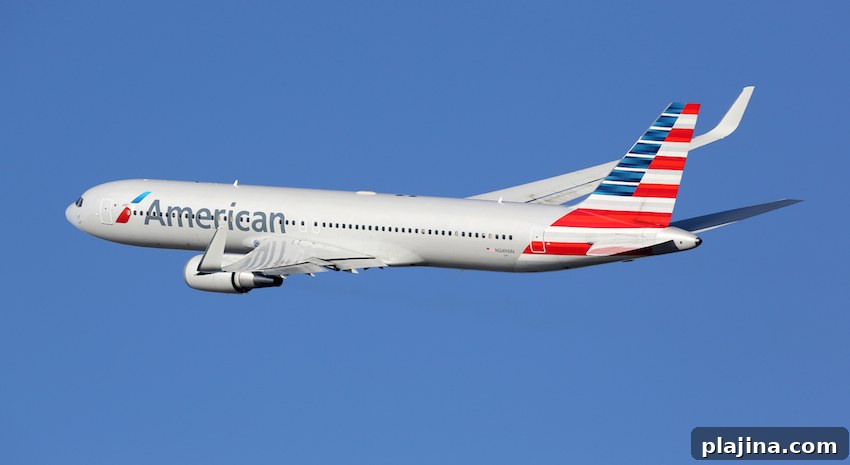
American Airlines has unveiled a $1.6 billion investment program for improvements at Los Angeles International Airport.
The proposal establishes the basis for negotiating a new 15-year lease and outlines a series of planned upgrades intended to streamline passenger flow and modernize airport facilities. Key elements include consolidating passenger check-in and baggage claim areas, enhancing check-in facilities at Terminal 5, and adding a new vertical circulation core that connects to the landside Automated People Mover (APM) rail system. The plan also calls for centralizing the security screening checkpoint for Terminals 4 and 5 at the APM level and creating both landside and airside connections between Terminal 4 and Terminal 5, including an above-ground link from the Terminal 4/BIT Connector to Terminal 5 airside.
Doug Parker, CEO of American Airlines, said the investment aims to elevate the customer experience while improving workspaces for employees and supporting the airline’s growth. He noted that U.S. carriers are reinvesting in their operations and communities, and described the LAX program as a clear example of that trend.
The program is scheduled to be executed over the next seven to ten years. Work will proceed by removing and rebuilding lobby sections of Terminals 4 and 5 in phases so the airport remains operational throughout construction. In addition to facility modernization, the agreement facilitates the allocation of additional gates to American Airlines as it expands its route network.
The phased approach is designed to limit disruption for travelers and staff while delivering a modern, connected terminal complex that improves passenger circulation, security processing, and access to the APM system. By centralizing key functions and linking terminals more effectively both landside and airside, the project seeks to create a more efficient and user-friendly environment for customers and employees alike.
As the program advances, passengers can expect upgraded check-in and baggage systems, more direct connections between terminals, and improved access to ground transportation via the APM. The long-term work is intended to future-proof the terminal complex to accommodate continued passenger growth and evolving operational needs.