
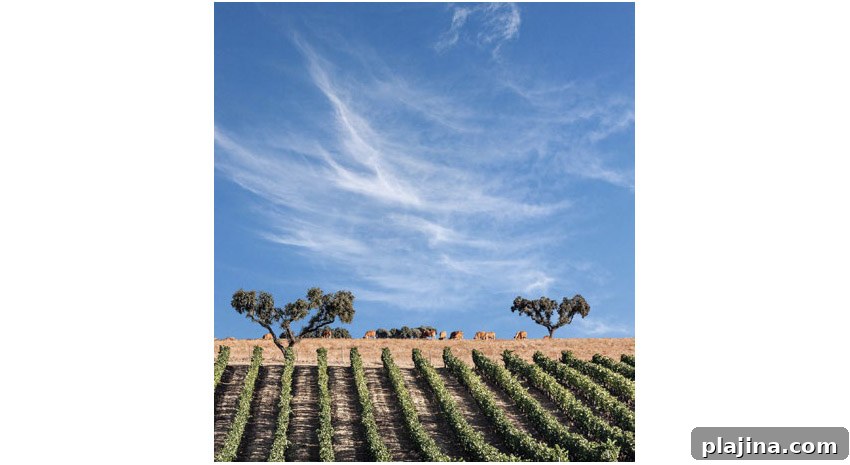
ALENTEJO FANS OUT EAST OF LISBON, an enormous arc of land covering nearly one-third of Portugal yet holding barely 7 percent of the country’s people. What it lacks in population, it more than makes up for in its wines and vineyards, its cheeses, hams, sausages, cork oak trees and the wheat that makes its memorable breads. It is also rich in archaeological finds, ancient towns and long-established winemaking traditions. Two thousand years ago the Romans, who occupied the region now known as Portugal, fermented wine in large clay amphorae. During a recent trip through Alentejo, I encountered amphorae both ancient and newly made at several wineries and sampled wines still produced in them today.
Much of Alentejo’s production relies on indigenous grape varieties, which yield wines with distinctive, often intriguing profiles. Below are some notable discoveries from the region.
At Herdade do Rocim, a modern and well-equipped estate, the Touriga Nacional 2016 ($16) stood out. Touriga Nacional is one of Portugal’s signature red grapes, and this bottling showcases the variety’s strengths: deep color, floral and fruity aromatics with spicy overtones, solid structure and a lingering finish. Rocim’s Olho de Mocho Reserva 2015 ($18), dominated by Alicante Bouschet, impressed as an elegant, smooth and well-balanced wine.
Quinta do Quetzal focuses primarily on reds, most built from local varieties with measured additions of other European grapes. The Guadalupe Winemaker’s Selection Vinho Tinto 2015 ($13) pairs Alicante Bouschet with small amounts of Syrah and Cabernet Sauvignon for an approachable, fruit-forward wine. The Quetzal Reserva 2015 ($23) blends Alicante Bouschet, Syrah and Trincadeira to produce a deeply colored, full-bodied wine with toasty notes.
Herdade do Esporão produces a wide range of wines; among them the Esporão Reserva 2016 ($15) is a compelling white blend of Antão Vaz, Arinto and Roupeiro, offering richness, balance and bright citrus aromatics. Esporão is also experimenting with amphorae fermentation, joining a broader movement in Alentejo to revisit ancient vessels and techniques in pursuit of textured, expressive wines.
Alentejo’s landscape and climate favor slow, even ripening and support a diversity of styles, from fresh, mineral whites to concentrated, savory reds. Indigenous varieties such as Touriga Nacional, Trincadeira and Antão Vaz produce wines with clear regional identity, while many producers blend local grapes with international varieties to achieve balance and complexity.
Beyond the bottles, visiting Alentejo reveals a food culture that complements the wines: rustic breads made from local wheat, intense cheeses, smoked hams and cured sausages that pair naturally with the region’s robust reds. The presence of cork oak forests also reminds visitors of the region’s broader agricultural heritage and its ongoing role in traditional Portuguese production.
Winemakers in Alentejo are attentive to both tradition and innovation. While some estates adhere to time-honored methods—such as amphora fermentation and extended maceration—others combine modern cellar technology and careful vineyard management to refine expression and consistency. This combination of respect for history and openness to new techniques helps explain why Alentejo’s wines have attracted growing attention from both domestic and international wine lovers.
There are many more interesting wines from Alentejo worth exploring. In future issues we will continue to profile additional producers and distinctive bottlings from this expansive, multifaceted region.