
Absinthe has experienced a dramatic arc: beloved, condemned, banned, mourned and now revived. This anise-forward, high-proof spirit (typically 100–146 proof) has returned to prominence, with producers in a dozen countries creating roughly 200 brands worldwide.
First distilled in the 18th century, absinthe became particularly popular in the 19th century, earning a reputation as the favored drink of Parisian artists and writers. Made from anise, fennel and Artemisia absinthium (wormwood) along with a variety of other herbs, authentic absinthe often has a natural green hue. The classic serving ritual calls for one part absinthe poured into a glass, a sugar cube placed on a slotted spoon over the glass, and four parts ice-cold water slowly dripped over the cube until the sugar dissolves and the spirit louches, releasing its aromatics.
Many Parisian drinkers skipped the water, however, and temperance movements later began to blame absinthe for social ills and sensational anecdotes, including stories of madness, blindness and the notorious tale of a drunken man who allegedly stripped and died dancing in the streets of Paris.
Those accounts contributed to wide-ranging bans on absinthe in the early 20th century. Over time, the spirit has been reevaluated: modern analysis shows that the extreme behaviors attributed to absinthe were more likely the result of excessive drinking in general, not a unique property of wormwood or the spirit itself.
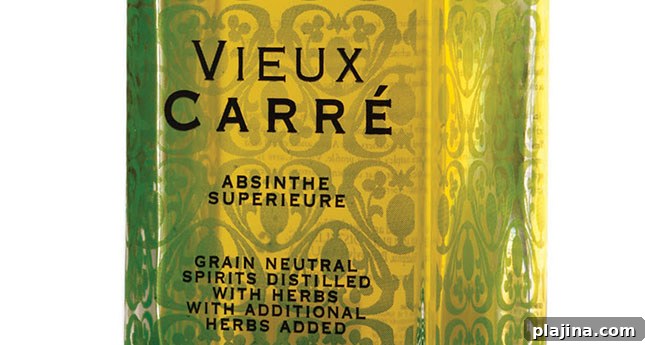
Starting in the late 20th century, legal restrictions eased and absinthe began to reemerge. In 2007, Lucid arrived from France as the first absinthe imported into the United States since 1912. That same year, St. George Absinthe Verte was distilled in California, marking the first U.S.-produced absinthe since the ban. In 2008, Vieux Carré became the first absinthe made in the eastern United States since 1912.
Vieux Carré illustrates what many enthusiasts appreciate about absinthe: a layered aroma of anise and fennel supported by a complex herbal backbone and a bright lemony snap. Its flavor foregrounds anise’s licorice character, rounded by fennel and balanced by the other botanicals and floral notes used in distillation. For those who enjoy depth and nuance, it’s a noteworthy example of the style.
Today, a wide selection of absinthes is available from several countries. Notable examples include Green Fairy (Czech Republic), La Clandestine (Switzerland), Mata Hari (Austria) and French bottlings such as Pernod, Mythe and Le Tourment. Prices typically start around $50, with premium bottles commanding higher prices depending on age, provenance and production methods.
For aficionados seeking a traditional experience, some venues maintain classic service rituals. Rambler’s Lounge at Casa Marina Resort in Key West, Florida, for instance, serves Lucid in the traditional manner and offers “Death in the Afternoon,” Ernest Hemingway’s famed cocktail combining absinthe and Champagne.