
The dining journey began well before I entered the 2-Michelin-starred restaurant at Hotel Arts Barcelona. From check-in onward, the hotel set a refined tone: a private elevator to the club level, two key cards for our room and two perfectly chilled glasses of Cava Gran Reserva waiting for us. The timing felt effortless and intentional.
In our room we discovered a tray of local cheeses and cured meats alongside a D.I.Y. pan con tomate. A handwritten note welcomed us and mentioned that Chef Paco Pérez looked forward to receiving us that evening at Enoteca Paco Pérez. That small, personal touch amplified our anticipation and cemented my high impression of the property in under an hour. We had booked a 2-Michelin-Star Experience using Marriott Bonvoy points — a package that included accommodations, breakfast, dinner, WiFi and parking — yet the hotel itself delivered a Michelin-level welcome that complemented the dining experience. When luxury hotels and Michelin-starred restaurants collaborate, they create immersive stays that redefine hospitality.
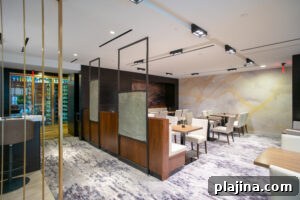
Waldorf Astoria Washington DC © Waldorf Astoria
I’ve encountered similar synergies at other properties, most recently at Waldorf Astoria Washington DC. Housed in the city’s original Old Post Office building, the hotel pairs historic grandeur with a 1-Michelin-star omakase at Sushi Nakazawa. The route to the restaurant leads through the famed Peacock Alley lobby and bar, which serves almost as a prelude to the meal. The lobby’s lively, “see and be seen” atmosphere flows into an intimate omakase where Chef Daisuke Nakazawa presents 20 precisely sourced and crafted nigiri.
“Having a Michelin-starred restaurant within the hotel elevates the entire guest experience in a meaningful way,” said Senih Geray, general manager at Waldorf Astoria Washington DC. “It turns dining from a convenience into a destination, giving our guests the confidence to enjoy world-class cuisine without leaving the property. It also attracts both international travelers and local patrons, reinforcing our position as one of Washington, D.C.’s leading luxury destinations.”
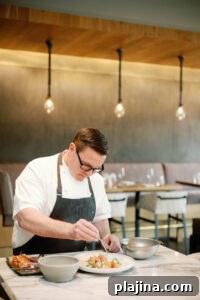
Executive Chef Jason Franey © Auberge Collection
At The Lodge at Blue Sky, Auberge Collection, an exclusive resort in Utah, the dining room has become a sought-after stage for Michelin-starred pop-ups. In 2025, SingleThread — the acclaimed 3-Michelin-starred restaurant from Healdsburg, California — launched its new concept, ThroughLine, at the Lodge. Against a dramatic mountain skyline, guests experienced a 12-course tasting interwoven with an eight-part documentary. That debut set a tone: the property now regularly hosts Michelin-starred chefs who arrive to showcase inventive menus within the Wasatch Mountains.
Chef Thomas Allan of The Modern, the Museum of Modern Art’s 2-Michelin-starred restaurant, held an exclusive three-night residency at The Lodge in March, and Chef Phillip Tessier later brought his 1-Michelin-starred PRESS restaurant for a full takeover. The Lodge typically hosts four to six Michelin-starred chefs each year, drawing guests who want a unique combination of wilderness and world-class cuisine.
“We started working with Michelin-starred chefs from the opening,” said Joe Ogdie, general manager of The Lodge at Blue Sky. “The annual partnership with Chef Kyle and Katina Connaughton of SingleThread Farms shifted how we view chef collaborations and how far they can be realized. Guests come to Blue Sky to reconnect with the natural world, and bringing in these chef partners helps us create the experiences our guests seek.”
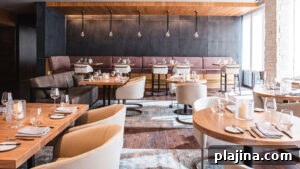
The Lodge at Blue Sky, Auberge Collection, dining room © Auberge Collection
For many travelers, an on-site Michelin-starred restaurant can be the deciding factor when choosing between hotels in the same city. In San Francisco, for instance, Parc 55 San Francisco — a Hilton Hotel Downtown — features Kin Khao Thai Eatery by Chef Pim Techamuanvivit, a 1-Michelin-starred restaurant. “Having a Michelin-starred venue inside our hotel is a huge draw,” said Peter Hart, general manager. “It lets guests enjoy world-class dining seamlessly while also attracting locals and visitors who might discover our property for the first time.”
Michelin recognition has come to symbolize more than an exceptional menu; it suggests a hotel’s broader commitment to service and quality. Michelin standards are exacting, and a restaurant that meets them often reflects a property-wide dedication to excellence. That alignment elevates these hotels above typical offerings and positions them as true destination properties.

Patrick O’Connell, chef and sole proprietor, in the kitchen at The Inn at Little Washington © Relais & Châteaux
“Gastronomy is the most authentic gateway to a culture — its ingredients, landscapes, traditions and the people who bring them to life,” said Laurent Gardinier, president of Relais & Châteaux. The organization oversees a portfolio of individually owned luxury hotels and restaurants and counts more than 200 Michelin stars across its properties. For Relais & Châteaux, gastronomy is not an amenity but an integral part of a destination’s identity.
To maintain that identity, Relais & Châteaux developed culinary standards and a global team of inspectors who evaluate properties across 65 countries. Their role is to ensure each member serves cuisine that makes a clear statement and conveys a strong sense of place. “A truly memorable journey always begins with exceptional cuisine,” Gardinier said. Hosting a fine-dining restaurant signals a commitment to authenticity and excellence and ties the hotel’s narrative to its culinary offerings.
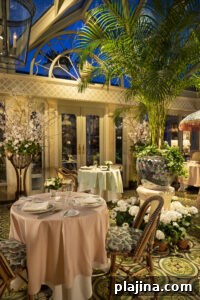
The Conservatory dining © Relais & Châteaux
Chefs and hoteliers collaborate closely to showcase local character and hospitality culture, transforming a simple stay into a destination where guests feel inspired and genuinely cared for. That partnership turns dining into the central thread that connects a hotel’s values, storytelling and guest experience.
Another advantage of experiencing Michelin-level dining inside a hotel is a sense of freedom. Guests are less constrained by practicalities such as catching the last train or arranging late transportation home. That relaxed frame of mind mirrors what many Michelin chefs strive to create: an environment where diners can let go, focus on the meal and fully inhabit the role of guest — to experience, taste and savor. In these hotel restaurants, the world is distilled into a single destination where exceptional cuisine and hospitality come together seamlessly.
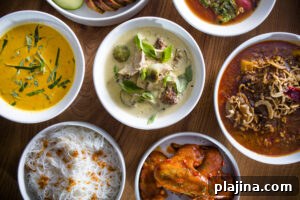
Dishes by Chef Pim Techamuanvivit © Kin Khao Thai Eatery